Pakistan’s national cricket apparatus is executing strategic Pakistan team changes ahead of its pivotal ICC Men’s T20 World Cup 2026 group-stage match against Namibia. This calibrated roster adjustment, aimed at optimizing team dynamics and securing a Super Eight berth, underscores a critical performance review by team management. A decisive victory on Wednesday at the Sinhalese Sports Club Cricket Ground will solidify Pakistan’s advancement, demonstrating a commitment to rigorous performance standards.
Calibrating Performance: Understanding Pakistan’s Strategic Team Changes
The imperative for these roster modifications stems directly from the team’s recent performance metrics. Consequently, the management is reportedly evaluating the contributions of several senior players, potentially opting to rest key figures such as Babar Azam and Shaheen Shah Afridi for the upcoming fixture. This precise intervention seeks to inject fresh impetus by integrating two to three new members into the playing XI, thereby leveraging the full depth of the team’s bench strength. Furthermore, such proactive adjustments are crucial for maintaining peak competitive readiness throughout the tournament.
Beyond the Boundary: How Strategic Shifts Impact National Morale and Sports Development
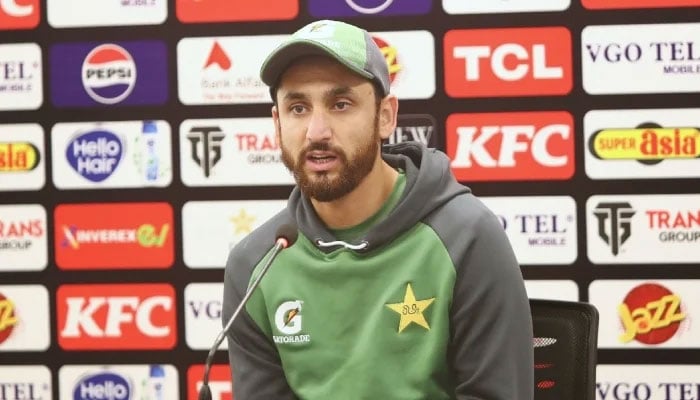
The strategic deployment of new talent within the national cricket team resonates far beyond the immediate sporting arena; it functions as a catalyst for national aspiration and sporting infrastructure development. For young Pakistani students and aspiring athletes, these Pakistan team changes exemplify a meritocratic system, proving that consistent performance and fresh talent are valued. This proactive management strategy can inspire a new generation, fostering a culture of continuous improvement in sports. Moreover, public perception often intertwines national sporting success with broader socio-economic progress, making disciplined team management a critical component of collective morale.
Data-Driven Decisions: Analyzing the Catalyst for Pakistan Team Changes
The direct impetus for these strategic evaluations traces back to Pakistan’s underwhelming fixture against India on Sunday. The team’s initial tactical decision to bowl first on a pitch demonstrably conducive to spin did not yield the anticipated results, enabling India to post a substantial 175 for five, propelled by Ishan Kishan’s rapid half-century.
Spin Attack Under Scrutiny
Pakistan’s spin contingent struggled to impose control or secure crucial breakthroughs. Specifically, Abrar Ahmed conceded 38 runs across three overs, while Shadab Khan gave away 17 runs in his singular over. Neither bowler registered a wicket, underscoring a critical vulnerability. Conversely, Shaheen Afridi delivered the most effective bowling performance, concluding with one for 31 from two overs.

Batting Collapse: A Structural Weakness
In pursuit of a challenging 176-run target, Pakistan’s batting lineup demonstrated a significant collapse under pressure. The team was systematically bowled out for a mere 114 runs within 18 overs, reflecting a pervasive structural weakness in critical match situations. Captain Salman Ali Agha subsequently characterized the overall performance as an “off-day,” signaling a need for immediate corrective action.
Defining Pakistan’s Forward Path: Momentum Shift or Stabilization Move?
These announced Pakistan team changes represent a calculated Momentum Shift. The proactive decision to adjust the playing XI, potentially resting established figures for fresh talent, is not merely a reactive measure but a strategic recalibration designed to unlock untapped potential and adapt to dynamic tournament conditions. This approach signals a robust commitment to performance optimization rather than mere maintenance. Consequently, it positions Pakistan to reclaim its competitive edge and advance with renewed vigor into the Super Eight stage, thereby reinforcing the nation’s disciplined pursuit of sporting excellence.