

Advancing Social Equity: The KP Transgender Protection Framework
Pakistan’s Khyber Pakhtunkhwa government has strategically introduced a comprehensive KP Transgender Protection policy, a calibrated initiative designed to empower transgender individuals, often referred to as Khawaja Sira. This structural framework aims to significantly reduce harassment, discrimination, and social exclusion throughout the province. Consequently, this policy establishes the region’s inaugural welfare endowment fund, explicitly earmarked for economic empowerment, skills training, and essential rehabilitation programs, marking a pivotal step towards systemic social integration.
The Translation: Catalyzing Systemic Change
This policy is a baseline for enhanced social services. It mandates the creation of safe homes, rehabilitation centers, and community shelters, offering critical refuge for individuals facing violence or displacement. Furthermore, authorities will establish a province-wide transgender welfare registry, a precision instrument to facilitate access to vital social protection schemes, comprehensive healthcare benefits, educational opportunities, and equitable employment. The Social Welfare Department will strategically oversee implementation, while district-level committees and police coordination desks will address localized protection and justice concerns, ensuring a robust, integrated response.
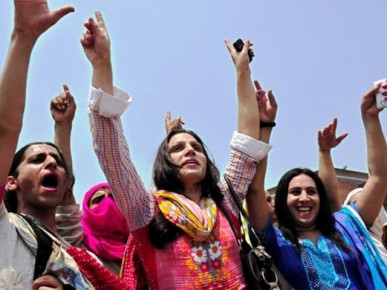
The framework also structurally enforces inclusive healthcare, non-discriminatory admissions in educational institutions, scholarships, employment quotas, and comprehensive workplace protections. Additionally, police and public officials will undergo targeted rights-awareness training, and both transport and health departments will integrate inclusion-focused reforms, signifying a holistic approach to gender equity.
The Socio-Economic Impact: Re-calibrating Daily Realities
This policy fundamentally re-calibrates the daily life of a Pakistani citizen, particularly for transgender individuals and their families. For students, it signifies access to education without discrimination and the availability of scholarships, opening previously inaccessible pathways to knowledge and skill development. Professionals can anticipate equitable employment quotas and workplace protections, fostering environments of respect and opportunity. Furthermore, households in both urban and rural Pakistan will benefit from the establishment of safe homes and rehabilitation centers, providing critical support structures. The welfare endowment fund is a direct economic catalyst, offering skills training and rehabilitation that translate into tangible livelihood improvements, thereby strengthening community resilience and economic participation.
The Forward Path: A Momentum Shift for KP Transgender Protection
Officials assert this policy structurally builds upon national legal protections, but pivots strategically from mere protection to long-term social and economic empowerment. Data from NADRA indicates approximately 170 transgender individuals are officially registered in the province, though social welfare authorities estimate the true number is substantially higher. This initiative revives prior inclusion efforts, which largely remained unimplemented. Therefore, this new strategy represents a clear Momentum Shift. It demonstrates a disciplined commitment to delivering lasting improvements in education, employment, healthcare, and social acceptance, moving Pakistan towards a more inclusive and efficient societal architecture.








