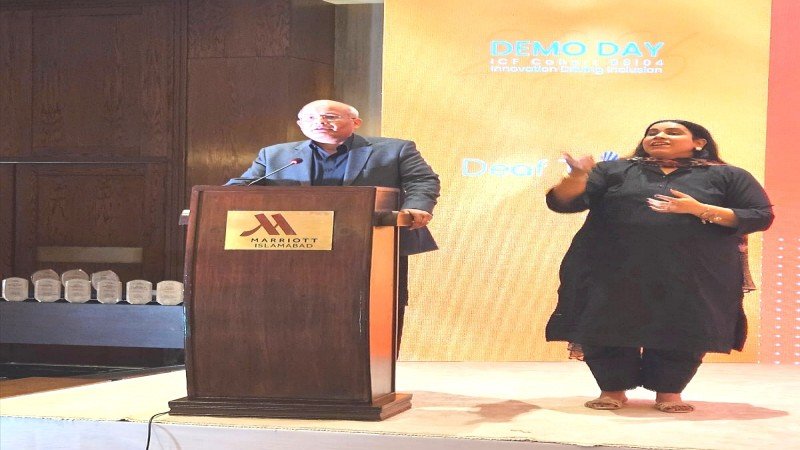
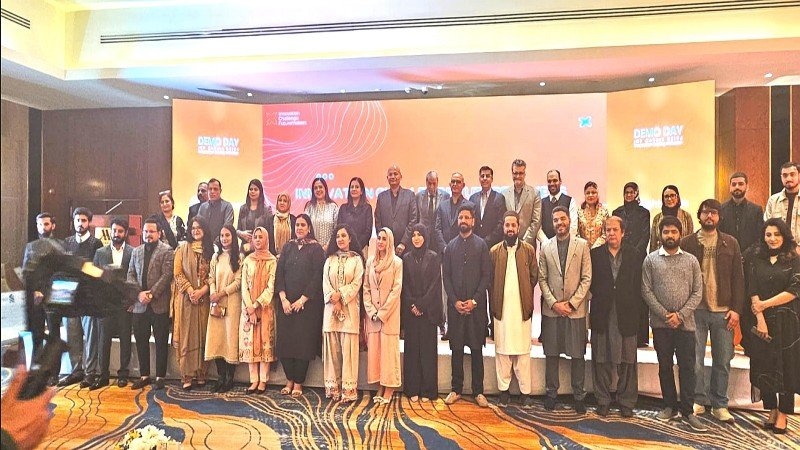
Pakistan’s strategic imperative for national advancement demands inclusive innovation. The recent Innovation Challenge Futuremakers (ICF) Demo Day for Cohorts 3 and 4 precisely demonstrated how purpose-driven startups strategically address systemic social, economic, and accessibility gaps. This initiative, meticulously executed by DeafTawk in collaboration with Sightsavers and funded by Standard Chartered Foundation, supports entrepreneurs with disabilities. Consequently, they refine solutions that address real-world challenges and strengthen their business models for scalable impact.
The Translation: Deconstructing Inclusive Development
Such inclusive development represents a calibrated shift from conventional, profit-centric models towards a framework where technological and entrepreneurial growth explicitly prioritizes equitable access and opportunity. Essentially, this means designing solutions for, and with, those traditionally marginalized. Munazza Gillani, Country Director at Sightsavers, precisely articulated this imperative, stating that innovation achieves authentic impact only when intentionally designed for those most often excluded. Therefore, programs like ICF structurally integrate accessibility with cutting-edge solutions. Tasneem Mirza, Head Community Impact and Engagement at Standard Chartered, Pakistan, further emphasized the strategic role of responsible finance. Supporting this entrepreneurship, she noted, extends beyond mere funding. It meticulously cultivates an ecosystem where innovation directly contributes to shared national prosperity.
Socio-Economic Impact: Reshaping Daily Life in Pakistan
For the average Pakistani citizen, this paradigm of inclusive innovation translates directly into tangible improvements across daily life. Students, particularly those with disabilities, gain access to more specialized educational tools and opportunities. Furthermore, professionals find enhanced employment pathways through accessible technologies and supportive enterprise models. Households in both urban and rural settings benefit from improved service delivery and more equitable access to essential resources. The Memorandum of Understanding (MoU) between NADRA Technologies Limited and Cohort 3 startup Reinn Raus exemplifies this structural integration. This partnership signals a vital institutional shift, allowing innovative, inclusive solutions to scale within critical public systems. Consequently, it directly benefits a broader populace, fostering systemic efficiency.
The Forward Path: A Momentum Shift for Pakistan
This development represents a decisive Momentum Shift for Pakistan’s national trajectory. The explicit commitment from governmental and development sector representatives, notably Mr. Zarrar Hasham Khan, Secretary IT & Telecommunication, underscores a strategic recognition: innovation must serve all citizens. This proactive stance, coupled with foundational programs like ICF, establishes a clear pathway for sustainable, people-centric growth. While challenges persist in scaling these initiatives nationwide, the demonstrated intent and concrete steps, such as the NADRA MoU, provide a strong baseline. Pakistan is therefore systematically building a more robust, equitable, and digitally inclusive future.