Catalyst for National Advancement: Pakistan Women’s ‘A’ Team Dominates Asia Cup Opener
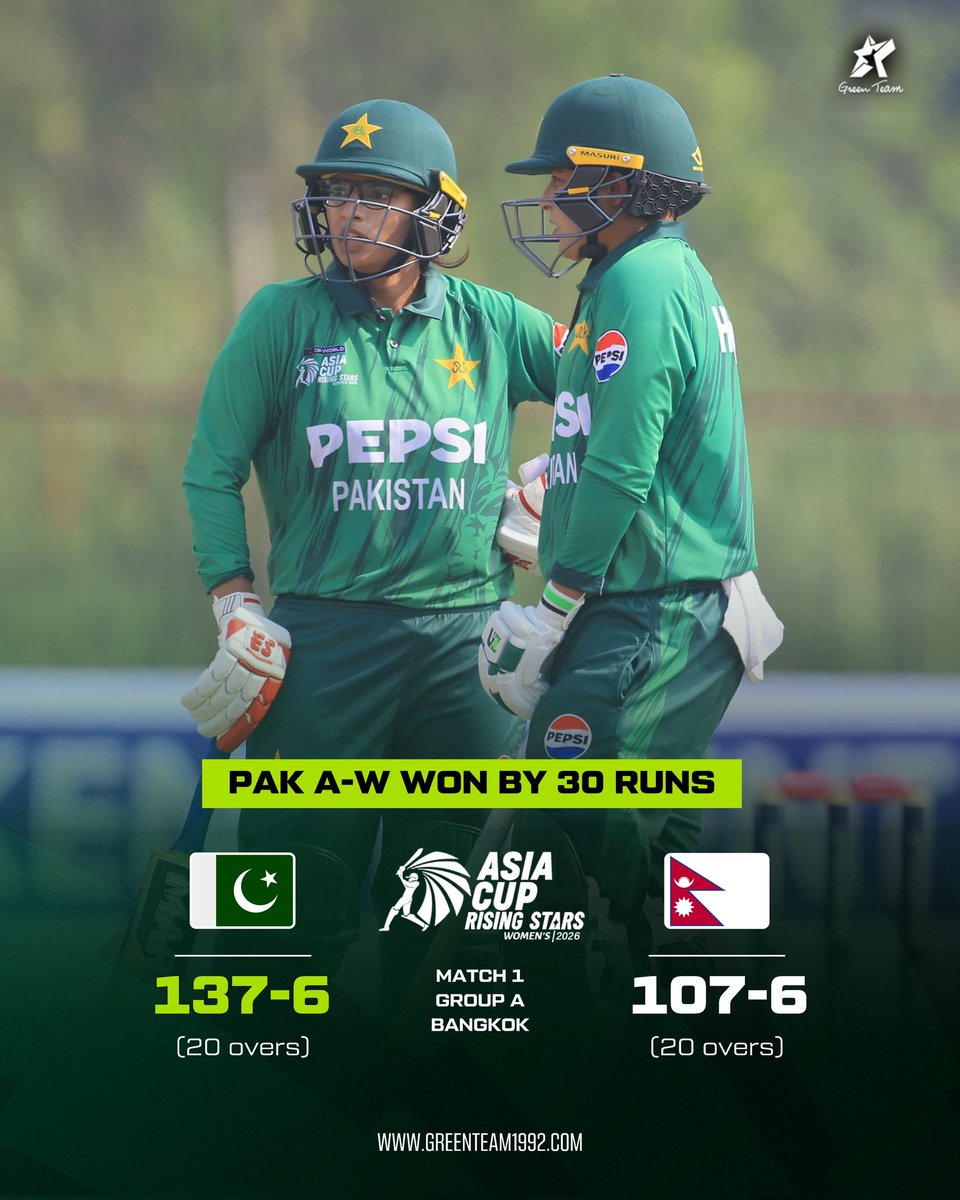
The recent triumph of the Pakistan Women Cricket Victory marks a pivotal moment, showcasing strategic excellence and disciplined execution on the international stage. Our ‘A’ team delivered a compelling all-round performance, decisively defeating Nepal by 30 runs in their inaugural match of the Women’s Asia Cup Rising Stars at Terdthai Cricket Ground. This victory, calibrated through strong batting and incisive bowling, positions Pakistan favorably early in the tournament.
Decoding the Victory: Strategic Imperatives in Women’s Cricket
This win transcends mere statistics; it exemplifies the structural evolution within Pakistan’s women’s cricket program. The Women’s Asia Cup Rising Stars is designed to nurture emerging talent, providing a critical baseline for future international representation. Consequently, securing an opening victory not only builds team morale but also validates the focused training regimes and tactical preparations. This provides clear context for upcoming challenges, especially against formidable opponents.

Precision in Performance: Batting Dynamics and Strategic Resilience
Initially, Pakistan’s innings faced early turbulence, with openers Shawaal Zulfiqar and Yusra Amir departing swiftly at a score of 19. Captain Hafsa Khalid, however, demonstrated exceptional leadership, stabilizing the innings with an unbeaten 40 runs. Her contribution, featuring two boundaries and a six, was crucial. Furthermore, Khalid forged a vital 37-run partnership with Huraina Sajjad, who added 17 runs, effectively mitigating early pressure.
Despite Nepal’s calibrated pressure tactics in the middle overs, capturing three wickets between the 11th and 16th overs, Pakistan maintained a competitive trajectory. Waheeda Akhtar then provided a decisive late surge, scoring 23 runs off just 15 balls, including five crucial boundaries. Eman Naseer’s rapid 9 not out, culminating in a six in the final over, ensured Pakistan posted a formidable total of 137-6 in 20 overs. Kabita Kunwar was Nepal’s most effective bowler, achieving figures of 2-10.
Dominant Defense: The Bowling Cadence and Field Discipline
In their response, Nepal commenced their chase with a loss, as Samjhana Khadka was dismissed in the third over. Bindu Rawal, with a determined 39 runs, and Puja Mahato, constructed a partnership that moved the score from 15-1 to 62. However, Momina Riasat’s intervention dismantled this partnership by dismissing Rawal, shifting the momentum back to Pakistan.
Left-arm spinner Anosha Nasir then executed a critical sequence, securing a wicket in the 12th over and following with successive dismissals across the subsequent two overs. Consequently, Nepal found themselves struggling at 69-6. While Sita Rana Magar and Kabita Kunwar forged a 38-run seventh-wicket partnership, the target remained unattainable. Nasir concluded with impressive figures of 3 wickets for 20 runs, complemented by Riasat’s 2 wickets for 21 runs and Akhtar’s single wicket for 19 runs.
Socio-Economic Impact: Empowering the Nation Through Pakistan Women Cricket Victory
This victory extends beyond the cricket pitch; it functions as a powerful socio-economic catalyst for Pakistani citizens. For students and aspiring athletes, particularly young girls, seeing the Pakistan Women Cricket Victory provides tangible proof of what calibrated effort and strategic development can achieve. It reinforces the importance of sports as a viable career path and a source of national pride.
Furthermore, such performances elevate the profile of women’s sports across urban and rural Pakistan, potentially attracting greater investment in infrastructure and training programs. This cultivates a more inclusive sporting ecosystem, directly impacting household aspirations and encouraging broader participation in STEM fields through the discipline fostered in competitive sports. It signals a progressive shift in societal norms regarding women in professional capacities.
The Forward Path: A Momentum Shift Towards Dominance
This initial triumph represents a clear Momentum Shift for Pakistan in the Women’s Asia Cup Rising Stars. The team’s capacity to recover from early setbacks and execute under pressure indicates a robust foundational structure. Moving forward, the strategic focus must remain on maintaining this high-performance baseline, especially with the upcoming pivotal match against India ‘A’. This fixture, scheduled for Sunday, February 15, at the same venue, will be a crucial test of their sustained competitive advantage. Continued precision and strategic adaptation will be paramount to convert this initial momentum into sustained dominance within the tournament.