

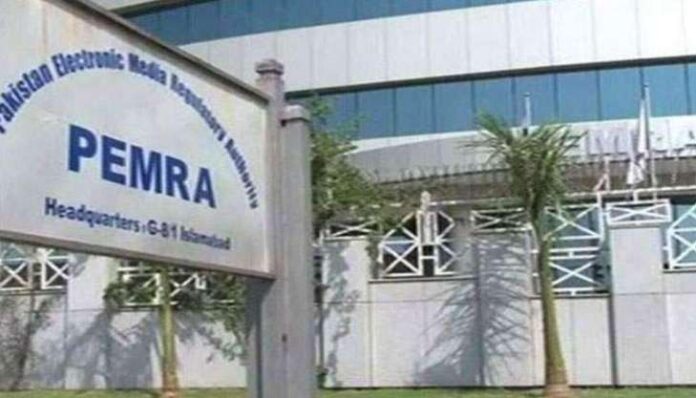
A landmark ruling by the Islamabad High Court (IHC) has declared the Rs. 32 billion demand notices issued by the Pakistan Electronic Media Regulatory Authority (PEMRA) to 23 television channels as fundamentally PEMRA levy illegal. This judicial intervention systematically corrects an overreach in regulatory fiscal policy, affirming that such levies must align strictly with established legal frameworks and directly correlate with oversight expenses. Consequently, this decision sets a critical precedent for media financial operations and regulatory precision within Pakistan’s rapidly evolving digital frontier.
The Translation: Deconstructing the Regulatory Framework
The core of this ruling clarifies the legal parameters for regulatory bodies like PEMRA. Specifically, PEMRA had issued notices in March 2022, seeking to collect five percent of channels’ annual advertisement income as a levy. This action was contested by the Pakistan Broadcasters Association (PBA) and various television channels, including Independent Media Corporation. The IHC meticulously analyzed the demand, concluding that revenue collection prior to the formal implementation of the PEMRA Rules, 2009, lacks legal authorization. Essentially, the court mandated that any regulatory charge must possess a clear, retroactive legal basis.
Furthermore, the 29-page ruling by Justice Saman Rafat Imtiaz highlighted a critical disconnect. PEMRA failed to demonstrate a reasonable and appropriate connection between the five percent charge on annual advertisement income and the actual expenses incurred in executing its regulatory duties. Therefore, most expenses detailed in PEMRA’s report could not be directly linked to the supervision or regulatory actions concerning licensed broadcasting entities. This structural deficiency in justification rendered the proposed PEMRA levy illegal under the principles of equitable and legally sound regulation. The court’s decision on the PEMRA levy illegal status will prevent future arbitrary charges.
Socio-Economic Impact: Calibrating Media Industry Stability
This judicial directive significantly impacts the daily operational dynamics for Pakistani television channels. Professionals in the media sector, from content creators to advertisers, can now operate with greater financial predictability. Prior to this ruling, the contested PEMRA levy illegal status created substantial financial burdens, potentially stifling investment in new programming and technological upgrades. Students aspiring to careers in media will observe a more stable industry, fostering innovation and growth.
Consequently, for households across urban and rural Pakistan, this decision indirectly supports the continued availability of diverse and high-quality programming. A financially stable media landscape allows channels to allocate resources towards improving broadcast quality, expanding regional content, and investing in journalistic integrity. In contrast, an unsustainable levy could have compelled channels to cut costs, potentially compromising content standards and public information access. This verdict thus stabilizes the financial baseline for a crucial public service.

The Forward Path: A Momentum Shift in Media Governance
This ruling represents a definitive Momentum Shift for media governance in Pakistan, rather than merely a stabilization move. The IHC’s precise articulation of regulatory fee legality establishes a robust framework that demands accountability and transparency from state institutions. It compels regulatory bodies to operate with calibrated precision, ensuring that fiscal demands are directly proportional to legitimate oversight functions. This decision acts as a catalyst for a more predictable and legally sound operational environment for the electronic media industry.
Ultimately, by clarifying the legal boundaries of financial demands, the court has fortified the structural integrity of media operations. This empowers media entities to invest with greater confidence, fostering an environment conducive to innovation and independent journalism. Therefore, the verdict is a strategic advancement towards a more mature and equitable regulatory ecosystem for Pakistan’s information infrastructure.








