
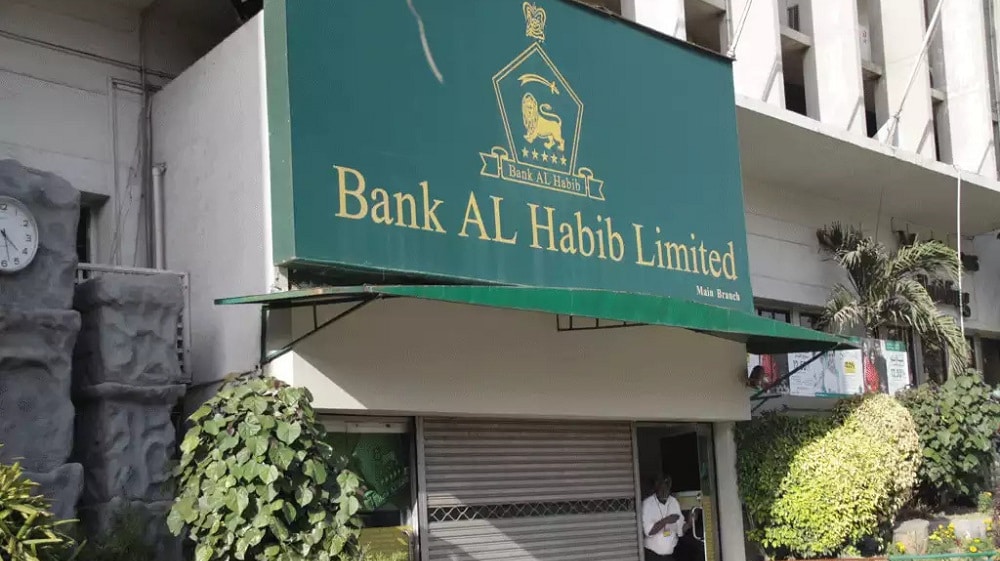
The operational trajectory of Pakistan’s financial infrastructure necessitates precise analysis. Consequently, Bank Al Habib (BAHL) has reported a significant profit decline, posting a consolidated profit-after-tax (PAT) of Rs. 32.46 billion in 2025. This represents a substantial 23 percent year-on-year (YoY) reduction, primarily driven by a calibrated decline in the policy rate and an increase in core operating expenses. Furthermore, the bank declared a final cash dividend of Rs. 4.5 per share for 4Q2025, adjusting the full-year Dividend Per Share (DPS) to Rs. 15.0, a decrease from Rs. 17.0 in 2024. This performance underscores the dynamic shifts within the national banking sector, highlighting the Bank Al Habib profit decline for the year.
The Translation: Deconstructing Bank Al Habib’s Financial Shifts
Understanding these financial metrics is crucial for stakeholders. The reported 23 percent YoY and 16 percent quarter-on-quarter (QoQ) earnings decline to Rs. 5.8 billion (EPS of Rs. 5.20) for 4Q2025 came in below market expectations. Specifically, industry analysts like Topline Securities pinpointed higher-than-anticipated operating expenses as a key differentiator. Moreover, non-interest expenses witnessed a 22 percent YoY and 4 percent QoQ surge, largely attributable to intensified marketing initiatives for remittances. This strategic expenditure elevated the bank’s cost-to-income ratio to 67 percent during 4Q2025, indicating increased operational leverage.
Net Interest Income (NII), a fundamental measure of banking profitability, registered Rs. 31.4 billion for 4Q2025. This figure reflects a 21 percent YoY and 5 percent QoQ decrease, fundamentally linked to a decline in asset yields. Interest earned by BAHL consequently contracted by 32 percent YoY and 7 percent QoQ, reaching Rs. 77 billion. In contrast, interest expenses also saw a reduction, decreasing by 38 percent YoY and 8 percent QoQ to Rs. 45 billion. Despite these pressures, non-interest income demonstrated resilience, growing by 3 percent YoY to Rs. 7.4 billion, primarily bolstered by robust foreign exchange earnings. However, a QoQ decline of 8 percent occurred due to losses on securities. The bank’s effective tax rate for 4Q2025 stood at 55 percent, a marginal improvement from 63 percent in 4Q2024.
The Socio-Economic Impact: Navigating Banking Performance Shifts
A decline in a major bank’s profitability carries structural implications for the broader economy and, consequently, for everyday Pakistani citizens. Firstly, a lower policy rate, while intended to stimulate economic activity, directly impacts savings returns. Households and individuals relying on fixed-income investments might experience reduced interest earnings, necessitating adjustments in personal financial planning. Furthermore, the increased operational costs borne by banks could translate into revised service charges or lending rates in the future, subtly influencing the cost of credit for small businesses and consumer loans. This environment demands strategic financial literacy for students and professionals alike, enabling them to navigate evolving market dynamics, especially in light of the Bank Al Habib profit decline.
For rural populations, where access to formal banking services is still developing, the stability and profitability of institutions like Bank Al Habib are foundational. Any shifts in bank performance can influence the pace of financial inclusion initiatives or the availability of microfinance. Conversely, for urban professionals, these financial results offer insights into the health of the banking sector, potentially impacting investment decisions or career prospects within the finance industry. The declaration of a reduced dividend per share also affects shareholders, including those who depend on investment income, thus influencing broader market sentiment.
The “Forward Path”: Assessing Structural Momentum Post-Financial Adjustments
The reported financial adjustments at Bank Al Habib in 2025 represent a Stabilization Move rather rather than a definitive Momentum Shift. While the 23 percent profit reduction is notable, it stems from systemic adjustments like policy rate recalibration and increased operational expenditure, which are often necessary for long-term institutional health and market positioning. The sustained growth in non-interest income, particularly from foreign exchange, indicates underlying resilience and diversified revenue streams. Furthermore, the strategic marketing investments, though contributing to higher expenses, are designed to fortify market presence in critical segments like remittances. This period allows the bank to re-calibrate its operational baselines and refine its strategic resource allocation in a dynamic economic environment, setting a foundation for future, more efficient growth. Pakistan’s financial sector requires such precise adjustments to maintain robust structural integrity.
Analyzing BAHL’s Market Valuation Metrics
Investors and market analysts continually assess a bank’s valuation through specific metrics. Bank Al Habib currently trades at a 2026E PE (Price-to-Earnings) ratio of 7.2x. Its PBV (Price-to-Book Value) ratio stands at 1.2x. Furthermore, the bank offers a dividend yield of 9.0 percent. These figures provide a baseline for evaluating its market performance against industry peers and its potential for future investor returns, particularly in light of the recently observed profit adjustments.








