

Optimizing Academic Infrastructure: The Sindh College Teachers Protest
A critical movement is underway in Sindh’s educational landscape. College teachers across the province have initiated a significant boycott of academic activities, escalating their demands for fundamental reforms. Led by the Sindh Professors and Lecturers Association (SPLA), this action highlights long-standing issues concerning promotions, staffing, and allowances. This Sindh College Teachers Protest emphasizes the urgent need for a calibrated approach to enhance provincial educational standards and faculty welfare. The association plans a sit-in outside Bilawal House in Karachi on February 12, asserting their call for decisive government intervention after over a month of unaddressed grievances. The escalating Sindh College Teachers Protest underscores a vital demand for systemic improvement.
The Translation: Deconstructing Faculty Demands for Systemic Improvement
The core of the teachers’ grievances stems from identified systemic administrative inefficiencies. The SPLA’s primary demands are structural, focused on improving career progression and operational efficacy. These include:
- Implementing the five-tier formula for promotions, ensuring clear career pathways.
- Convening Departmental Promotion Committees to fill thousands of vacant lecturer posts, addressing a critical deficit in instructional capacity.
- Holding essential Board-I and Board-II meetings, crucial for policy implementation and administrative oversight.
- Revising sanctioned staff strength based on data-driven student-teacher ratios, ensuring optimal learning environments.
- Establishing new colleges, strategically located to meet the evolving provincial educational needs and expand access.
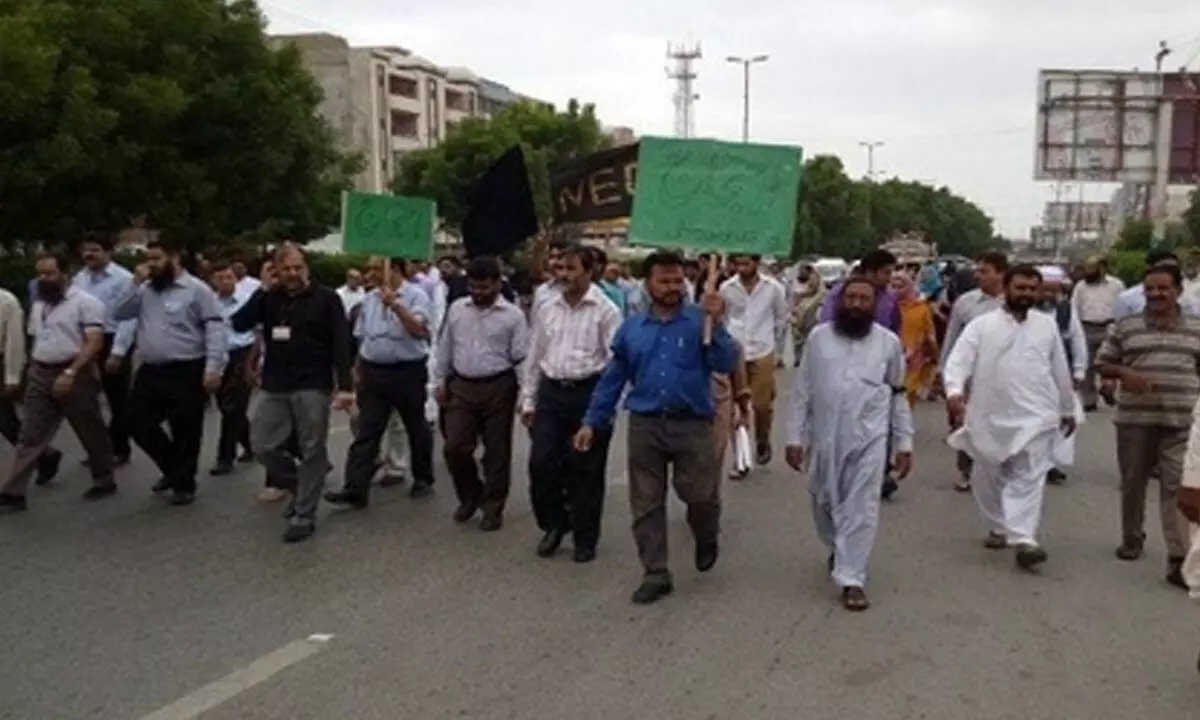
Furthermore, the demands extend to operational and professional welfare improvements. Teachers are actively pushing for fair and transparent transfer policies, alongside the immediate hiring of crucial non-teaching support staff. They also call for a significant upgrade to existing college infrastructure, encompassing modern furniture and state-of-the-art laboratory equipment. Moreover, the SPLA emphasizes the critical need for providing up-to-date textbooks, particularly for specialized subjects such as computer science, commerce, and various arts disciplines. Finally, the association seeks merit-based appointments, the restoration of frozen allowances, and the consistent payment of MPhil and PhD allowances, as mandated by legal rulings. These measures are designed to ensure equity, professional recognition, and a high-functioning academic system. Addressing these concerns is central to resolving the ongoing Sindh College Teachers Protest.
The Socio-Economic Impact: Calibrating Education for Every Pakistani Citizen
This escalating Sindh College Teachers Protest directly impacts the daily lives of countless Pakistani citizens, particularly students, aspiring professionals, and households across urban and rural Sindh. For students, the absence of teachers and the lack of proper infrastructure translate directly into disrupted learning, delays in academic progression, and a compromised quality of education. Consequently, this can impede their future career prospects and diminish their potential contribution to national development. For aspiring professionals, the current scarcity of vacant lecturer posts means fewer opportunities for employment and career advancement within the vital academic sector. This also affects the broader economy by limiting the pool of qualified educators essential for cultivating a robust, skilled workforce.
Households, in turn, bear the brunt of an underperforming educational system. They make significant investments in their children’s future, expecting quality instruction that competently prepares them for a competitive global landscape. When teachers protest due to unaddressed grievances, it signals a systemic instability that erodes public trust in these foundational institutions. Ultimately, resolving these structural issues is not merely about faculty welfare; it is about establishing a high baseline for educational excellence. This, in turn, empowers every young Pakistani to contribute meaningfully to national progress, directly impacting the future human capital of Sindh and, by extension, the entire nation. The resolution of the Sindh College Teachers Protest is pivotal for this advancement.
The “Forward Path”: A Momentum Shift Towards Educational Efficacy
This current protest, while inherently disruptive to academic operations, unequivocally represents a crucial “Momentum Shift” rather than a mere “Stabilization Move.” It indicates that the academic workforce is proactively advocating for a more efficient and equitable educational system. The persistence of these calibrated demands, culminating in the imminent sit-in, underscores the pressing urgency for resolution. This situation presents a critical opportunity for the provincial government and the College Education Department to engage in strategic, decisive dialogue. A proactive and timely response, involving the implementation of these proposed reforms, would serve as a powerful catalyst for genuine educational progress. Conversely, ignoring these fundamental structural issues risks further destabilizing the entire educational foundation, which is paramount for Pakistan’s sustained socio-economic development and global competitiveness. The Sindh College Teachers Protest serves as a clear indicator for necessary systemic reforms.









