

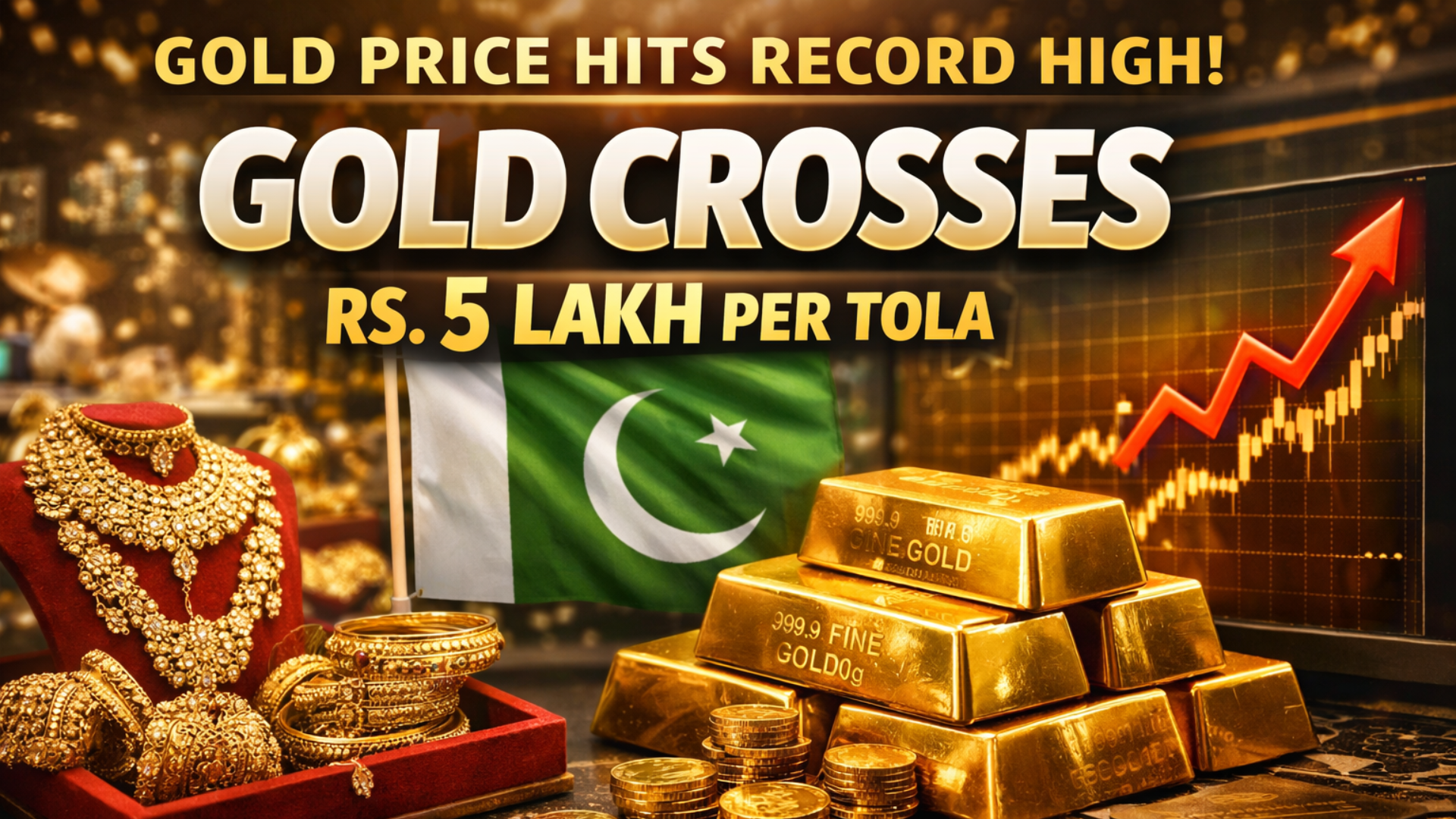
Pakistan’s financial landscape has observed a significant shift; the Gold Price Pakistan has critically risen above the Rs. 5 lac benchmark per tola, signaling a notable market recalibration. This strategic increase follows a global rebound, impacting both gold and silver valuations. Consequently, understanding these dynamics is crucial for economic stability and individual financial planning across the nation.
After a three-day period of decline, precious metal prices demonstrated a strong resurgence in both international and Pakistani markets. This calibrated upturn reflects broader economic indicators and investor confidence shifts. Locally, the price of per tola gold experienced a substantial increase of Rs. 24,000, reaching a new baseline of Rs. 514,362. Furthermore, the price of 10 grams of gold escalated by Rs. 20,576, now valued by the Gold Price Pakistan at Rs. 440,982. The 22-karat gold variant also saw an increase, quoted at Rs. 404,248 per 10-gram, underscoring a systemic market adjustment.
The Translation: Decoding the Surging Gold Price Pakistan
This recent surge in gold valuation signifies more than just numerical changes; it reflects a complex interplay of international market forces and domestic economic conditions. When global spot gold traded near $4,921 an ounce—a significant 3.11 percent increase—it creates a ripple effect. This global upward momentum directly influences local commodity markets, necessitating a proportional adjustment in Pakistani gold rates. Therefore, the local increase is not isolated but structurally linked to broader, external market behaviors affecting the overall Gold Price Pakistan.
Furthermore, silver prices have also moved higher in a correlative pattern. The price of per tola silver climbed by Rs. 741, reaching Rs. 9,146. This concurrent rise in precious metals suggests a collective investor response to perceived economic uncertainties or inflationary pressures. Consequently, understanding these calibrated movements is essential for stakeholders analyzing market resilience and investment strategies within Pakistan.
Socio-Economic Impact: Daily Life Amidst Rising Gold Prices
The escalating cost of gold directly impacts the daily lives of Pakistani citizens, from urban professionals to rural households. For families, the traditional role of gold as a primary investment or a significant component of wedding dowries becomes more challenging. This price hike means a higher financial burden for those planning such events, potentially delaying purchases or necessitating alternative financial strategies. Students from economically diverse backgrounds, observing these market trends, gain crucial insights into real-world economic volatility. Furthermore, the stability of the Gold Price Pakistan is a constant concern for many.
Moreover, local businesses engaged in jewelry manufacturing and retail face revised operational costs and fluctuating consumer demand. This necessitates strategic pricing adjustments and inventory management to maintain profitability. Conversely, individuals who hold gold as an asset may experience an appreciation in their wealth, influencing their purchasing power and investment decisions. Thus, the gold market’s volatility serves as a tangible economic indicator affecting diverse segments of the population.
The Forward Path: Momentum Shift or Stabilization Move for Pakistan’s Economy?
This recent surge in Pakistan’s gold market represents a significant economic event, and its classification—as either a “Momentum Shift” or a “Stabilization Move”—requires precise analysis. Given the substantial increase following a period of decline and its correlation with global trends, this development is more accurately termed a Stabilization Move. It reflects the market’s attempt to find a new equilibrium after prior corrections, rather than initiating a completely new trajectory of sustained growth or decline.
The market is recalibrating, absorbing external influences and adjusting domestic valuations to reflect current global economic baselines. While the immediate impact is a higher price point, this structural adjustment aims to restore market confidence and predictability. Therefore, this strategic shift offers a period of re-evaluation for investors and policymakers, focusing on long-term systemic robustness rather than short-term speculative gains. It is a necessary recalibration for the nation’s economic framework.








