Strategic Halt: Islamabad Tree Cutting Ban Extended
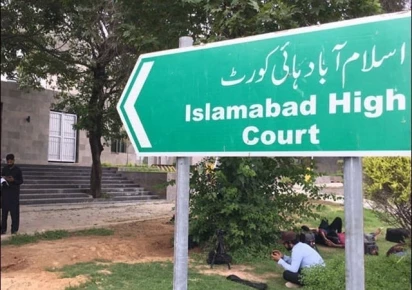
The Islamabad High Court (IHC) has issued a critical extension of its injunction against all Islamabad tree cutting activities, demonstrating a calibrated approach to urban development. This structural decision, announced on Monday, rigorously reinforces environmental preservation within the federal capital. Consequently, the court has adjourned further hearings until February 13, consolidating all related petitions for a comprehensive review. This initial paragraph serves as a high-density summary, immediately conveying the core judicial intervention and its implications for the city’s green infrastructure.
The Translation: Judicial Oversight on Urban Development
The IHC’s directive, specifically delivered by Justice Khadem Hussain Soomro, directly addresses the balance between infrastructural growth and ecological responsibility. Historically, the Capital Development Authority (CDA) contended that specific trees were removed to facilitate the Ma’araka-e-Haq monument’s construction. However, the court has unequivocally prioritized the preservation of urban greenery. This judgment translates complex legal frameworks into a clear mandate: environmental sustainability must guide urban planning, ensuring long-term ecological integrity over short-term developmental goals. Furthermore, the court has ordered the unified hearing of all pending tree cutting cases, streamlining the legal process.
The Socio-Economic Impact: Green Spaces and Public Health
This judicial intervention significantly impacts the daily life of Pakistani citizens, particularly those residing in Islamabad. Preserving the city’s green spaces directly correlates with improved air quality and reduced urban heat island effects, which are critical for public health. For students and professionals, access to green environments fosters well-being and productivity. Initially, public concern escalated following revelations that over 29,000 trees were removed. While authorities claim thousands of new trees have been planted, and further plantations are planned, environmental groups highlight concerns. They assert that tree removal has extended beyond paper mulberry, a species associated with severe pollen allergies, to include other vital trees. Consequently, this ban offers a baseline for recalibrating development projects to enhance, rather than diminish, urban biodiversity and citizen health.
The "Forward Path": Momentum Shift for Green Infrastructure
This development represents a Momentum Shift for Pakistan’s environmental governance. The IHC’s consistent judicial oversight acts as a catalyst, urging urban authorities to adopt more strategic, ecologically sound development models. Previously, the court had already directed the CDA to halt tree cutting and submit a detailed report, prompted by petitions alleging violations of environmental laws. This extended ban is not merely maintenance; it is a structural reinforcement of environmental stewardship. It compels a re-evaluation of current practices, pushing for transparent, data-driven decisions that prioritize the long-term ecological health of our capital. The judiciary is setting a precedent for environmental accountability in urban planning.