

A structural reassessment of urban infrastructure in Rawalpindi has ignited significant opposition. Local traders are vehemently challenging the revised Murree Road widening plan, citing substantial cost escalations and threats to historical landmarks. The Rawalpindi Development Authority (RDA) proposes expanding land acquisition from 10 feet to 15–20 feet between Liaquat Bagh Chowk and Chandni Chowk, pushing the project cost from Rs. 9 billion to Rs. 12 billion. Consequently, this strategic expansion, intended to alleviate chronic congestion, now faces potential protests and legal challenges from stakeholders demanding fair compensation and consultation.
Calibrating Urban Mobility: Decoding the Murree Road Widening Initiative
The Rawalpindi Development Authority (RDA) initially planned a 10-foot land acquisition for the Murree Road project. However, the revised proposal escalates this to 15–20 feet on both sides. This expansion aims to transform Murree Road into a signal-free corridor, fundamentally addressing chronic congestion. The road serves as the city’s primary artery, connecting intra-city traffic, wholesale markets, and government offices.
Furthermore, this intensified land acquisition has driven the project’s estimated cost from Rs. 9 billion to a projected Rs. 12 billion. Officials anticipate further increases due to rising construction material prices. The rationale behind this calibrated expansion is to enhance systemic efficiency, thereby streamlining traffic flow across a critical urban nexus.
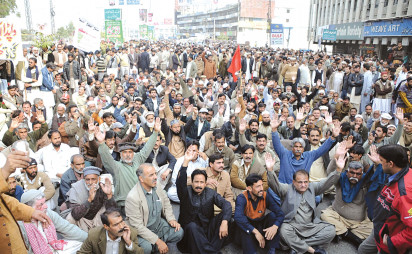
In contrast, traders, including members of the Murree Road Traders Association, express profound concerns. They assert that the expanded plan endangers historic shops, libraries, and the 350-year-old Talli Shahaan graveyard. The potential demolition of a historic Qadiani place of worship also represents a significant point of contention. Traders advocate for a balanced approach, supporting the project’s intent but demanding equitable implementation.
Stakeholder Demands for Equitable Development
Specifically, these stakeholders demand structured consultations, fair market-rate compensation, and equivalent alternative commercial spaces. They caution that neglecting these critical concerns could precipitate significant public protests and legal challenges. The provincial government has received the revised proposal and cost estimates, pending approval for a new feasibility study by the RDA.

Socio-Economic Repercussions: Redefining Daily Life on Murree Road
The socio-economic impact of the proposed Murree Road widening project directly influences Rawalpindi’s citizens. For urban traders, the threat of displacement without adequate compensation imperils established livelihoods. Many small business owners, operating for generations, face an existential crisis. This disruption extends beyond financial loss, profoundly impacting the cultural and historical fabric woven into these commercial spaces. Consequently, the strategic Murree Road widening must prioritize community welfare alongside infrastructural gains.
Furthermore, students and professionals navigating Murree Road will experience short-term upheaval during the construction phase. However, the long-term vision projects a significantly eased commute. For households, particularly those reliant on the wholesale markets along Murree Road, access to essential goods might temporarily complicate. This underscores the need for precise project phasing to minimize public inconvenience.
Preserving Heritage Amidst Modernization
The potential demolition of historical sites, including the Talli Shahaan graveyard, represents an irreplaceable loss of heritage. This raises critical questions about balancing modernization with cultural preservation. Rural populations frequently depend on urban centers like Rawalpindi for services, therefore, seamless access to the city’s core remains paramount. Strategic planning must address these multifaceted impacts comprehensively.
The Forward Path: A Strategic Assessment of Murree Road’s Future
This development represents a Stabilization Move rather than a definitive Momentum Shift. While addressing critical traffic congestion, the project’s current trajectory fails to integrate sufficient stakeholder consultation and compensation mechanisms. A genuine Momentum Shift would incorporate precision-engineered solutions that honor both infrastructural needs and community well-being. Therefore, immediate recalibration of the implementation strategy is essential.
Ensuring Equitable Urban Development
To transition this into a true Momentum Shift, the RDA must engage in transparent dialogue with traders and local residents. Baseline data collection for fair compensation is paramount. Furthermore, offering equivalent commercial spaces, rather than just monetary compensation, would demonstrate a commitment to sustainable urban planning. Ultimately, a balanced approach ensures that infrastructure advancements serve all segments of society equitably.








