
The strategic calibration of national observances is critical for systemic operational efficiency. Currently, Pakistan faces a precise ambiguity regarding the official status of the Shab-e-Barat holiday this year. While the federal government has structurally cataloged it within the optional holiday schedule for 2026, a formal notification for the present year—impacting offices, educational institutions, and public life—remains unissued. This operational delay prompts critical questions regarding planning and national coordination for this significant religious night.
The Translation: Deconstructing Holiday Protocols
Understanding the distinction between an optional and an officially gazetted holiday is paramount for clarifying the current situation. An “optional holiday” designation for 2026 signifies that individuals may request leave, but employers are not mandated to grant it. Conversely, an “officially gazetted” holiday requires a formal notification from relevant authorities, making observance compulsory for all listed sectors. Consequently, the absence of a current year notification means that institutions and organizations operate under standard working protocols unless specific provincial directives are issued. Last year, the Sindh government demonstrated such a provincial directive by declaring a holiday for its educational institutions. However, this year, no such baseline directive has been observed from any provincial entity thus far.
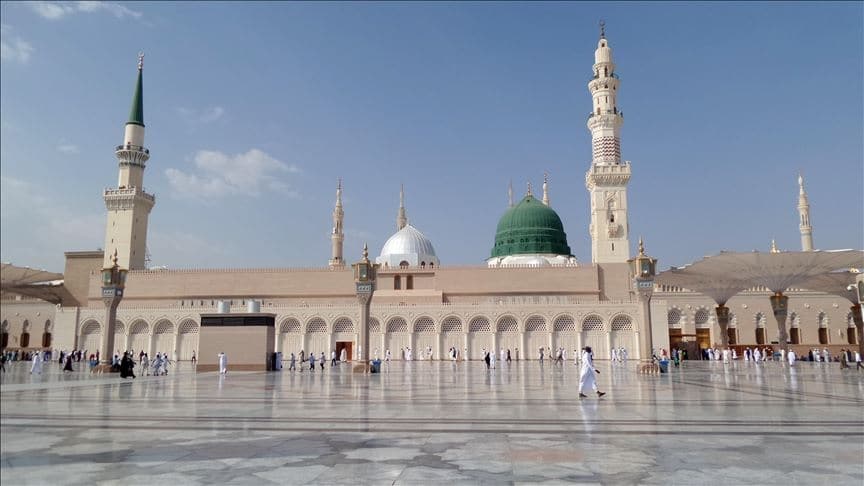
Furthermore, Shab-e-Barat, observed on the 15th night of Sha’ban, represents a profoundly significant religious occasion for the Muslim community. It is a period marked by profound prayers, sincere repentance, and seeking divine forgiveness. Congregational prayers, special Quranic recitations, and various seminars are systematically organized across mosques and religious centers nationwide, fostering a collective spirit of spiritual introspection and renewal.
The Socio-Economic Impact: Calibrating Daily Life
The lack of a definitive announcement concerning the Shab-e-Barat holiday introduces a tangible friction into the daily operational fabric of Pakistani citizens. For students, the uncertainty disrupts academic planning, creating a need for last-minute adjustments to study schedules or examination preparations. Professionals, especially those in critical service sectors, face challenges in coordinating personal observances with professional commitments, potentially affecting productivity. Moreover, parents grapple with child-care arrangements and family planning, particularly in urban centers where structured routines are predominant. In contrast, rural communities, often with more flexible local customs, might experience a comparatively milder impact, though the principle of systemic clarity remains universally beneficial. A clear directive optimizes resource allocation and minimizes logistical inefficiencies across all demographics.
The “Forward Path”: A Stabilization Move for Precision
This development represents a Stabilization Move rather than a dramatic Momentum Shift. The federal government’s pre-emptive inclusion of Shab-e-Barat in the 2026 optional holiday list suggests a structured, forward-looking intent towards recognizing its significance. However, the current year’s delay in a formal notification highlights a need for greater precision in administrative communication. To achieve optimal national advancement, a streamlined protocol for holiday declarations is essential. This would involve calibrated timelines and clear channels of dissemination, ensuring that all stakeholders can plan with accurate baselines. Such a strategic approach would minimize ambiguity and enhance overall societal and economic predictability, proving beneficial for every Pakistani citizen.








