

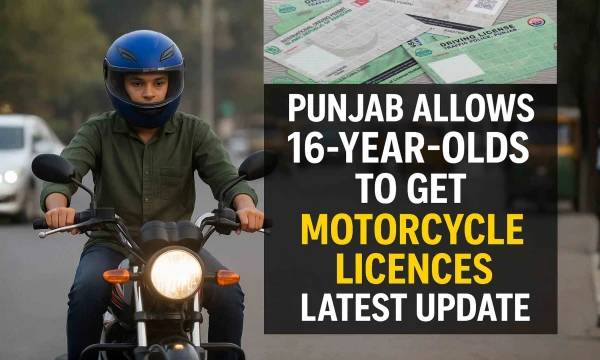
A pivotal legislative advancement in Punjab now permits 16-year-olds to legally operate motorcycles, introducing a structured Juvenile Driving Permit system. This strategic amendment to the Motor Vehicles Ordinance 1965 aims to significantly enhance road safety, reduce unlicensed underage driving, and minimize traffic accidents across the province. Consequently, this initiative establishes a new baseline for youth mobility and regulatory oversight in Pakistan.
Structural Shift: Defining the New Framework
The Punjab Assembly’s Standing Committee on Interior has precisely approved the Motor Vehicles Amendment Bill 2026. This approval signals a structural recalibration of policies concerning motorcycle operation by minors. Specifically, individuals aged 16 will now possess the legal authorization to ride motorcycles. Furthermore, the committee sanctioned the implementation of a Juvenile Driving Permit for underage riders, thereby establishing a distinct and formally structured legal framework for individuals aged 16 to 18 years.
The Translation (Clear Context)
This legislative move effectively codifies a pathway for younger citizens to engage with motorized transport under specific conditions. Previously, legal operation was restricted to older age groups. The ‘Juvenile Driving Permit’ is not merely a standard license; it represents a specialized certification. It integrates targeted oversight and safety protocols, distinguishing it from conventional adult driving permits. Consequently, this ensures that the developmental stage of the rider is critically factored into their authorization.
Precision Management: Mitigating Risks and Enhancing Safety
The proposed legislation mandates strict adherence to specific conditions, supervision mechanisms, and safety regulations, enforced by the relevant licensing authority issuing these juvenile permits. This proactive measure strategically targets the escalating issue of unlicensed underage driving, aiming for a measurable reduction in traffic accidents. Moreover, this amendment structurally improves road safety within the province by embedding accountability and adherence into youth driving practices. The Motor Vehicles Ordinance 1965 receives critical updates through these provisions, aligning it with contemporary road safety imperatives.
The Socio-Economic Impact
This policy shift significantly impacts the daily life of Pakistani citizens, particularly students and young professionals in both urban and rural settings. For a 16-year-old student, it means calibrated independence, allowing legal access to transport for educational or vocational pursuits. For households, it could streamline commutes and access to essential services, particularly where public transport options are limited. However, it also places a heightened responsibility on parents and guardians to ensure compliance with new safety regulations, fostering a culture of disciplined road use from a younger age. This decision strategically opens pathways for enhanced youth mobility, yet it simultaneously elevates the collective responsibility for road safety across communities.
Strategic Trajectory: Navigating the Forward Path
Following the committee’s rigorous approval, the bill will now advance to the Punjab Assembly. Upon receiving final legislative consent, this amendment will be formally enacted as law. This progression underscores a disciplined commitment to modernizing vehicular regulations. It represents a deliberate, architectural step towards a more organized and safer road environment, integrating the region’s youth into a regulated system.
The “Forward Path” (Opinion)
This development unequivocally represents a Momentum Shift. By formalizing the framework for 16-year-olds in Punjab to ride motorcycles, the government is not merely maintaining the status quo. Instead, it is actively adapting legislation to current socio-economic realities while simultaneously instituting specific mechanisms for safety and accountability. This strategic recalibration empowers youth with regulated mobility and simultaneously constructs a more robust, data-driven approach to road safety. It’s a precise move that positions the province for greater systemic efficiency in traffic management and youth integration.









