
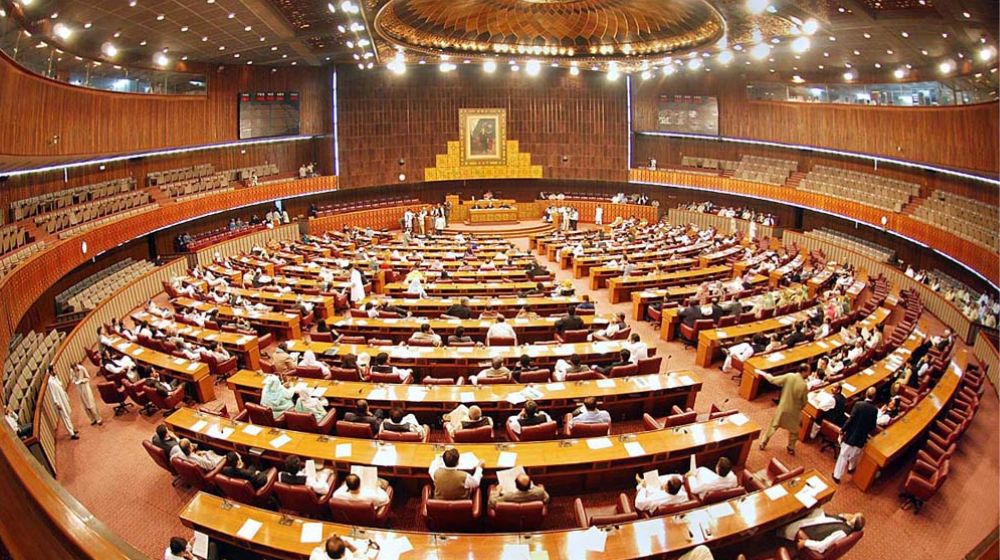
Pakistan’s digital infrastructure is currently undergoing a rigorous stress test, with a significant surge in online scams directly impacting high-profile individuals. A recent Senate committee briefing revealed that over a dozen senators and MNAs have become targets of sophisticated cyber criminals, facing financial fraud, identity theft, and online harassment. This systemic vulnerability underscores an urgent need for enhanced digital security protocols nationwide, establishing a new baseline for cyber defense and citizen protection in Pakistan.
The Translation: Decoding Pakistan’s Digital Vulnerabilities
The National Cyber Crime Investigation Agency (NCCIA) recently presented compelling data to the Senate Standing Committee on Interior. Their findings indicate a calibrated increase in cyber attacks, with public representatives increasingly targeted. Consequently, these incidents highlight not only individual financial losses but also a broader national security concern regarding digital trust and integrity. Furthermore, the pervasive nature of online scams demands a comprehensive and unified response to safeguard national digital assets. It is imperative to understand the structural mechanisms behind these sophisticated digital incursions.

Multiple parliamentarians reported being manipulated into transferring substantial funds, while others experienced unauthorized misuse of their personal online identities. While the NCCIA has secured arrests in several cases, active investigations persist to apprehend all implicated suspects. This proactive enforcement demonstrates a commitment to establishing accountability within the digital domain.
Case Studies: Precision Targeting by Cyber Criminals
- Senator Falak Naz Chitrali: Allegedly defrauded of Rs. 485,000 by an individual impersonating the CEO of Shaukat Khanum Memorial Hospital. Prompt arrests led to the recovery of funds, a testament to rapid response capabilities.
- Senator Bilal Ahmed Mandokhail: Targeted by callers masquerading as a provincial governor, demonstrating the psychological engineering employed by fraudsters.
- Sahibzada Hamid Raza: Experienced a fraudulent extraction of Rs. 490,000, further illustrating the financial scale of these illicit operations.
- Online Harassment & Defamation: Senator Faisal Rehman, MNA Raja Khurram Nawaz, and Naz Baloch were subjected to malicious online content, highlighting the non-financial dimensions of cyber warfare.
- Identity Impersonation: A fake social media account was structurally engineered using the likeness of Deputy Chairman Senate Syedaal Khan. Additionally, Senator Palwasha was deceived through an online "investment" scheme, revealing diverse attack vectors.
The Socio-Economic Impact: Fortifying Citizen Trust in the Digital Sphere
These incidents of online scams extend far beyond the high-profile victims, creating widespread apprehension among Pakistani citizens. For students, professionals, and households in both urban and rural Pakistan, this translates into a tangible erosion of trust in digital platforms. Consequently, individuals become more hesitant to engage in online transactions, educational pursuits, or professional networking, impeding the nation’s digital growth trajectory. This scenario directly impacts digital literacy initiatives and the broader adoption of e-governance solutions, stifling potential socio-economic benefits.

The pervasive nature of cybercrime demands a robust, multi-layered defense strategy. When citizens perceive their digital interactions as inherently risky, the foundational pillars of a cashless economy and accessible digital services begin to destabilize. Therefore, strengthening cyber security is not merely a technical exercise; it is a strategic imperative for fostering economic resilience and social stability across all demographics.
The Forward Path: Strategic Interventions for Digital Resilience
The NCCIA’s operational capacity is under review, with Director General Irfanullah reporting 157,000 complaints received nationally. From these, 6,029 cases were formally registered, and 65,431 complaints transitioned into active inquiries. This volume unequivocally indicates the pervasive nature of online scams across the populace, extending beyond legislative bodies. The agency, despite resource constraints, continues its mission to mitigate these threats.
Systemic Challenges: The Account Renting Vector
A critical enabling factor for financial fraud is the illicit practice of individuals "renting out" their bank accounts. These account holders receive minimal commissions, while cyber criminals exploit these accounts as conduits for laundered funds. The Minister of State for Interior has explicitly communicated this structural vulnerability, advocating for targeted policy reforms.
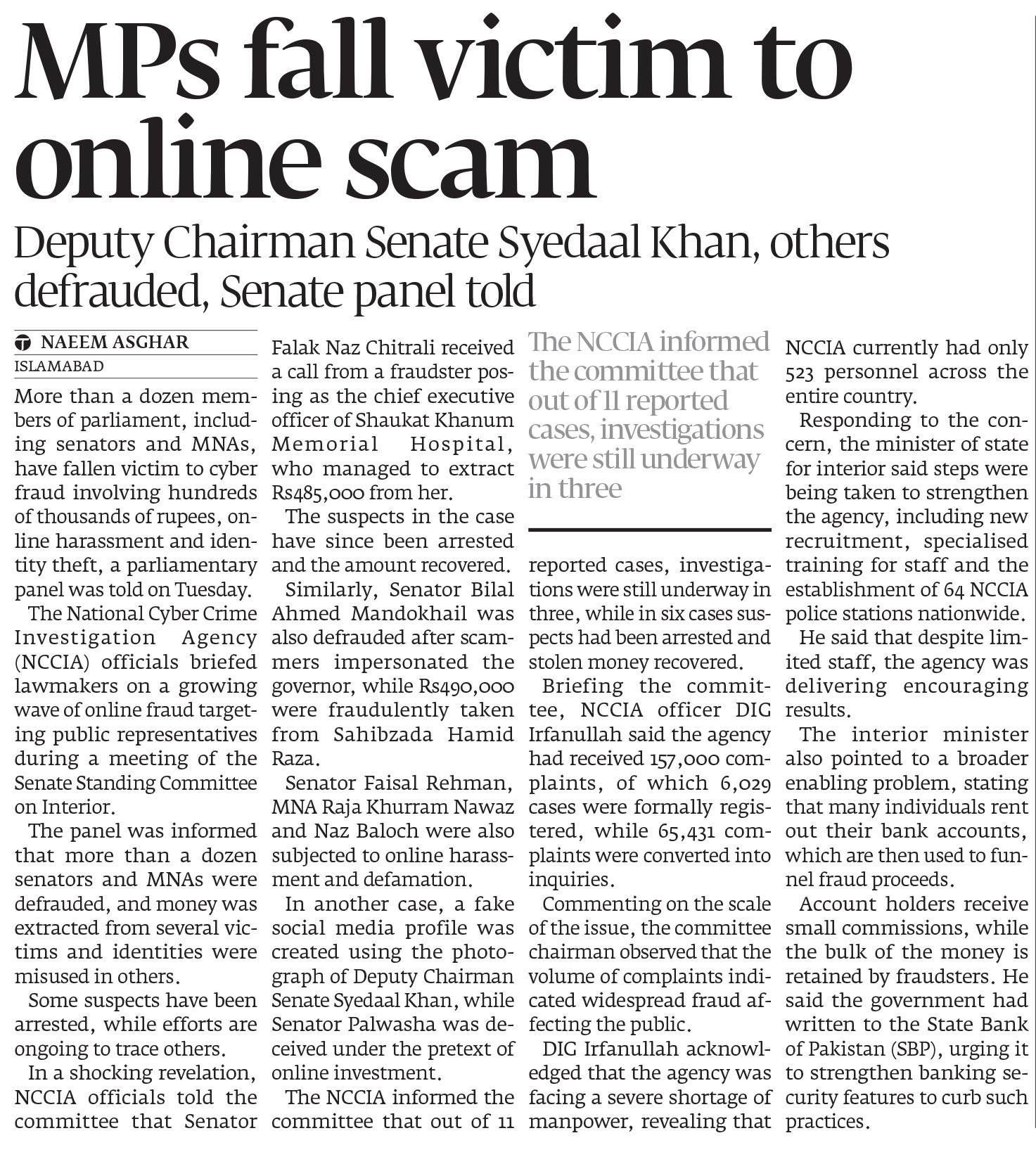
The government has strategically engaged the State Bank of Pakistan (SBP), urging the implementation of more stringent banking security protocols. These measures aim to systematically dismantle the infrastructure supporting such abuse, thus protecting citizens and stabilizing the financial system. Furthermore, steps are underway to bolster the NCCIA’s capabilities through strategic recruitment, specialized training programs, and the establishment of 64 new NCCIA police stations nationwide, signifying a "Momentum Shift" towards a more secure digital future.








