

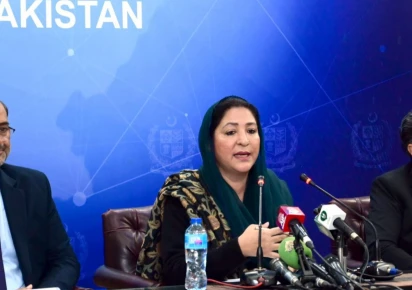
Pakistan’s Higher Education Commission (HEC) has strategically launched the Maktab digital records system, a foundational step toward comprehensive academic data management. This innovative platform meticulously tracks student enrolment, grades, transcripts, and degrees, signaling a calibrated advancement in national educational infrastructure. Federal Education Minister Wajiha Qamar recently announced this initiative, emphasizing its pivotal role in enhancing transparency and operational efficiency across the nation’s universities. Initially deployed in 25 public universities, the system projects a phased expansion to encompass all public higher education institutions, thereby standardizing data integrity and access.
What is the Maktab Digital Records System?
The Maktab system represents a structural upgrade to Pakistan’s academic ecosystem. Essentially, it centralizes all student academic journeys onto a single, secure digital portal. Minister Qamar highlighted the integration of artificial intelligence (AI) to ensure both secure and highly efficient system management. Furthermore, this platform rigorously strengthens accountability measures and digital tender scrutiny, ensuring transparent operational frameworks within educational institutions. Consequently, students and parents can now directly register complaints through integrated e-katcheries and digital portals, thereby significantly improving oversight and service delivery mechanisms for these Maktab digital records.
The Translation: Streamlining Academic Processes
This initiative translates into a significant reduction in bureaucratic friction. Historically, managing academic records involved manual processes prone to delays and inconsistencies. The Maktab system eliminates these inefficiencies by digitizing the entire lifecycle of a student’s academic journey, from initial admission to final degree issuance. Moreover, the Inter Board Coordination Commission (IBCC) has concurrently implemented a 24-hour online system for equivalence and verification, further streamlining international board registrations. This dual advancement establishes a baseline for rapid, verifiable academic data exchange, directly impacting the accuracy of Maktab digital records.
Strategic Objectives of Maktab:
- Enhanced Transparency: Provides a clear, immutable record of academic progress.
- Time Efficiency: Reduces processing times for transcripts and degrees.
- Streamlined Tracking: Offers a singular portal for comprehensive student academic data.
- Improved Accountability: Establishes digital oversight for institutional operations.
- Accessibility: Facilitates direct complaint registration for stakeholders.
The Socio-Economic Impact: Empowering Pakistani Citizens
This digital transformation profoundly impacts the daily lives of Pakistani citizens, particularly students and professionals. For students, the Maktab digital records system means faster access to verified academic documents, which is critical for higher education admissions, scholarships, and employment opportunities both domestically and internationally. Professionals benefit from a more efficient verification process for their credentials, accelerating career progression. Furthermore, households in urban and rural Pakistan will experience reduced administrative burdens and costs associated with document procurement and verification. This calibrated move fundamentally supports a more agile and responsive educational ecosystem, fostering greater trust and reliability in academic certifications.
The “Forward Path”: A Momentum Shift for National Advancement
The launch of the Maktab system unequivocally represents a Momentum Shift for Pakistan’s educational and digital landscape. It transcends mere maintenance, pushing the nation towards a more integrated and technologically advanced future. Minister Qamar’s emphasis on these reforms as part of a broader effort to modernize Pakistan’s education system underscores a strategic vision. This development directly improves quality and strengthens the country’s international standing by aligning its academic infrastructure with global best practices. Ultimately, this initiative serves as a catalyst for digital literacy and data-driven governance within higher education, positioning Pakistan for sustained intellectual growth.








