

Optimizing Household Resilience: The Punjab Ramadan Package
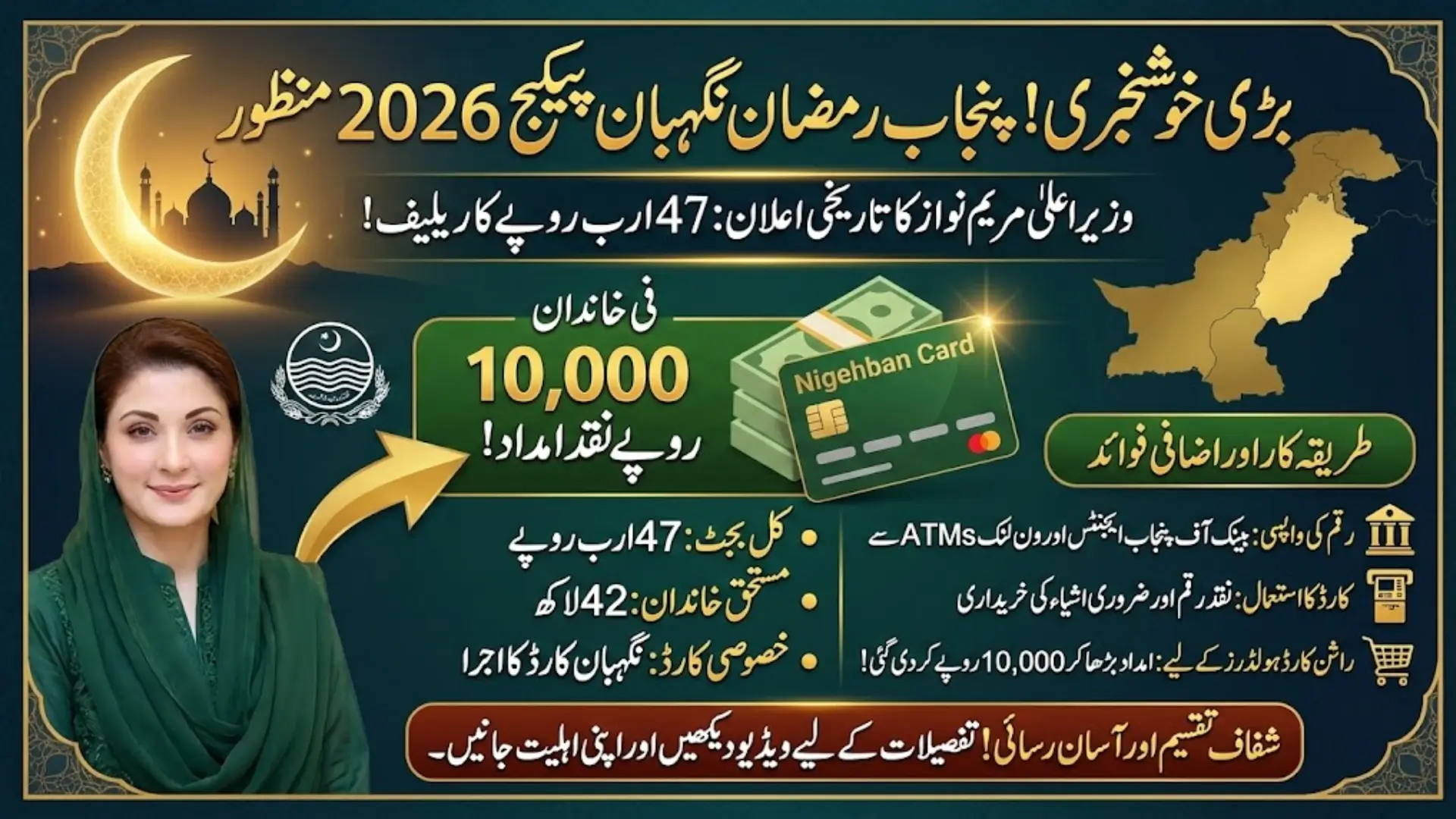
The Punjab government has strategically allocated a substantial Rs. 47 billion Punjab Ramadan Package, designed to provide critical financial assistance to 4.2 million deserving families across the province during the holy month. This precision initiative, finalized under the leadership of Chief Minister Maryam Nawaz, represents a calibrated effort to enhance household economic stability. Ultimately, this program directly injects vital resources into communities, ensuring fundamental support during a period of heightened need.
The Translation: Structural Support for Vulnerable Households
This comprehensive Punjab Ramadan Package is not merely a handout; it is a meticulously structured financial intervention. Specifically, the government will disburse Rs. 10,000 to each eligible family. Furthermore, authorities are issuing over two million ‘Nigehban Cards.’ These cards serve as a digital conduit, enabling beneficiaries to access cash assistance and procure essential commodities efficiently. This systematic approach streamlines distribution, contrasting sharply with previous, less integrated relief efforts. Consequently, the program aims to establish a reliable baseline of support, ensuring resources reach the intended recipients without operational friction.
Operationalizing Efficiency: Access and Monitoring
The operational framework for the Punjab Ramadan Package prioritizes accessibility and transparency. The Nigehban Cards facilitate cash withdrawals through a vast network. This includes Bank of Punjab branchless banking agents and ATMs connected to the One-Link network. To ensure seamless activation, the government plans to establish 136 dedicated card activation centers throughout Punjab. In contrast to traditional, often opaque distribution models, a new ‘Ramadan Nigehban Dashboard’ will monitor and verify the entire distribution process. This digital oversight ensures accountability and reduces potential inefficiencies. Earlier, ration card holders received Rs. 3,000 monthly; this package strategically elevates that support to Rs. 10,000 during Ramadan.
The Socio-Economic Impact: Bolstering Community Foundations
This strategic financial injection profoundly impacts the daily lives of Pakistani citizens, particularly students, professionals, and households in both urban and rural settings. For many families, this Rs. 10,000 allocation represents a significant buffer against inflationary pressures, directly easing the burden of acquiring essential food items and managing household expenses during Ramadan. Students from underprivileged backgrounds may find their families better equipped to support their educational needs, reducing immediate financial stress. Moreover, this direct aid stimulates local economies, as funds are disbursed and spent within communities, creating a localized multiplier effect. Consequently, this initiative stabilizes the foundational economic units of our society, fostering a greater sense of security and well-being across diverse demographics.
The Forward Path: A Stabilization Move for Economic Equity
This development represents a Stabilization Move. While ambitious, it primarily addresses immediate economic vulnerabilities and cost-of-living challenges during a critical period. It strategically maintains a baseline of economic equity, preventing further erosion of purchasing power for millions. However, to achieve a true “Momentum Shift” towards sustainable prosperity, future initiatives must integrate longer-term structural reforms. These reforms should focus on wealth creation, skill development, and robust economic diversification, rather than solely on direct financial transfers. This package is a critical, well-executed tactical response, yet it underscores the ongoing necessity for comprehensive, strategic economic planning beyond immediate relief.








