
The Digital Fortification of Islamabad
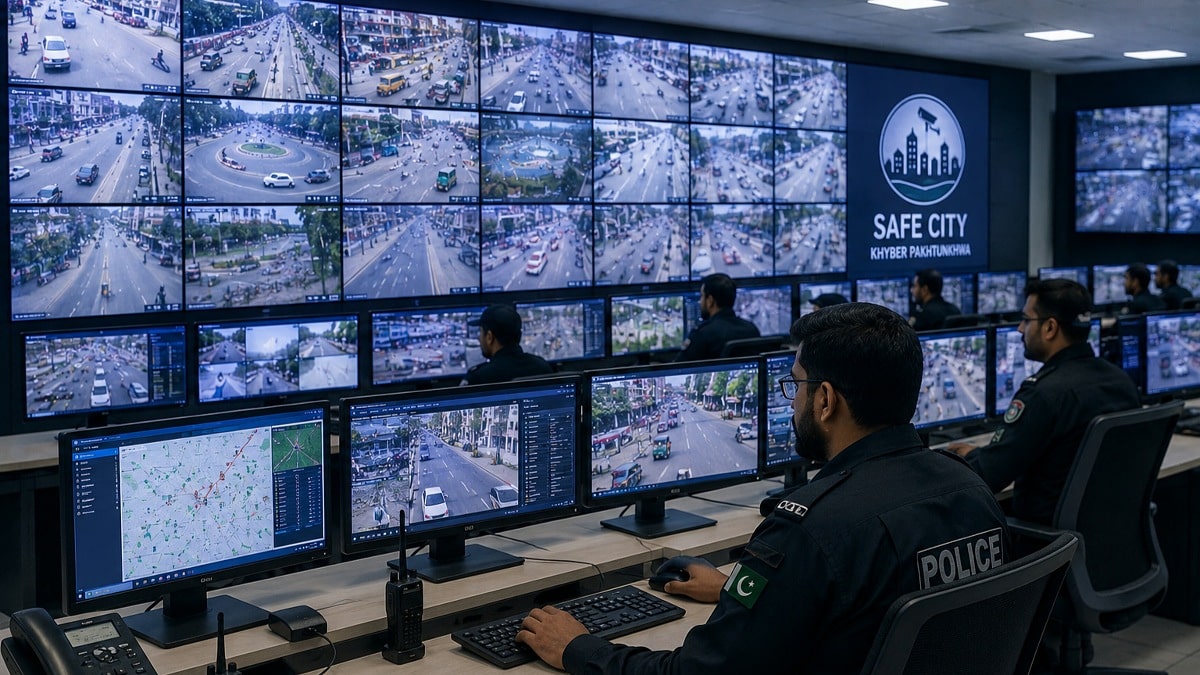
The digital fortification of Pakistan’s federal capital has entered its final calibration phase. Interior Minister Mohsin Naqvi, alongside Minister of State for Interior Talal Chaudhry, recently conducted a structural review of the Safe City Expansion project at the Islamabad Headquarters. During this high-level briefing, the Minister established a definitive deadline of September 30 for the initiative’s completion. This strategic move aims to integrate advanced surveillance technology into the city’s core security architecture.
Technical Milestones and Infrastructure Progress
Data indicates that the expansion project has successfully reached an 85% completion rate. Engineers have already installed 85% of the new surveillance network, supported by a 415-kilometer backbone of newly laid optical fiber. Furthermore, the development of the data center and cybersecurity framework currently stands at approximately 80%. Consequently, the system is nearly ready to transition from development to active monitoring.

Minister Naqvi emphasized that the remaining tasks must proceed without delay. He envisions the Islamabad Safe City as a modern, world-class institution. By adopting technologically advanced systems, the government intends to catalyze public safety through precision monitoring and rapid emergency response capabilities. Additionally, a state-of-the-art Fusion Centre is scheduled for completion within the next three months to serve as a critical operational hub.

The Translation: Clarifying the System Logic
In technical terms, this expansion is more than just adding cameras; it is about building a “Neural Network” for the city. The “Fusion Centre” acts as the brain, where data from police, emergency services, and intelligence agencies merge into a single actionable stream. The 415km optical fiber network ensures that high-definition video data travels at the speed of light, eliminating lag in criminal detection. By finalizing the Safe City Bill, the government is providing the “Operating System” or legal rules required to ensure this tech respects privacy while maintaining law and order.

Socio-Economic Impact: Benefits for the Citizen
For the average resident of Islamabad, the Safe City Expansion translates into a measurable increase in daily security. Commuters can expect more efficient traffic management and a reduction in street crimes due to ubiquitous monitoring. Moreover, the rapid response capabilities will significantly reduce the “Golden Hour” response time during medical or security emergencies. For professionals and students, this creates a stable urban environment conducive to economic productivity and safe evening mobility.
The Forward Path: Strategic Assessment
This development represents a clear Momentum Shift in Pakistan’s urban management strategy. Rather than relying on reactive policing, the shift toward a STEM-driven surveillance grid indicates a move toward proactive prevention. While the technological milestones are impressive, the long-term success will depend on the consistent maintenance of the 415km fiber network and the ethical oversight provided by the upcoming Safe City Bill. This project sets a baseline for future smart city initiatives across the nation.








