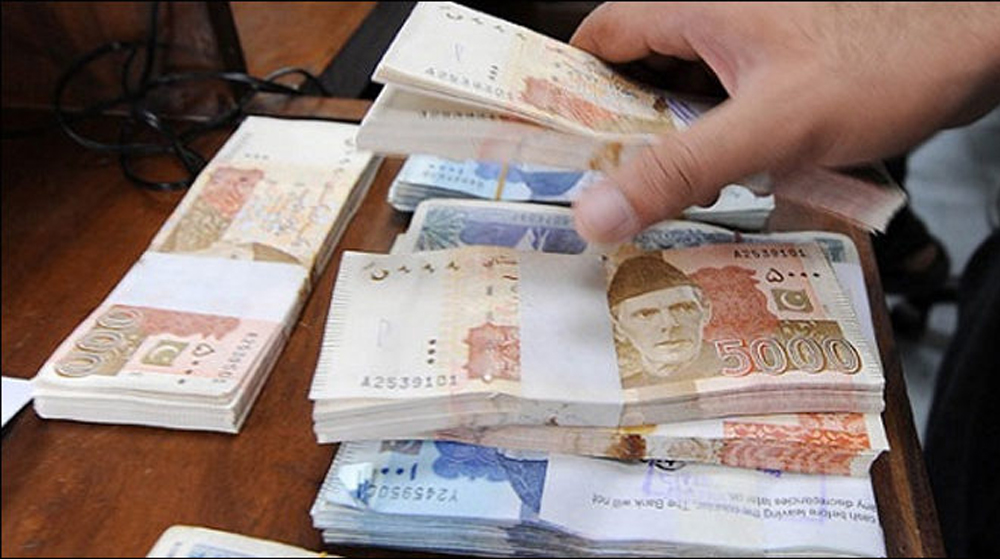
The Islamabad High Court recently sanctioned a significant transport allowance hike for judicial and high court officers, aiming to modernize the institutional framework of Pakistan’s legal system. Chief Justice Sardar Muhammad Sarfraz Dogar approved the revised monthly rates, which target officials from Grade 17 to Grade 22. Consequently, this strategic adjustment will integrate into the 2026-27 financial year budget to ensure administrative sustainability across the district judiciary.
Structural Calibration: The 2026 Transport Allowance Hike
This systemic update redefines the compensation architecture for high-ranking officials. Under the new structure, the IHC has established specific monthly tiers to replace legacy logistics models. Grade 22 officers will receive Rs250,000 per month, while Grade 21 officers will obtain Rs195,000. Furthermore, the registrar’s office confirmed that Grade 20 and Grade 19 officers will see their allowances move to Rs175,000 and Rs150,000, respectively.
:max_bytes(150000):strip_icc()/SIMON_BradWilson_MG_1711-scaled-5271264a5c7f443288e4aeefe999c32a.jpeg)
Lower-tier leadership also benefits from this calibrated increase. Grade 18 officers will now draw Rs100,000 monthly, while Grade 17 officers are slated for Rs60,000. These figures reflect a baseline adjustment for inflation and operational costs. Moreover, the IHC will draw these funds from the specifically allocated budget for the district judiciary, ensuring no immediate disruption to existing fiscal cycles.
The Translation: Decentralizing Judicial Logistics
In technical terms, this move represents a “monetization” of transport assets. Rather than maintaining a costly fleet of government-owned vehicles, the IHC is providing liquid capital to its officers. Consequently, this shift reduces the long-term maintenance overhead and the bureaucratic friction associated with public vehicle management. This transition is a catalyst for higher individual accountability and fiscal precision within the court system.

Socio-Economic Impact: What This Means for Citizens
For the average Pakistani citizen, these adjustments signal a shift in how tax-funded institutions manage internal resources. While the immediate impact benefits judicial professionals, the long-term goal is to reduce the “leakage” often associated with centralized vehicle pools. Ultimately, a more efficient judiciary translates into faster case processing and a more robust rule of law. Households in urban centers like Islamabad may see improved legal responsiveness as administrative hurdles are cleared.
The Forward Path: Momentum Shift or Stabilization?
From an architectural standpoint, this development represents a Stabilization Move. While the transport allowance hike addresses the immediate needs of high-level talent, it primarily corrects for past inflationary pressures rather than innovating the legal process itself. To transform this into a “Momentum Shift,” the judiciary must now link these enhanced benefits to measurable performance benchmarks. A precision-based approach to compensation is a necessary catalyst for a modern Pakistan, but it requires rigorous transparency to succeed.