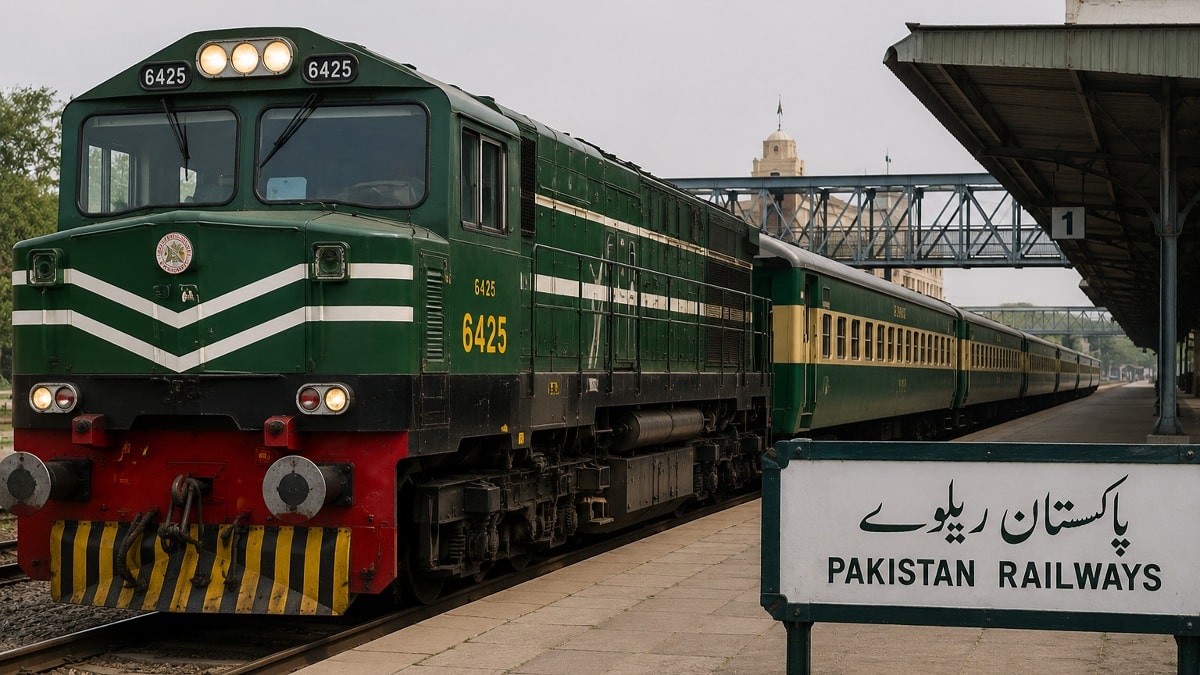
Connectivity serves as the baseline for national economic mobility. The Pakistan Railways restoration of the Babu Passenger Train and the Sandal Express represents a calibrated effort to reactivate vital transit corridors. Federal Minister Muhammad Hanif Abbasi confirmed that these services, suspended during the pandemic, will return to the tracks on August 20 and 21 respectively.
Strategic Impact of the Pakistan Railways Restoration
The restoration schedule follows a precise operational timeline to ensure system stability:
- Babu Passenger Train: Resumes the Lahore to Lala Musa route on August 20.
- Sandal Express: Restarts operations from Multan to Sargodha via Jhang on August 21.
Furthermore, the ministry plans to expand this initiative. Consequently, more suspended services will likely return later this year to align with the national vision for improved public infrastructure.
The Translation
Railway logistics function as the structural backbone of a nation’s movement. By restarting these specific routes, the ministry is not merely resuming traditional services. Instead, they are recalibrating the regional transit grid to meet high-volume public demand. Specifically, these routes serve as primary catalysts for labor and trade flow between major urban hubs and the surrounding agricultural districts.
The Socio-Economic Impact
This development directly improves the daily lives of students and daily-wage workers. Lower-cost rail travel provides a strategic alternative to expensive road transport. Consequently, households in both urban and rural Punjab will likely see a reduction in monthly transit expenditure. Additionally, the return of these services acts as a stabilizer for local commerce in areas like Jhang and Lala Musa, allowing goods to reach larger markets with higher precision and lower cost.
The Forward Path
We categorize this development as a Momentum Shift. While restoring pandemic-era suspensions addresses a baseline deficit, the commitment to enhancing passenger facilities indicates a proactive shift toward system efficiency. Ultimately, the long-term success of this move depends on maintaining technical safety protocols and consistent service frequency to ensure the railway remains a reliable catalyst for national progress.