

The release of the Poco M8 Power marks a calibrated shift in hardware engineering, prioritizing structural endurance as a baseline for mobile productivity. By integrating an unprecedented 8,000 mAh battery with the Snapdragon 4 Gen 4 chipset, Poco has positioned this device as a strategic catalyst for users requiring long-term system reliability. This expansion of the M8 lineup addresses a critical gap in the market: the demand for high-performance displays paired with sustainable energy cycles.
Architectural Design and Visual Precision
The Poco M8 Power features a 6.9-inch Full HD+ AMOLED display that operates at a precision-calibrated 120Hz refresh rate. Engineers utilized Gorilla Glass 7i to shield the panel, ensuring structural integrity against daily wear. Furthermore, the inclusion of an under-display fingerprint scanner provides a seamless biometric authentication experience without disrupting the aesthetic flow of the chassis.

Despite the massive internal power cell, the device maintains a profile of 8.45mm and a weight of 225 grams. This balance of mass and ergonomics ensures the device remains functional for extended professional use. Additionally, the IP65 rating provides a necessary baseline of protection against dust and water ingress, which is vital for diverse environmental conditions.
Internal Infrastructure and Software Lifecycle
Under the hood, the Snapdragon 4 Gen 4 chipset drives the system architecture. Poco paired this processor with up to 8GB of LPDDR4X RAM and 128GB of UFS 2.2 storage to maintain operational fluidness. Users can also expand storage via a dedicated microSD slot, offering a scalable solution for data-heavy workflows.
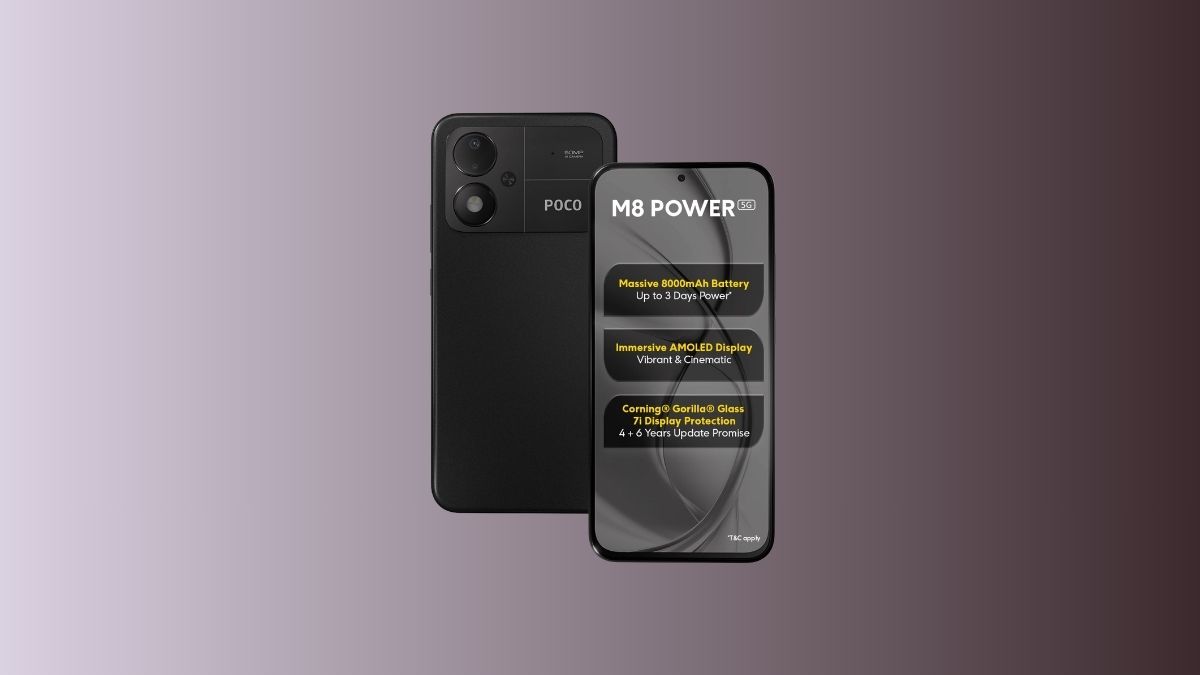
Software stability remains a primary focus, as the device launches with HyperOS 3 based on Android 16. Consequently, Poco has committed to a long-term support cycle, promising four generations of Android updates and six years of security patches. This roadmap ensures the Poco M8 Power remains a viable asset well into the next decade.
The Situation Room: National Impact Analysis
The Translation (Clear Context)
The “Power” moniker is not merely marketing; it refers to the high-density silicon-carbon battery technology. This allows the Poco M8 Power to store more energy in a smaller physical footprint than traditional lithium-ion cells. The 38-day standby claim is the result of deep software optimization within HyperOS 3, which throttles background processes with surgical precision when the device is idle.
The Socio-Economic Impact
For the average Pakistani citizen, this device addresses “energy anxiety.” In regions where consistent charging is hampered by load-shedding or infrastructure gaps, an 8,000 mAh battery becomes a tool for economic continuity. Students can attend online lectures and professionals can manage remote operations for multiple days without a power source, directly improving digital inclusion in rural and urban sectors alike.
The Forward Path (Opinion)
This development represents a significant Momentum Shift. While most manufacturers focus on incremental camera improvements, Poco is tackling the fundamental bottleneck of modern mobile life: endurance. By standardizing massive batteries in the mid-range segment, they are forcing the industry to recalibrate their priorities toward utility and longevity.
Poco M8 Power Specification Matrix
| Chipset | Qualcomm Snapdragon 4 Gen 4 (4nm) |
| OS | Android 16 with HyperOS 3 (4 Gen Updates) |
| Display | 6.99-inch AMOLED, 120Hz, 1,800 nits peak |
| Battery | 8,000 mAh, 45W Wired / 22.5W Reverse Charging |
| Pricing | Starting at $262 (Approx. 6GB/128GB) |








