The Mansehra district administration has officially ordered the immediate restoration of the Saif-ul-Muluk Road to revitalize the Kaghan Valley’s tourism sector. Following a severe cloudburst that damaged critical infrastructure, the Deputy Commissioner directed the Kaghan Development Authority (KDA) to initiate repairs on a war footing. This strategic intervention ensures that Pakistan’s premier destination remains accessible while maintaining stringent safety protocols for travelers.
Restoring the Saif-ul-Muluk Road: A Strategic Priority
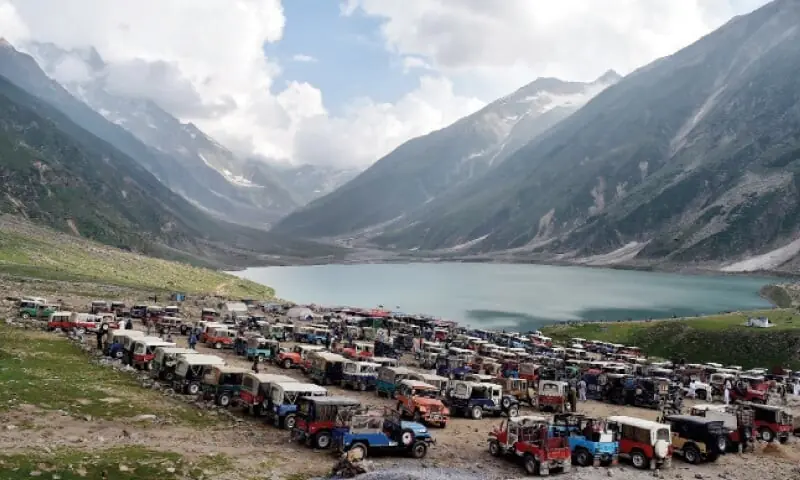
The recent flash floods, triggered by an intense cloudburst on July 30, compromised the structural integrity of the mountain route. Consequently, authorities launched a precision rescue operation to evacuate approximately 200 stranded jeeps and their passengers. To prevent further risks, the administration temporarily closed the Saif-ul-Muluk Road until a specialized revenue team could conduct a comprehensive safety audit.
As the tourism season reaches its baseline peak, the KDA has now received instructions to deploy heavy machinery for immediate repairs. Furthermore, the district administration emphasized that restoring this link is essential for the economic stability of the Naran region. This move addresses the concerns of the local business community, who view the road’s accessibility as a vital catalyst for regional commerce.
The Situation Room: Analysis
The Translation
The term “war footing” in this context signifies a calibrated mobilization of resources where bureaucratic delays are bypassed for rapid engineering results. By ordering an immediate reopening, the administration is prioritizing the Saif-ul-Muluk Road as a high-value asset. This decision reflects a shift from emergency response to infrastructure stabilization, ensuring that technical safety and economic continuity coexist.
The Socio-Economic Impact
For the average Pakistani citizen, particularly those in the hospitality and transport sectors, this restoration is a lifeline. We estimate the impact across several key areas:
- Livelihood Protection: Local jeep drivers and tour guides regain their primary source of income during the peak season.
- Market Confidence: Hotel owners in Naran see a stabilization in booking rates as accessibility improves.
- Safety Standards: Improved road surfaces reduce vehicle wear and tear and enhance passenger security on steep gradients.
The Forward Path (Opinion)
We classify this development as a Momentum Shift. While the repair is a response to a crisis, the directive’s urgency demonstrates a proactive approach to tourism management. However, for long-term sustainability, Pakistan must transition from reactive repairs to climate-resilient infrastructure. Calibrating our mountain roads to withstand recurring cloudbursts is the only way to ensure the permanent safety of our northern frontier.