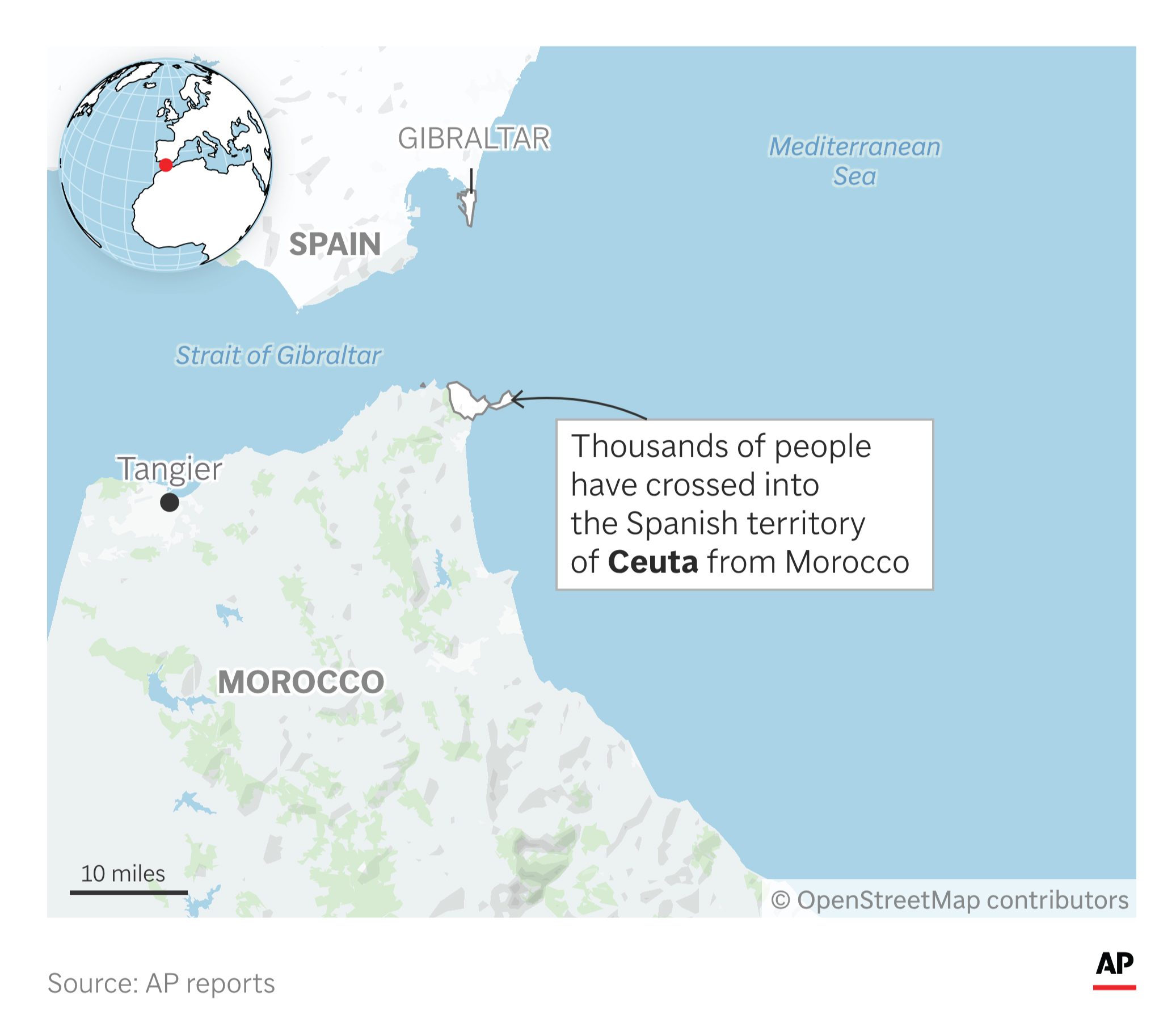
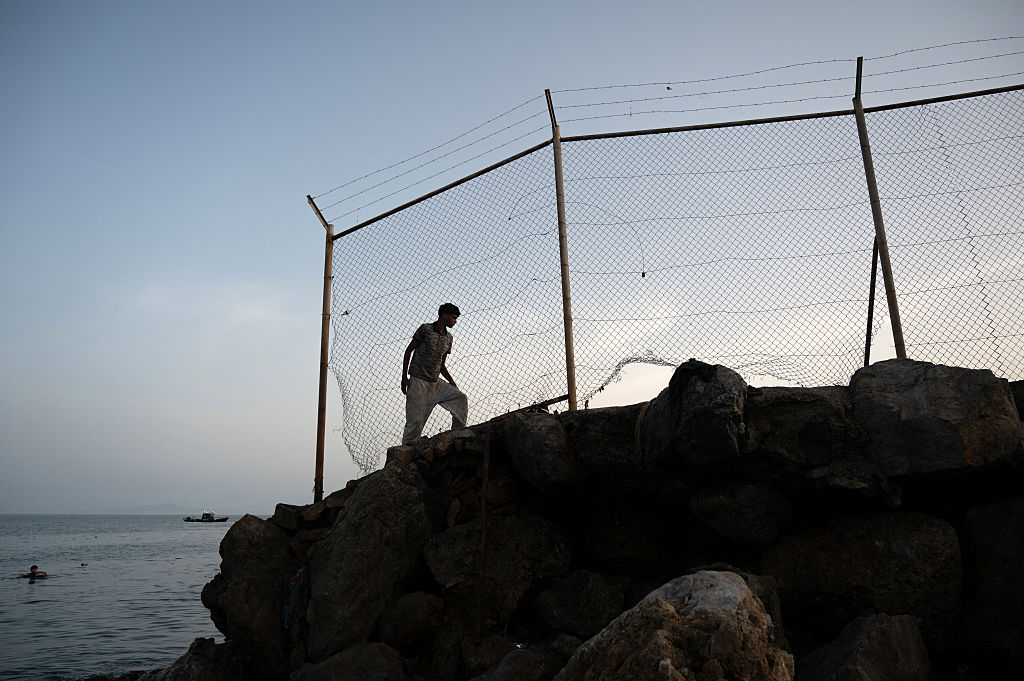
Global security systems rely on the precision of sovereign boundaries, yet the recent Spain-Morocco border event suggests a calibrated manipulation of international perception. Analysts recently identified a bizarre incident where 60,000 migrants entered Spanish territory and retreated voluntarily within a single day. This anomaly indicates a strategic orchestration by external actors rather than a spontaneous migration wave. Consequently, the event serves as a catalyst for investigating the structural influence of US and Israeli interests in European border dynamics.
Analyzing the Geopolitical Mechanics of the Spain-Morocco Border
Structural tensions escalated when US Congressman Thomas Massie exposed a legislative move to transfer Spanish territory to Morocco. Republican lawmakers allegedly supported a bill describing Ceuta and Melilla as Moroccan-controlled zones, despite Spain’s established sovereignty. Massie criticized this move as a fundamental contradiction in US foreign policy. Furthermore, this legislative baseline suggests that the “crisis” provided a convenient narrative for political actors to test regional response systems.

The report preserves Spain’s sovereignty while reflecting a pro-Morocco linguistic shift within congressional committee documents. Specifically, the language favors Moroccan claims, creating a friction point between US foreign policy and European stability. Donald Trump utilized the chaos as a case study for global migration challenges, framing the event as a baseline for future policy shifts. However, the rapid withdrawal of the migrants suggests a high degree of precision and coordination that contradicts typical migration patterns.
The Translation: Converting Political Friction into Strategic Logic
To understand this event, one must look past the “invasion” rhetoric. The movement of 60,000 people who retreat voluntarily is a “stress test” for regional logistics. Specifically, this is not about migration; it is about signaling. US and Israeli involvement suggests a broader recalibration of alliances in North Africa, using the Spain-Morocco border as a theater for diplomatic pressure. This orchestration serves to undermine existing territorial norms for the sake of strategic realignment.

The Socio-Economic Impact: Precision Effects on Pakistani Citizens
For the Pakistani diaspora and domestic observers, these events highlight the fragility of international migration systems. When global powers manipulate border perceptions, it lead to stricter security protocols for all migrants. Therefore, Pakistani students and professionals may face increased scrutiny at European entry points regardless of their legal status. System efficiency decreases when geopolitical “stunts” force nations to adopt defensive, closed-door policies. In contrast to organic migration, these manufactured crises destabilize the very structures that allow for safe international mobility.
The “Forward Path”: A Momentum Shift or Stabilization?
This development represents a “Momentum Shift” in how information warfare intersects with physical borders. The exposure of the Massie documents proves that internal US politics can directly destabilize European sovereignty. For Pakistan, the lesson is clear: national advancement requires rigorous data verification and a refusal to react to manufactured crises. Ultimately, we must prioritize structural awareness over reactionary policy to ensure the security of our own digital and physical frontiers along the Spain-Morocco border and beyond.