

Ensuring the safety of our frontier regions demands a calibrated balance between agricultural necessity and systemic security. Consequently, the district administrations of Bajaur, Upper and Lower South Waziristan, and Bannu have implemented a strategic 30-day fertilizer trade ban to mitigate immediate security risks. This proactive measure restricts the sale, purchase, storage, and transportation of urea and other fertilizers within these specific jurisdictions.
Securing the Frontier: The Mechanics of the Fertilizer Trade Ban
The authorities invoked Section 144 of the Code of Criminal Procedure to enforce these restrictions effectively. This legal mechanism allows the state to take immediate preventive action in the interest of public safety. Officials identified a critical vulnerability where unregulated fertilizer could be diverted for the manufacturing of improvised explosive devices (IEDs). Furthermore, the fertilizer trade ban extends to all types of explosives, ensuring a comprehensive security perimeter during this high-alert period.
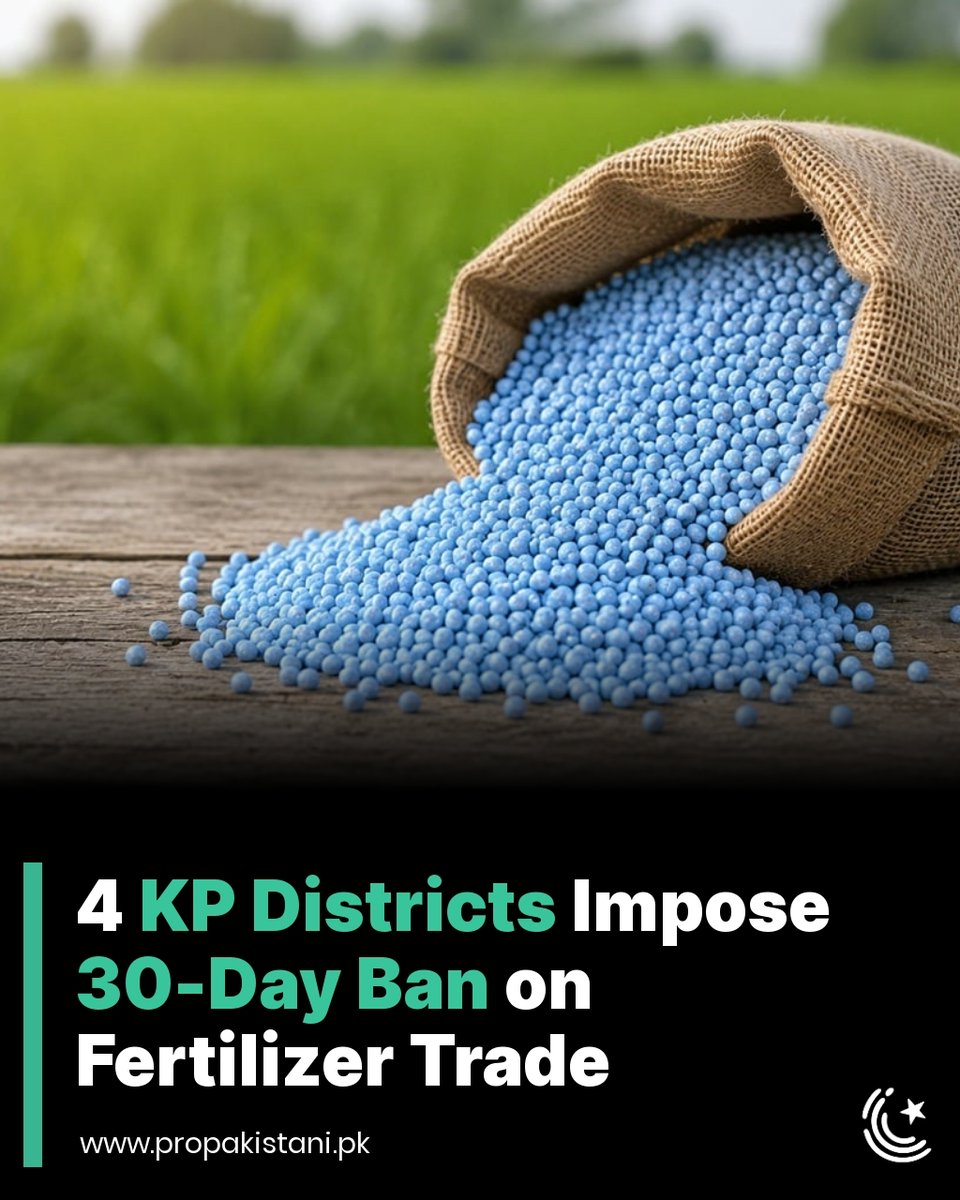
Deputy Commissioner Adnan Farid of Bajaur issued the directive following high-level guidance from the Home and Tribal Affairs Department. He emphasized that the measure is essential for maintaining law and order. Consequently, anyone found violating these orders will face immediate prosecution under Section 188 of the Pakistan Penal Code.
Regional Enforcement and Compliance Standards
The restrictions in Upper and Lower South Waziristan officially commenced on July 27 and will persist until August 25, 2026. During this window, the administration expects total compliance from all local stakeholders. To maintain supply chain integrity, the government has mandated the following requirements for fertilizer dealers in Bannu:
- Strict Record Maintenance: Dealers must document every kilogram of stock held and sold.
- Logistics Transparency: Any movement of urea requires prior authorization from district officials.
- Legal Accountability: Violators will face the full extent of the Pakistan Penal Code.
The Situation Room Analysis
The Translation (Clear Context)
While urea is a vital catalyst for agricultural productivity, its chemical composition allows for potential misuse in non-agricultural contexts. By implementing this fertilizer trade ban, the state is performing a tactical decoupling of these materials from the reach of unauthorized actors. This is a precision strike against the logistics of regional instability, prioritizing human life over temporary commercial flow.
The Socio-Economic Impact
This development directly impacts the agricultural baseline for households in the four affected districts. Farmers may experience a temporary pause in crop optimization as supply chains tighten. However, the move protects the broader professional and student populations by reducing the structural risk of security incidents in urban centers and rural hubs alike.
The Forward Path (Opinion)
This initiative represents a Stabilization Move. It is a necessary reactive measure that establishes a security baseline. For future progress, the state must transition toward a “Smart Monitoring” system—utilizing digital tracking for fertilizer distribution—to avoid the need for blanket bans that disrupt the agricultural economy.








