
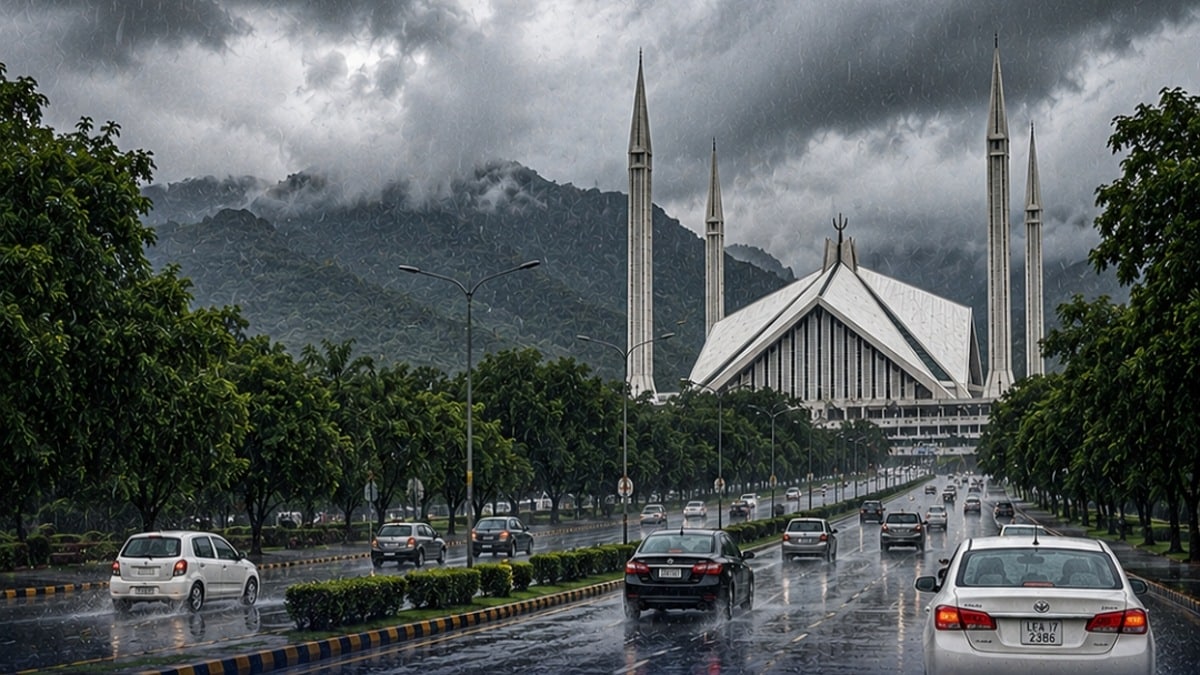
The Pakistan Meteorological Department (PMD) has calibrated its latest sensors to track a rigorous new monsoon spell in Pakistan, forecasting intense rain and thunderstorms over the next 24 hours. Consequently, authorities have issued high-priority warnings regarding potential urban flooding and hill torrents as atmospheric pressure intensifies across the region. This climatic shift demands immediate precision in local contingency planning.
Meteorological Projections and River Baselines
According to current data, a stronger weather system will catalyze heavy rainfall starting July 29. This system will primarily impact Islamabad, upper Punjab, and Khyber Pakhtunkhwa. Furthermore, the catchments of major rivers remain under strict surveillance. While the Flood Forecasting Division currently classifies the Indus and Jhelum as “low flood,” the Chenab and Ravi rivers show calibrated rises at Marala and Balloki respectively.
Key Rainfall Metrics (Last 24 Hours)
- Noorpur Thal: 115 millimeters
- Gujranwala: 107 millimeters
- Gujrat: 94 millimeters
- Lahore: 450 millimeters (Cumulative 5-day total)
The Translation: Contextualizing the Data
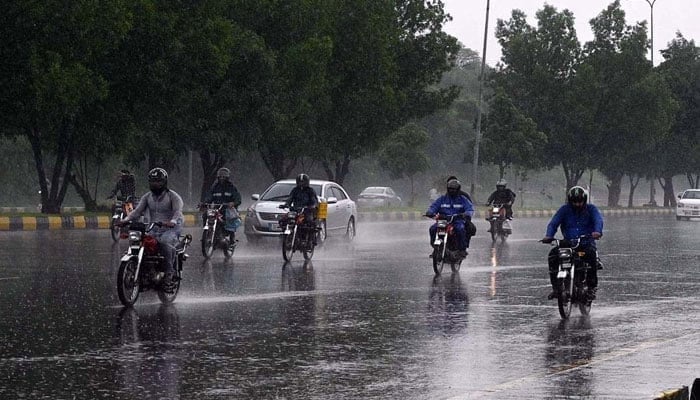
In technical terms, the “strong monsoon currents” from the Arabian Sea represent a massive influx of thermal energy and moisture. To the Next-Gen citizen, this means the atmosphere is primed for rapid-onset precipitation. Unlike steady rain, these thunderstorms deliver high volumes of water in narrow windows, which exceeds the drainage capacity of our current urban systems. Therefore, the “low flood” river status does not eliminate the danger of “flash” urban flooding.
The Socio-Economic Impact
How does this monsoon spell in Pakistan affect the daily baseline of our citizens? For urban professionals and students, it creates a significant logistics bottleneck. Water-clogged arterial roads in cities like Lahore and Karachi directly impact supply chain efficiency and workplace attendance. In rural interior Sindh, while the rain offers a cooling catalyst for crops, the strong winds pose a structural risk to vulnerable housing and electrical grids. Precision in preparation is now a necessity rather than an option.
The Forward Path: Strategic Opinion
From an architectural standpoint, this development represents a Stabilization Move regarding our national water reservoirs. However, it remains a “Momentum Stall” for our urban infrastructure. We must transition from reactive emergency response to a model of proactive structural resilience. This involves upgrading drainage throughput and implementing real-time sensor networks to manage urban flow. Our progress depends on engineering our cities to withstand, rather than just survive, the seasonal cycle.








