National advancement requires a fundamental recalibration of our fiscal architecture. Finance Minister Muhammad Aurangzeb is spearheading a strategic FBR AI Integration to calibrate Pakistan’s tax infrastructure for the digital age. By deploying advanced algorithms and integrated databases, the government aims to eliminate manual inefficiencies. This initiative establishes a baseline for national economic transparency and systemic integrity.
The Blueprint for a Digital Tax Frontier
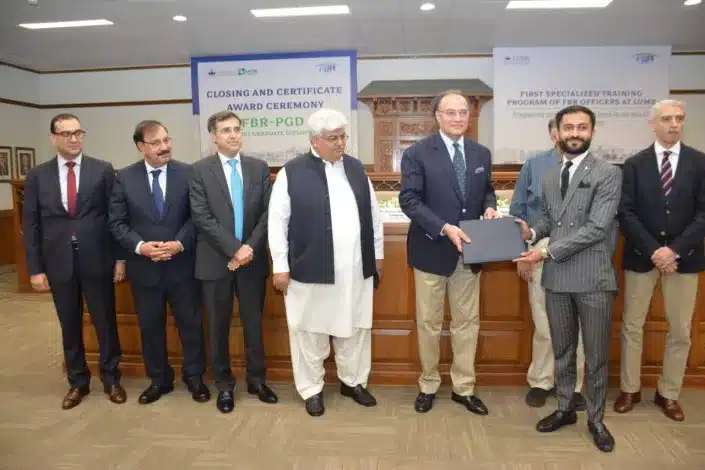
Modern tax administration depends entirely on high-velocity digital systems and integrated data sharing. During the closing ceremony at Lahore University of Management Sciences (LUMS), Aurangzeb urged FBR officers to adopt artificial intelligence immediately. Consequently, the Federal Board of Revenue is transitioning toward a precision-led operating model. This shift enhances institutional transparency while allowing the government to detect sophisticated tax evasion schemes with unprecedented accuracy.

Precision Data and FBR AI Integration
The government has already uncovered major cases of sales tax evasion through these new digital benchmarks. Furthermore, the reform drive began with the sugar sector and recently expanded to include enforcement measures in the cement industry. Ultimately, these efforts align with the Prime Minister’s vision for a cashless economy. Documenting the economy serves as a catalyst for long-term financial stability and global investor confidence.

The Situation Room: Strategic Analysis
The Translation (Clear Context)
Instead of relying on manual audits and subjective human oversight, the FBR is building a neural network of financial data. This FBR AI Integration means “big data” now monitors cross-institutional transactions. This system removes the guesswork from tax collection. It creates a digital paper trail that makes it nearly impossible for large-scale evasion to remain undetected within the formal economy.
The Socio-Economic Impact
How does this change the daily life of a Pakistani citizen? Specifically, it reduces the disproportionate tax burden on compliant individuals and small businesses. By capturing revenue from previously undocumented sectors, the government can fund critical public infrastructure. Students and young professionals will benefit from a more stabilized economy and a fairer playing field in the domestic market.
The Forward Path (Opinion)
This development represents a Momentum Shift for Pakistan. Moving beyond mere stabilization, the integration of AI suggests a long-term commitment to technological governance. If the FBR maintains this trajectory, the institutional milestone set for 2026 will serve as the structural foundation for Pakistan’s economic sovereignty in 2047. Precision is the only way forward.