
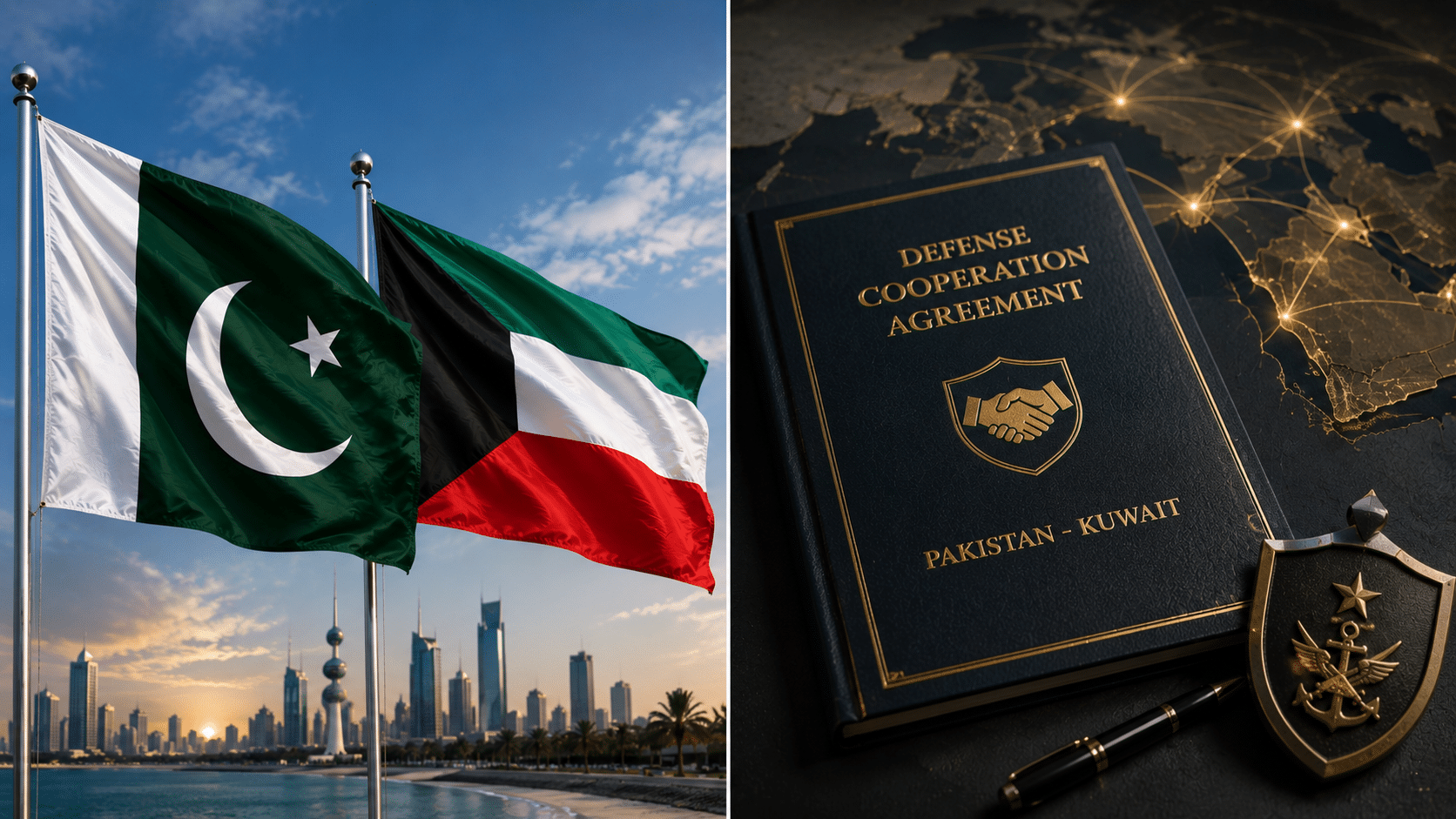
The strategic architecture of the Middle East is currently undergoing a precision recalibration. By formalizing a comprehensive Defense Cooperation Agreement with Kuwait, Pakistan has solidified its status as a critical Gulf security partner. This pact, recently signed into law via a decree-law in Kuwait Alyawm, marks a structural shift in regional military synergy and tactical cooperation.
The Architectural Blueprint of Regional Stability
The agreement establishes a baseline for deep-rooted military cooperation between both nations. Consequently, the framework extends beyond mere diplomatic gestures to include precision-focused logistical support and defense science exchange. As a Gulf security partner, Pakistan will now engage in annual cooperation plans, ensuring a consistent momentum in bilateral training and intelligence-sharing frameworks.
Operational Scope and Strategic Framework
The pact outlines a multi-dimensional approach to defense. Pakistan and Kuwait will focus on several key pillars to enhance their shared security objectives:
- Personnel Exchange: Systematic exchanges of military personnel, technical experts, and defense specialists.
- Technological Synergy: Joint advancement in defense science and technology to modernize existing systems.
- Intelligence Framework: A calibrated intelligence-sharing mechanism with strict confidentiality safeguards.
- Administrative Oversight: A Joint Military Committee will meet annually to supervise the implementation.
The Situation Room: Strategic Breakdown
The Translation (Clear Context)
Essentially, this pact transforms intermittent cooperation into a disciplined, legal obligation. By creating a Joint Military Committee, both nations move from ad-hoc interactions to a calibrated, annual synchronization of defense assets. Furthermore, the strict confidentiality clauses ensure that high-value intelligence remains protected, fostering a baseline of trust necessary for advanced technological collaboration and regional security.
The Socio-Economic Impact
For the average Pakistani citizen, this stability acts as a catalyst for long-term economic security. Increased defense ties often precede broader trade agreements, securing the professional interests of the millions of Pakistanis working in the Gulf. Moreover, the focus on defense science and technology creates a strategic pipeline for Pakistani engineers and STEM professionals to engage in international innovation ecosystems.
The Forward Path (Opinion)
This development represents a Momentum Shift. Moving beyond traditional roles, Pakistan is successfully positioning itself as a structural pillar of Gulf defense architecture. This stabilization move not only balances regional power dynamics but also provides a precision-engineered roadmap for future diplomatic and economic integration across the Middle East.








