
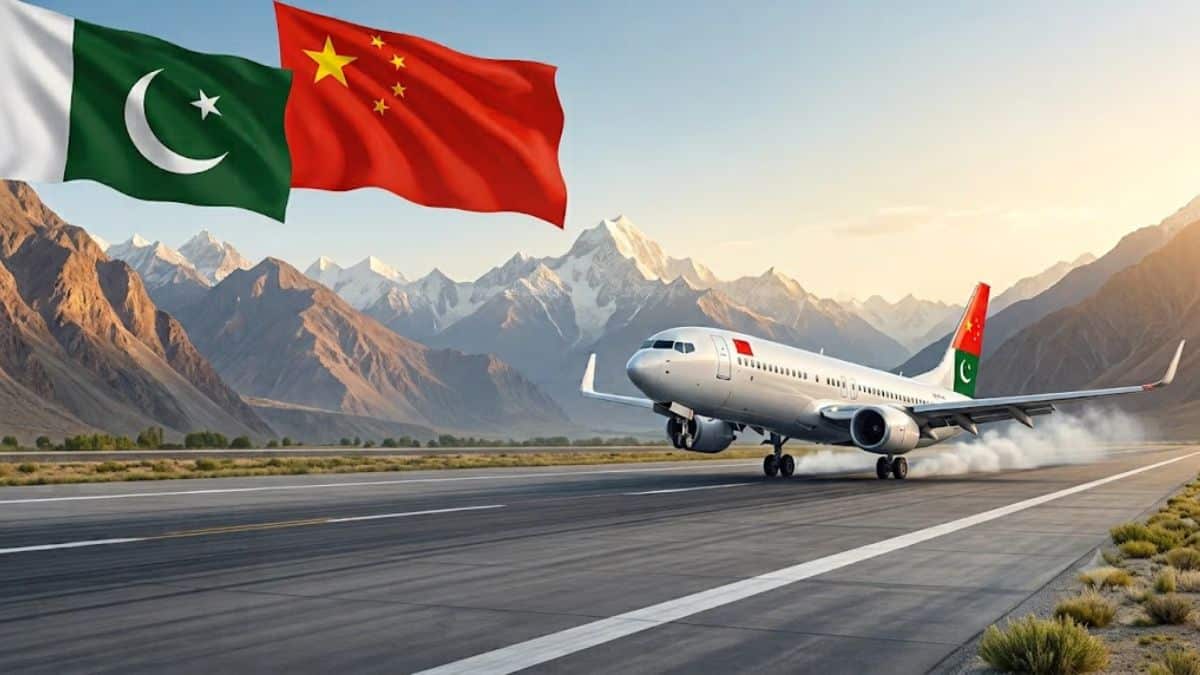
The Gilgit-Baltistan administration recently proposed the launch of direct Gilgit-Baltistan China flights between Skardu and Kashgar. This strategic maneuver aims to calibrate a more efficient corridor for tourism, trade, and regional economic cooperation. By bridging the aerial gap between northern Pakistan and China’s Xinjiang region, the proposal serves as a catalyst for deeper systemic integration.
Strategic Impact of Gilgit-Baltistan China Flights
Chief Minister Amjad Hussain Azar discussed this structural vision during a high-level meeting with Chinese Ambassador Jiang Zaidong. Consequently, the precision of this aerial link between Skardu and Kashgar will streamline travel for business architects and global tourists alike. The chief minister emphasized that direct flights could also improve people-to-people contact between Gilgit-Baltistan and Xinjiang.
Furthermore, the GB government proposed a visa-on-arrival facility for Chinese tourists visiting destinations like Hunza. This move, pending federal approval, establishes a friction-less entry point for international travelers. Chinese companies also received invitations to invest in critical regional sectors, including:
- Hydropower & Renewable Energy: Tapping into the region’s vast water resources for sustainable power.
- Mining & Infrastructure: Calibrating the extraction of mineral wealth and strengthening physical trade baselines.
- Tourism: Upgrading the regional hospitality infrastructure to meet international standards.
The Situation Room Analysis
The Translation (Clear Context)
Traditionally, the Karakoram Highway served as the singular, high-latency link between Pakistan and China. This flight proposal represents a “logic update” for regional logistics. By establishing a direct aerial vector, the government is shifting from a 19th-century transit model to a 21st-century precision network that bypasses geographical constraints.
The Socio-Economic Impact
For the local citizen, this is a baseline for economic mobility. Tourists from the Xinjiang region represent a high-value demographic that can stimulate the hospitality sector in Hunza and Skardu. Additionally, direct trade routes allow local professionals and SMEs to export high-altitude produce with significantly lower spoilage rates and overhead costs.
The “Forward Path” (Opinion)
This development represents a Momentum Shift. Transitioning from land-locked isolation to an aerial transit hub signals a move toward modern economic maturity. While currently a proposal, the engagement of high-level diplomatic channels indicates a commitment to structural progress that will serve as a catalyst for the entire northern economic zone.








