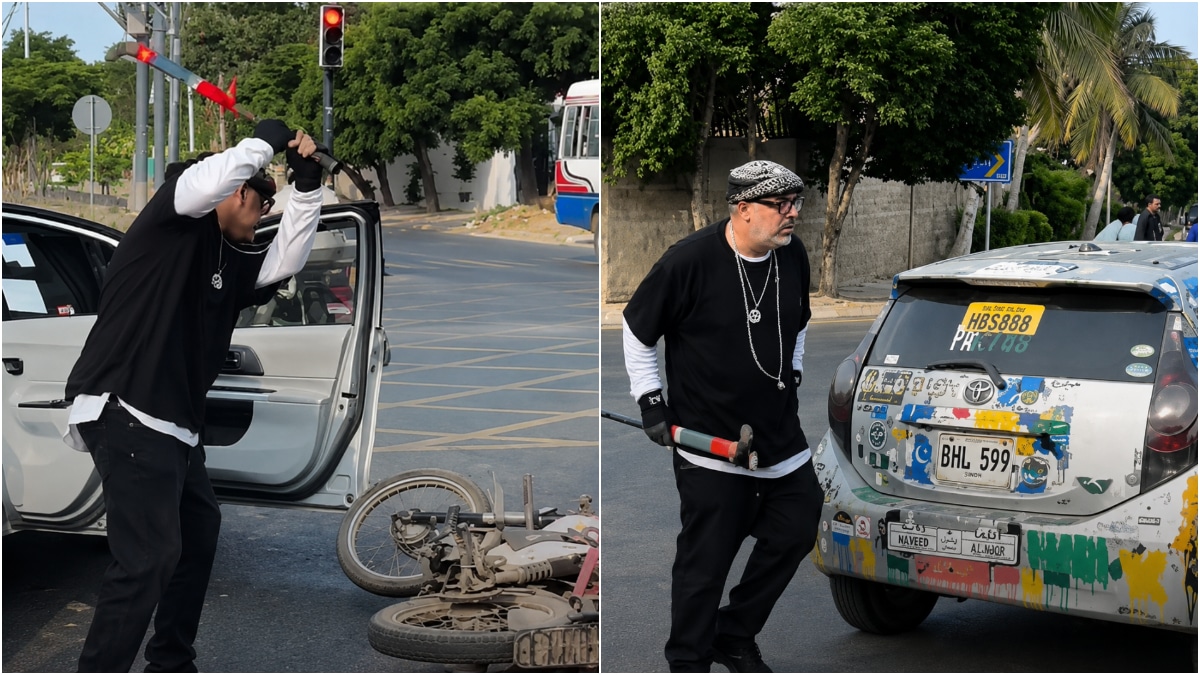
A recent Karachi road rage incident in the Defense Housing Authority (DHA) serves as a baseline for examining how legal settlements and individual accountability intersect in our modern gig economy. The food delivery rider, who faced a physical assault during a viral confrontation, has officially forgiven the accused. Both parties reached a strategic out-of-court settlement at the Darakhshan Police Station, effectively halting further legal proceedings.
Analyzing the Karachi Road Rage Incident and Gig Worker Safety
The incident escalated rapidly after a minor collision between a vehicle and a motorcycle. Consequently, video footage showed the accused attacking the rider with a hockey stick, which triggered a nationwide digital outcry. Following a precise investigation, the DIG South Media Cell confirmed that the accused compensated the rider for both motorcycle damage and associated financial losses. Furthermore, the suspect’s father cited high stress levels as a catalyst for his son’s aggressive behavior during the confrontation.
Police investigators utilized vehicle registration data to trace the suspect with technical precision. Simultaneously, they collaborated with the food delivery company to identify and protect the rider. Although the rider initially faced physical trauma, he chose to settle the matter amicably after receiving financial restitution. The father of the accused has since assured authorities that he will counsel his son to avoid future volatile interactions on the road.
The Translation: Decoding the Settlement Logic
In Pakistan’s legal framework, many minor criminal disputes conclude through “mutual consent” rather than a calibrated trial. This process allows for immediate financial recovery for the victim, which is often a primary concern for low-income earners in the gig economy. In contrast to a lengthy court battle, this out-of-court settlement provided the rider with the necessary funds to repair his vehicle and return to work immediately. This mechanism prioritizes immediate stability over long-term judicial precedent.
The Socio-Economic Impact: Vulnerability in the Gig Economy
The Karachi road rage incident highlights the extreme structural vulnerability of Pakistan’s delivery workforce. These professionals operate in a high-risk environment with minimal systemic protection against urban aggression. For the average Pakistani citizen, this case demonstrates that while digital evidence can act as a catalyst for justice, the actual resolution often depends on private financial negotiations. Consequently, this reinforces a system where financial compensation serves as the primary deterrent for physical assault, rather than strict legal sentencing.
The Forward Path: Innovator’s Perspective
This development represents a Stabilization Move rather than a momentum shift. While the individual rider received compensation, the structural causes of road rage and the lack of worker protection remain unaddressed. To achieve a true momentum shift, Pakistan must implement calibrated legislative reforms that protect gig workers from workplace violence. Precision in law enforcement must evolve beyond tracing license plates; it must include creating a culture where accountability is the baseline, not an optional financial settlement.