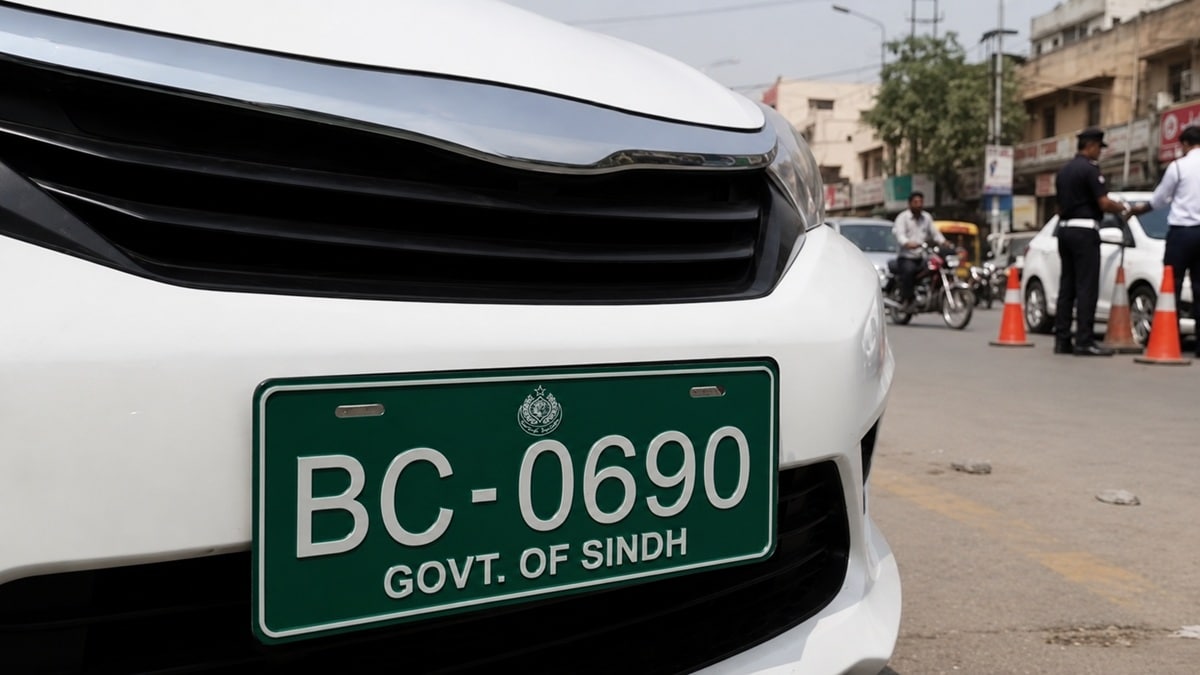
The Inspector General (IG) of Sindh Police recently initiated a strategic government number plates crackdown to eliminate the unauthorized use of official registration by private individuals. This systemic realignment targets government officers who exploit official privileges by installing state-issued identifiers on their personal vehicles. Consequently, this calibrated move aims to restore the baseline of institutional transparency across the province.
The Structural Directive Against Misuse
According to the official directive, the misuse of government number plates creates significant obstacles for law enforcement and undermines public trust. The IG clarified that official registration remains strictly reserved for government-allotted vehicles. Furthermore, the police field formations received specific instructions to identify and intercept any private vehicle displaying these illegal markers. No individual, regardless of their professional status, may install or display these plates under any circumstances.

Enforcement Protocols and Penalties
The Sindh Police will take decisive action against violators to ensure total compliance with the law. Officers will immediately confiscate illegal government number plates and, in severe cases, take vehicles into legal custody. Additionally, authorities may register criminal cases if the legal requirements warrant such measures. Supervisory officers must personally oversee these operations, as the IG warned that departmental action awaits any official showing undue favor or negligence.
The Translation (Clear Context)
In technical terms, this crackdown addresses “Identity Fraud” within the state infrastructure. By using official plates on private cars, individuals bypass routine security checks and exploit a “systemic bypass” intended only for state business. The Sindh Police are essentially recalibrating the boundary between personal assets and state-sanctioned authority. This ensures that law enforcement filters remain effective and unbiased.
The Socio-Economic Impact
For the average Pakistani citizen, this development promises a more equitable road environment. It removes the “VIP culture” barrier that often allows private individuals to evade traffic regulations. Students and professionals can expect more consistent law enforcement, while households benefit from increased security as the potential for criminals to masquerade as government officials decreases significantly.
The Forward Path (Opinion)
This development represents a significant Momentum Shift for the province. While it functions as a corrective measure, the strict focus on rank-agnostic enforcement signals a move toward a more disciplined, rule-based society. If the Sindh Police sustain this precision, it could serve as a catalyst for broader institutional reforms across Pakistan.