
The global semiconductor landscape serves as the structural baseline for digital evolution. Recently, Taiwan Semiconductor Manufacturing Company (TSMC) reported a record-breaking second quarter, achieving a calibrated revenue peak of $40.2 billion. Despite this precision, rising AI bubble fears continue to cloud investor sentiment as the costs of maintaining this momentum reach unprecedented levels. TSMC’s net profit jumped 77 percent year-on-year to approximately $22 billion, yet the market remains focused on the long-term sustainability of such exponential growth.
Calibrating Capital: Analyzing AI Bubble Fears
TSMC operates as the primary catalyst for the world’s most advanced hardware, supplying essential components to industry titans like Nvidia and Apple. Consequently, the company serves as a strategic bellwether for the broader tech ecosystem. While the firm projected third-quarter revenue to reach as high as $45.8 billion, the financial markets responded with a sharp correction. Specifically, TSMC’s U.S.-listed shares declined by 4 percent following the announcement of an aggressive capital expenditure forecast.

Investors are increasingly scrutinizing the delta between massive infrastructure spending and tangible consumer returns. TSMC raised its 2026 capital expenditure target to a range of $60 billion to $64 billion. This shift represents a significant escalation from previous guidance of $52 billion. Furthermore, the Philadelphia Semiconductor Index recently entered technical bear-market territory, dropping nearly 20 percent month-to-date as the “AI rally” faces intense structural scrutiny.
The Industry-Wide Expenditure Audit
Data from Goldman Sachs Research indicates that U.S. tech investment as a share of GDP has surpassed the levels seen during the 1990s dot-com era. Moreover, current spending plans for 2026 are 50 percent higher than estimates provided just six months ago. The Bank for International Settlements (BIS) has also issued a directive warning against circular financing and “financial fragility.” These systemic indicators suggest that while AI bubble fears have not halted progress, the cost of participation is rising faster than immediate profitability for many downstream firms.
- Record Revenue: $40.2 billion achieved in Q2.
- Profit Surge: 77% year-on-year increase.
- Capex Expansion: Target increased to $64 billion by 2026.
- Market Sentiment: Investors demand evidence of durable profits over raw revenue.
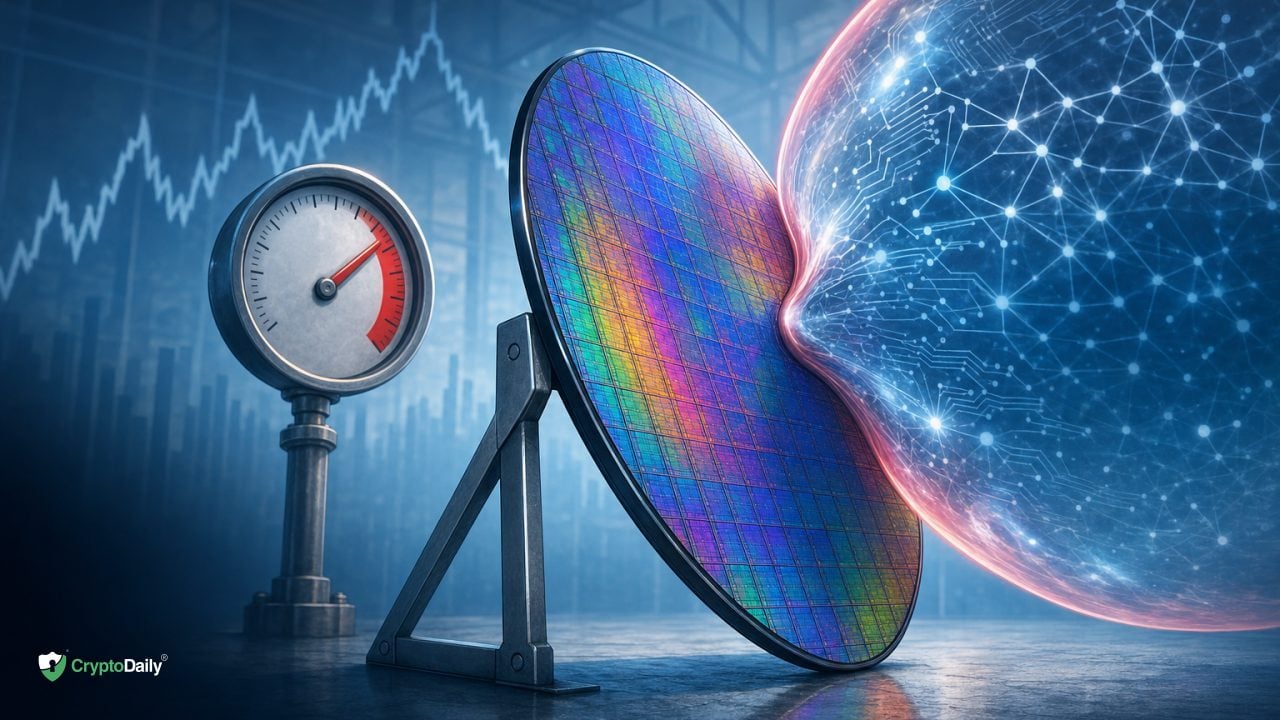
The Translation (Clear Context)
In technical terms, TSMC is currently the only factory capable of building the “engines” for the AI revolution. While they are making record profits by selling these engines, the companies buying them (like Google, Microsoft, and Meta) are spending massive amounts of cash (Capital Expenditure) to build “garages” (Data Centers). The market is nervous because the engines and garages are becoming incredibly expensive, but the “passengers” (profitable AI services for average users) haven’t started paying enough to cover the bill yet.
The Socio-Economic Impact
For the Pakistani professional and student, this global recalibration is a double-edged sword. On one hand, the continued investment ensures that AI tools will become more powerful and accessible. On the other hand, if AI bubble fears lead to a global tech recession, the outsourcing market—which many Pakistani developers rely on—could see a sharp contraction. Furthermore, as hardware costs rise, the “Digital Divide” may widen, making it more expensive for local startups to acquire the high-compute resources needed to compete globally.
The Forward Path (Opinion)
This development represents a Stabilization Move rather than a collapse. We are exiting the “hype phase” and entering the “execution phase” of the AI cycle. The massive spending by TSMC is a vote of confidence in the technology’s necessity, but the market’s skepticism is a healthy corrective force. It forces architects of the future to pivot from “growth at all costs” to “structural efficiency.” For Pakistan, the strategic play is to focus on AI application and integration rather than hardware, utilizing these powerful chips to solve local industrial inefficiencies.








