
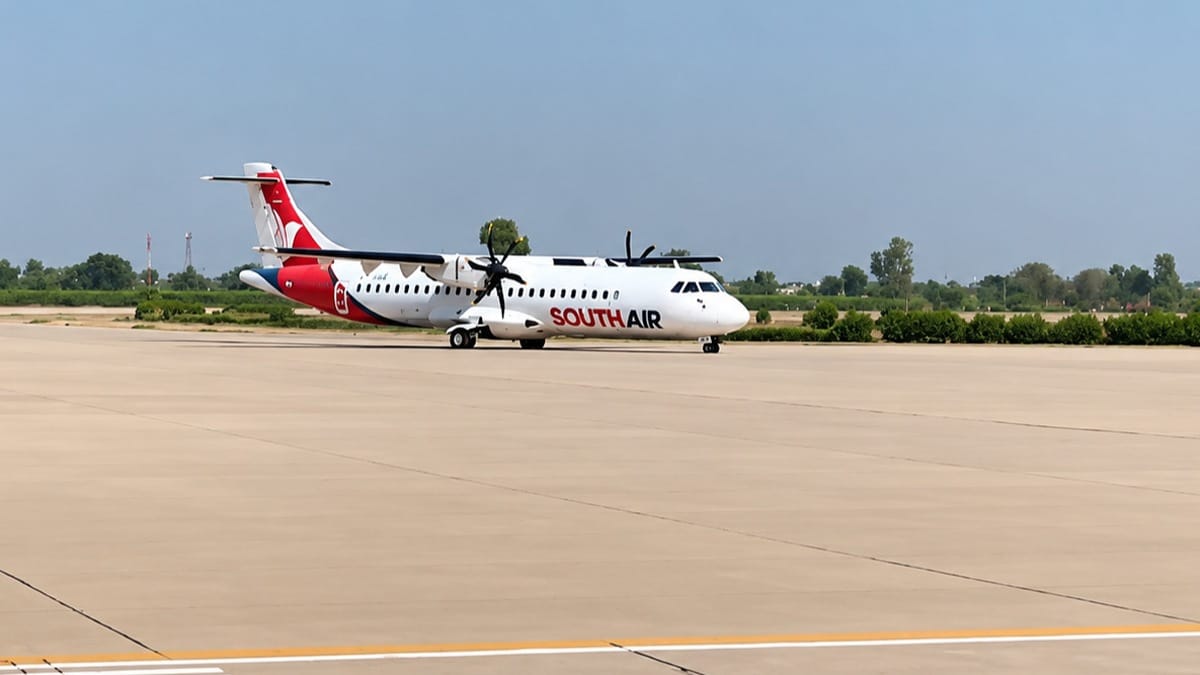
The restoration of flight operations at Sheikh Zayed Airport marks a calibrated shift in Pakistan’s domestic aviation landscape. After a suspension lasting nearly three years, aviation authorities successfully reactivated commercial services to Rahim Yar Khan this Saturday. This reactivation serves as a strategic baseline for regional connectivity, effectively ending a period of isolation for Southern Punjab’s air travel infrastructure.
Calibrating Regional Mobility: The Return of Sheikh Zayed Airport
Commercial aviation returned to the region as South Air’s inaugural flight from Karachi touched down precisely on schedule. The aircraft, carrying 72 passengers, received a festive reception that underscored the socio-economic importance of this route. Furthermore, this move highlights the growing role of private carriers in filling the structural gaps left by the national carrier’s recent consolidations.

The reopening facilitates immediate travel convenience for residents of Rahim Yar Khan and adjacent districts. Previously, these citizens faced significant logistical hurdles due to limited domestic options. Consequently, the entry of South Air into this market represents more than just a new route; it signifies a competitive expansion into under-served territories.
Strategic Aviation Resilience
While global aviation has faced various disruptions in recent years, Pakistan’s domestic sector is finding momentum through targeted regional hubs. The integration of Sheikh Zayed Airport back into the national grid provides a necessary catalyst for local commerce. Moreover, the airline’s commitment to expanding services to cities with limited connectivity suggests a data-driven approach to market penetration.
The Situation Room Analysis
The Translation (Clear Context)
The three-year hiatus at Sheikh Zayed Airport was not merely a pause in service but a significant logistical vacuum for Southern Punjab. By permitting private airlines like South Air to spearhead the resumption, the government is utilizing private capital to restore public utility. This precision-based approach ensures that flight operations are sustainable and less reliant on struggling state-run entities.
The Socio-Economic Impact
This development directly improves the daily lives of professionals and students in Rahim Yar Khan. The reduction in travel time to Karachi—Pakistan’s economic hub—allows for greater business efficiency and rapid medical or educational transit. For the average household, this means localized access to the national economy without the need for grueling 10-hour road journeys.
The “Forward Path” (Opinion)
This represents a Momentum Shift. The resumption of operations is not just a return to the status quo; it is an evolution toward a more decentralized and privatized aviation model. If South Air maintains consistency, this will serve as a catalyst for other regional airports to seek similar private-sector partnerships, ultimately stabilizing the national transport network.








