
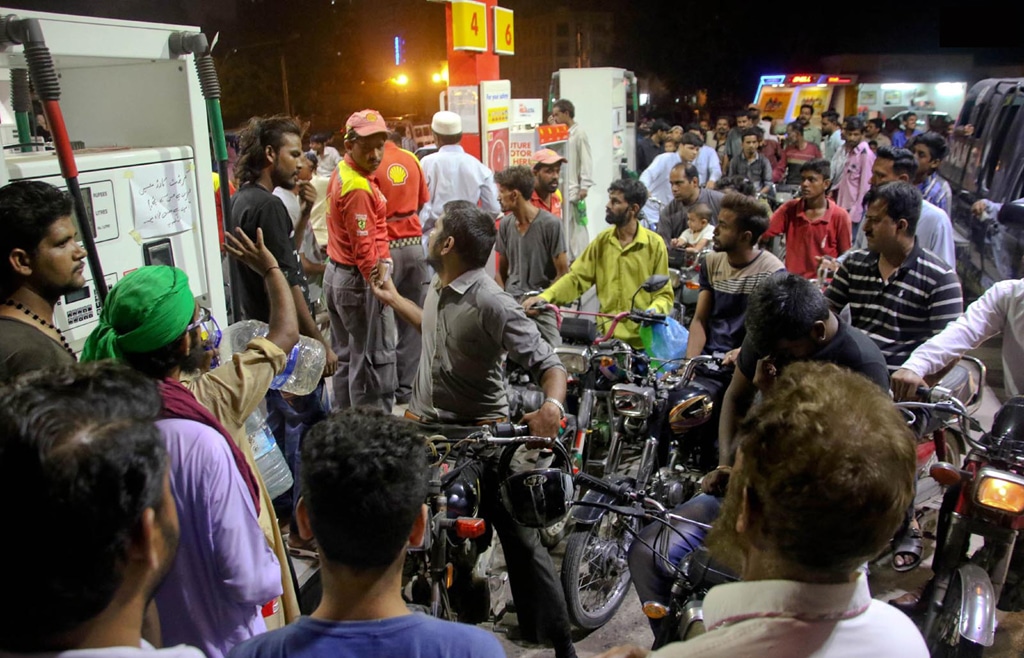
The government calibrated a sharp increase in Pakistan fuel prices tonight, responding to systemic volatility within the international energy market. Specifically, the Petroleum Division adjusted the price of petrol to Rs. 315 per litre and high-speed diesel to Rs. 354 per litre. This strategic update follows a period of artificial scarcity that disrupted supply chains across several urban centers earlier this week. Consequently, these new rates will take effect immediately after midnight to align domestic benchmarks with the Brent crude baseline of $87 per barrel.
Structural Drivers Behind Rising Pakistan Fuel Prices
Precision in energy pricing is currently dictated by the escalating US-Iran tensions, which have acted as a catalyst for panic in global crude markets. Last week, authorities increased petrol by Rs. 13 and diesel by Rs. 14, but those figures proved insufficient to stabilize the baseline. The current adjustments represent a more aggressive calibration:
- Petrol (MS): Increased by nearly Rs. 5 to a new level of Rs. 315 per litre.
- High-Speed Diesel (HSD): Increased by approximately Rs. 30 to a new level of Rs. 354 per litre.
- Global Benchmark: Brent crude currently trades at $87 per barrel, reflecting a high-risk premium.
Furthermore, the Petroleum Division indicated that rates might fluctuate daily to maintain system efficiency against shifting international variables.
The Situation Room Analysis
The Translation (Clear Context)
The logic behind this spike rests on “imported inflation.” When geopolitical friction occurs between major entities like the US and Iran, the energy supply chain anticipates disruption. This anticipation drives up Brent crude prices. Because Pakistan is a net importer of petroleum products, the government must pass these costs through the system to prevent a total fiscal collapse of the energy sector.
The Socio-Economic Impact
This adjustment will significantly alter the daily life of the average Pakistani citizen. The Rs. 30 jump in diesel is particularly critical, as diesel fuels the logistics and agricultural sectors. Consequently, households should expect a secondary wave of inflation in food prices and public transport fares. For professionals and students in urban centers, the Pakistan fuel prices hike directly reduces disposable income, necessitating a shift toward more fuel-efficient transport solutions.
The Forward Path (Opinion)
This development represents a Stabilization Move rather than a momentum shift. The government is reacting to external shocks rather than internal policy failures. While the price hike is painful, maintaining a subsidized rate would lead to a wider fiscal deficit. However, the lack of a long-term strategic reserve system makes the Pakistani economy vulnerable to every minor tremor in the Middle East. Precision planning in alternative energy is no longer optional; it is a structural necessity.








