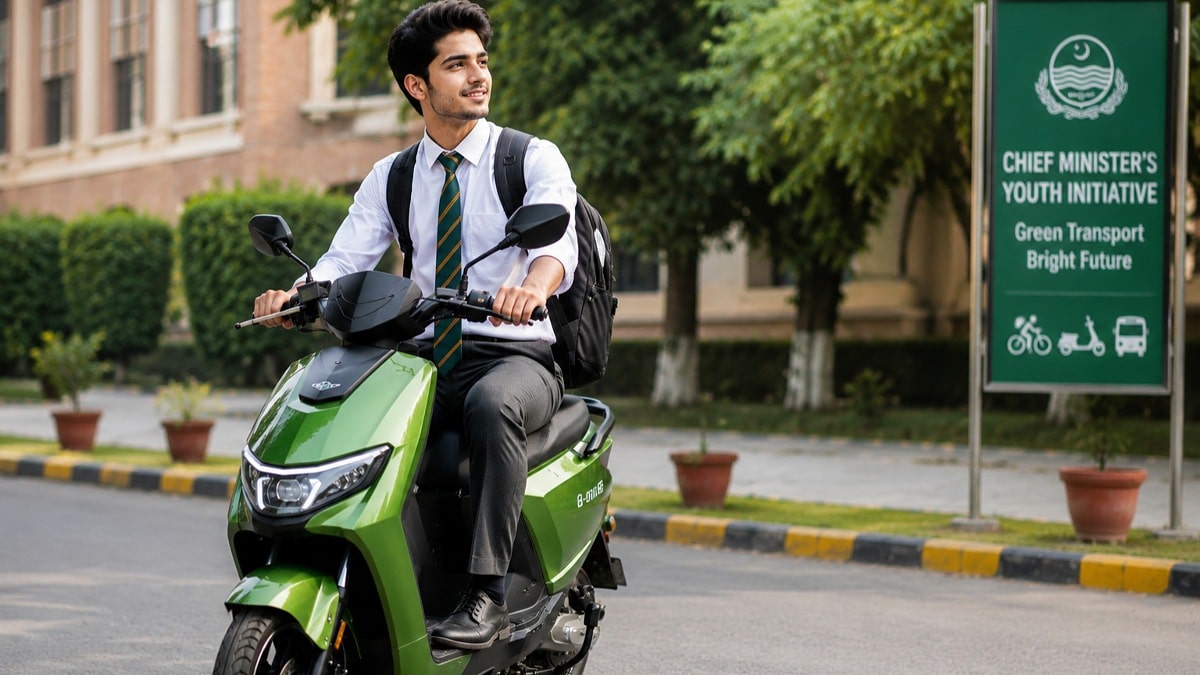
Punjab Chief Minister Maryam Nawaz recently calibrated a major shift in student mobility by announcing the distribution of 100,000 Punjab electric bikes. This strategic move, integrated with a massive 40 billion PKR infrastructure upgrade, aims to dismantle the logistical barriers currently hindering academic progress across the province. Consequently, this initiative positions mobility as a fundamental right for the next generation of Pakistani scholars.
Calibrating the Future: 100,000 Punjab Electric Bikes and STEM Labs
The Punjab government is transforming the educational landscape by establishing Nawaz Sharif Schools in every tehsil. These institutions will serve as the baseline for modern learning, featuring STEM, Artificial Intelligence (AI), and IT labs. Moreover, the Chief Minister confirmed a comprehensive support package for high-achieving students, including:
- 100,000 Laptops: Precision tools for the digital economy.
- 50,000 Merit Scholarships: Strategic financial support for academic excellence.
- 300 Modern Schools: Structural upgrades to provide global-standard facilities.
Furthermore, the government is allocating 40 billion PKR to upgrade existing infrastructure. These funds will ensure every classroom has furniture, clean drinking water, and functional utilities. This structural overhaul ensures that students in rural areas like Arifwala receive the same quality of education as those in urban centers.
The Translation: Navigating the Policy Shift
The transition from traditional school maintenance to a STEM-centric model represents a precision-targeted policy shift. By providing Punjab electric bikes and electric buses, the government is not just buying vehicles; they are reducing the “cost of attendance” for families. This logic addresses the physical and financial friction that often causes students to drop out between secondary and higher education.
The Socio-Economic Impact: Empowering the Student Baseline
This initiative directly impacts the daily lives of thousands of households. For a student in a remote tehsil, an electric bike transforms a two-hour walk into a fifteen-minute commute. This efficiency gain allows more time for research and skill development. Additionally, the focus on AI and computer labs prepares the Pakistani workforce for the global freelance and tech markets, potentially increasing the national GDP through digital exports.
The Forward Path: A Momentum Shift in Human Capital
In our expert view, this development represents a significant Momentum Shift. Rather than mere stabilization, these measures introduce a catalyst for long-term growth. While the physical infrastructure is vital, the integration of 100,000 laptops and AI labs suggests a forward-thinking commitment to technological literacy. To maintain this trajectory, the government must ensure the sustainability of the charging infrastructure for the Punjab electric bikes and provide consistent electricity to the new IT labs.