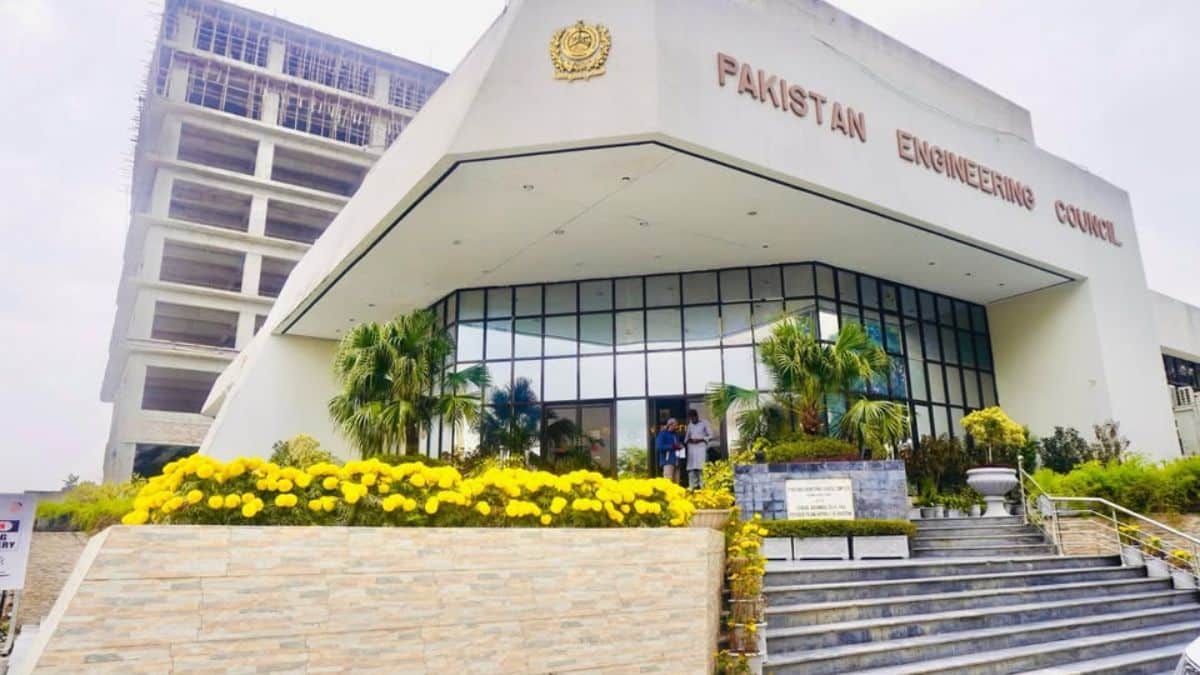
The Pakistan Engineering Council (PEC) has calibrated a new trajectory for national engineering standards by announcing the 27th Professional Engineer exam (EPE) schedule for Fall 2026. This computer-based assessment, scheduled for Sunday, November 8, 2026, serves as a critical checkpoint for registered engineers seeking the prestigious Professional Engineer (PE) title. Consequently, this initiative ensures that Pakistan’s structural and technical framework remains integrated with global professional benchmarks.
Strategic Deployment: Examination Locations and Eligibility
The council will conduct the examination across a decentralized network of major urban centers to ensure maximum accessibility. Specifically, testing centers will operate in Islamabad, Rawalpindi, Lahore, Multan, Faisalabad, Peshawar, and Swat. Furthermore, the exam extends to Dera Ismail Khan, Karachi, Hyderabad, Sukkur, Nawabshah, Quetta, Gwadar, Gilgit-Baltistan, and Muzaffarabad.
To maintain precision in professional standards, PEC has defined strict eligibility criteria. Registered engineers who graduated on or after January 15, 2008, are eligible to apply. Additionally, applicants must demonstrate a minimum of five years of post-registration practical experience. Candidates must also secure 17 Continuing Professional Development (CPD) points, comprising 10 points from work experience and 7 from approved categories.
Registration Logistics and Fee Structure
The PEC CPD portal is now open for online applications, providing a streamlined digital interface for candidates. Interested professionals must submit their applications by the August 15, 2026, deadline. Regarding the financial baseline, the fee for both exam parts is Rs. 5,000, while a single part costs Rs. 2,500. Moreover, engineers who failed a single component in the 24th, 25th, or 26th EPE may re-apply for the remaining section.
The Situation Room: Analysis
The Translation
While “EPE” might sound like another bureaucratic hurdle, it is actually a calibrated certification of competency. In simpler terms, the Professional Engineer exam acts as a bridge between being a “graduate” and a “specialist.” It validates that an engineer possesses not just theoretical knowledge, but the tactical experience required to lead complex national projects. The transition to a computer-based test (CBT) further reflects PEC’s move toward digital system efficiency.
The Socio-Economic Impact
For the Pakistani citizen, this development translates to enhanced safety and infrastructure reliability. When engineers are rigorously vetted, the probability of structural failure in public works decreases. For professionals, the PE title is a catalyst for higher earning potential and international mobility. Consequently, as more engineers achieve professional status, Pakistan’s technical workforce becomes more competitive in the global labor market, potentially increasing foreign remittances and domestic innovation.
The Forward Path (Opinion)
This announcement represents a Momentum Shift. By maintaining a strict schedule and leveraging digital testing, PEC is modernizing the engineering profession. This move signals a departure from stagnant licensing models toward a dynamic, merit-based system. To accelerate progress further, the council should consider integrating more specialized tech-centric engineering disciplines into the EPE framework to match the evolving digital frontier.