
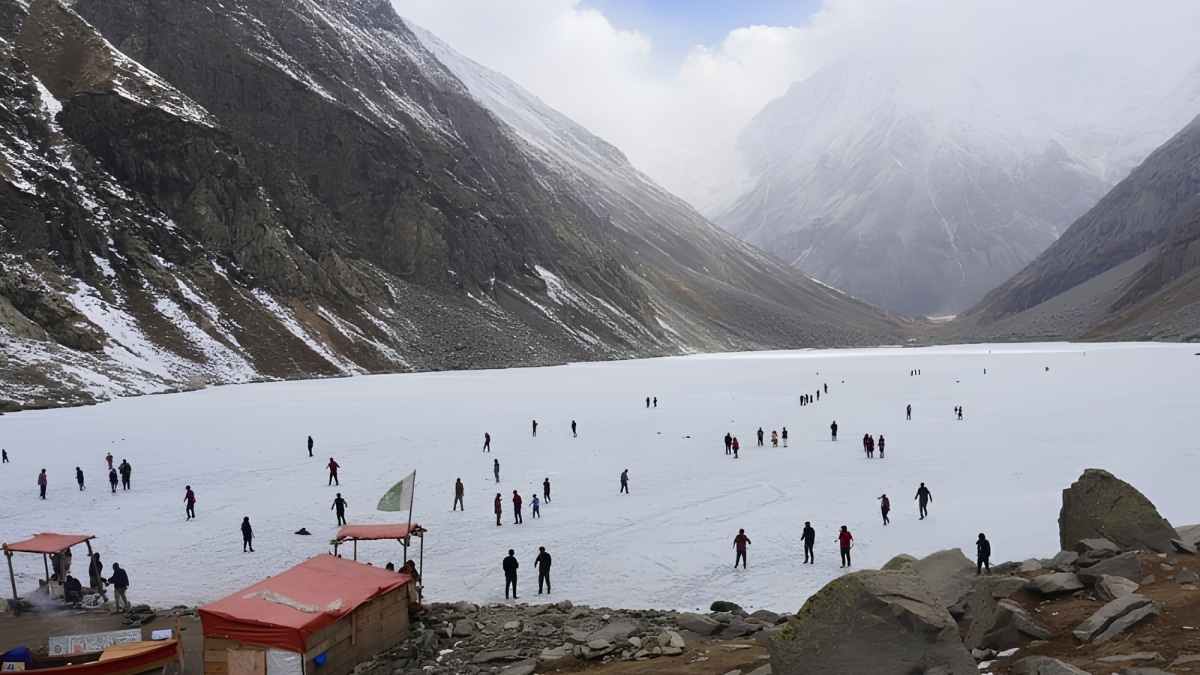
National advancement requires a calibrated approach to public safety and infrastructure management. The recent tragedy at Andrab Lake, Kalam, where a sudden glacier collapse claimed the life of a tourist, serves as a grim baseline for auditing Swat glacier safety protocols and institutional accountability. The deceased, identified as Abdul Wajid from Bahawalpur, represents the human cost of systemic lapses in tourism enforcement.
Structural Failures in Tourism Oversight
Following the incident, a Provincial inquiry into a separate boating accident at Saifullah Lake has surfaced, revealing a pattern of negligence. Consequently, the report identifies multiple departments—including the Police, Tourism Authority, and Rescue 1122—as responsible for failing to uphold safety mandates. Although Section 144 prohibited hazardous activities, the lack of a precision-driven enforcement strategy allowed these restrictions to be ignored on the ground.
The Resource Gap in Safety Enforcement
Data indicates a significant workforce deficit during peak tourist periods. Specifically, on the day of the previous boating incident, 17 out of 37 Tourism Police personnel were on leave. This structural shortage directly compromised the ability of authorities to monitor high-risk zones. While officials registered 103 cases against swimmers, they strategically ignored the ongoing ban on boating activities, creating a lethal inconsistency in law enforcement.
The Situation Room: Analysis
The Translation (Clear Context)
In technical terms, the failure in Swat was not a lack of regulation, but a breakdown in calibrated enforcement. Section 144 acts as a legal barrier, yet without active personnel to monitor physical access points, it remains a “paper shield.” The “Next Gen” reality is that a regulation only exists if the state has the operational capacity to maintain the baseline of that rule at the site of impact.
The Socio-Economic Impact
Tourism is the primary catalyst for Swat’s local economy. However, every safety failure erodes consumer confidence, which impacts the livelihoods of thousands of local families, hotel operators, and small business owners. For the average Pakistani professional or student seeking domestic travel, these incidents transform a recreational asset into a high-risk hazard, ultimately deterring the internal investment needed for regional growth.
The Forward Path (Opinion)
This development represents a Stabilization Move. We are currently in a phase where existing laws must be enforced before we can discuss further tourism expansion. To achieve a momentum shift, Pakistan must integrate STEM-driven monitoring tools—such as drone surveillance and real-time sensor arrays near glaciers—to automate safety alerts and reduce reliance on understaffed human police units.








