
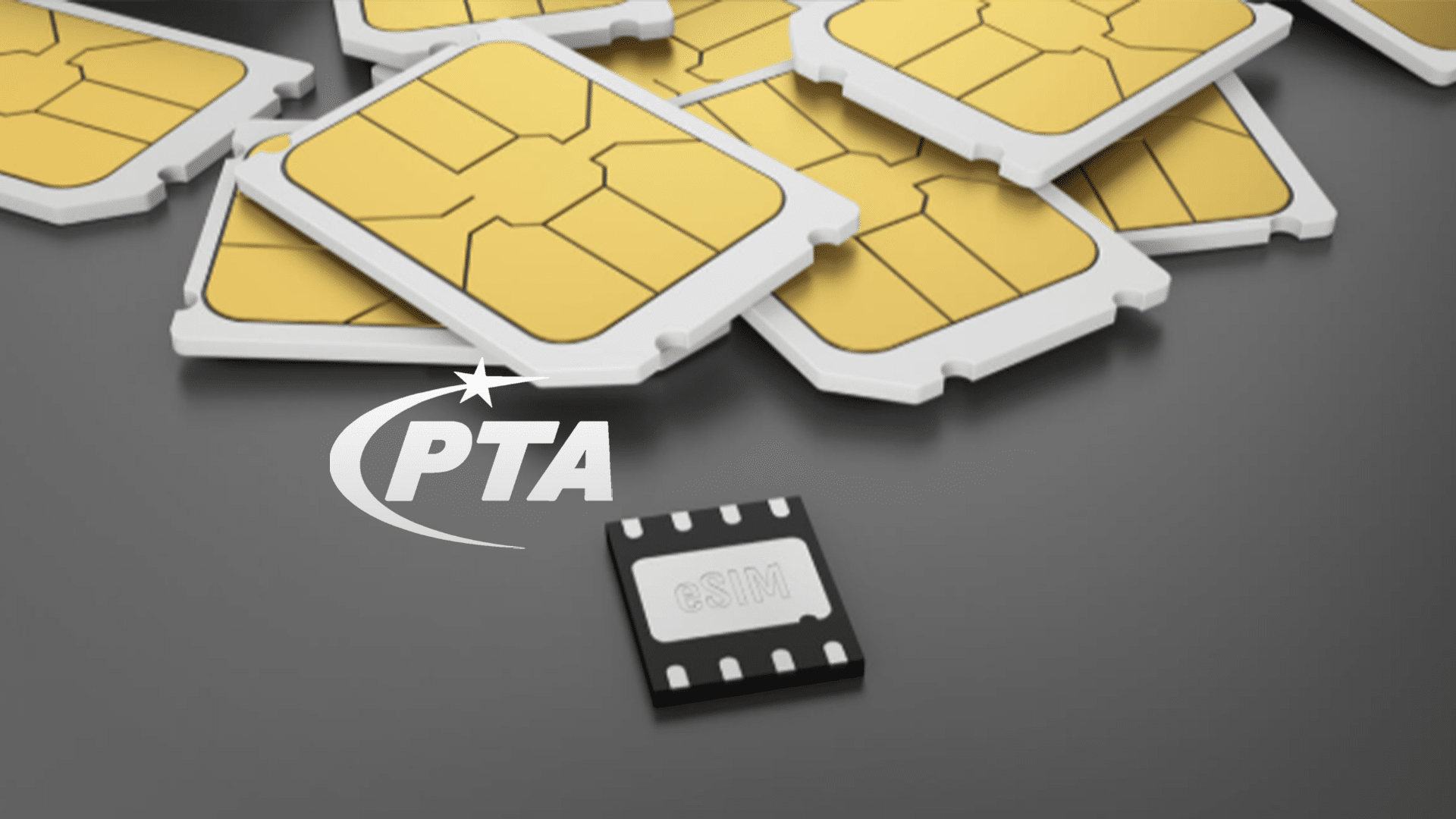
Digital infrastructure serves as the primary catalyst for national advancement. Consequently, the Pakistan Telecommunication Authority (PTA) is actively negotiating with mobile operators to reduce eSIM prices in Pakistan by 50%. This strategic calibration aims to lower the current fee of Rs. 2,000 to a more accessible range of Rs. 1,000 to Rs. 1,500, fostering a baseline for widespread digital adoption.
Strategic Realignment of eSIM Prices in Pakistan
PTA Chairman Major General (R) Hafeez Ur Rehman recently briefed the Senate Standing Committee on Cabinet Secretariat regarding these structural adjustments. He emphasized that lowering eSIM prices in Pakistan is essential to meet evolving consumer demands. Furthermore, the regulator anticipates that increased market volume will naturally drive costs down further, creating a sustainable ecosystem for digital identification.
The Chairman clarified the division of regulatory labor during his briefing. While the PTA oversees technical standards and connectivity, the Federal Board of Revenue (FBR) maintains sole responsibility for imposing taxes on mobile hardware. Consequently, the PTA has no direct influence over the taxation levels that currently affect device affordability.
The Manufacturing Baseline and 5G Readiness
Pakistan currently manufactures approximately 25 million mobile phones annually. In contrast, premium devices from brands like Samsung and Apple remain largely imported assets subject to significant duties. High taxation on these devices may create a structural bottleneck for the deployment of 5G services.

Strategic precision is required to balance revenue generation with technological progress. The PTA chairman warned that if taxes remain prohibitive, the adoption of 5G will face significant obstacles, potentially stalling Pakistan’s digital frontier expansion.
The Situation Room Analysis
The Translation (Clear Context)
An eSIM, or embedded SIM, replaces the physical plastic card with a programmable chip already built into the device. By reducing the cost of activation, the PTA is removing a “digital tax” on modern hardware. This transition allows for more efficient switching between networks and enables the use of multiple profiles without physical constraints.
The Socio-Economic Impact
For the average Pakistani citizen, this price reduction directly lowers the barrier to entry for high-end digital services. Students and professionals using modern devices will see an immediate 50% saving on connectivity setups. In the long term, cheaper eSIM prices in Pakistan encourage the use of 5G-ready devices, which are essential for the gig economy and remote education in both urban and rural sectors.
The Forward Path (Opinion)
This development represents a Momentum Shift. While the price cut is a welcome tactical move, the broader challenge remains the heavy taxation on hardware. If Pakistan wishes to lead in the regional digital economy, the fiscal policy must align with the technical vision. Reducing eSIM costs is a catalyst; however, stabilizing hardware taxes is the structural fix required for true 5G parity.








