
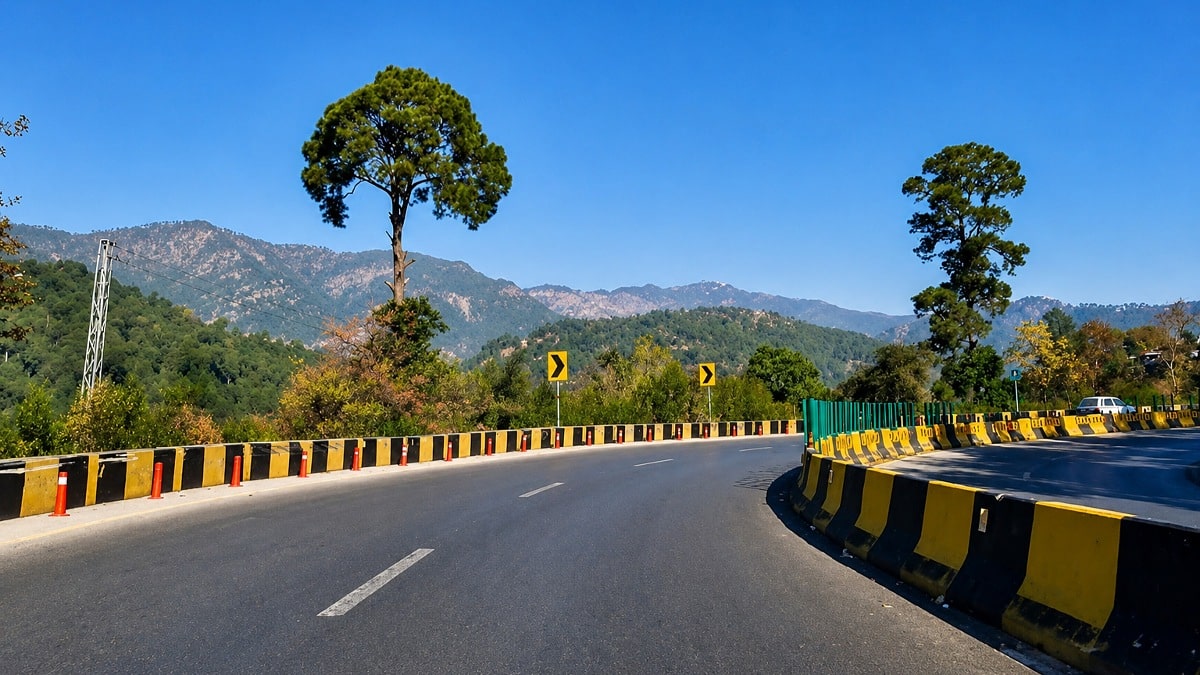
National advancement requires a calibrated balance between infrastructure maintenance and logistical flow. The Islamabad Traffic Police (ITP) initiated Murree traffic diversions on the GT Road starting July 16 to facilitate essential structural repairs. Authorities closed the 17-Mile Toll Plaza to all traffic, redirecting commuters to the Murree Expressway until July 20. Consequently, precision planning is required for all northern-bound travel during this five-day window.
The Translation: Structural Logic Behind the Diversion
Infrastructure integrity remains the baseline for system efficiency. The ITP is not merely closing a road; they are strategically rerouting the traffic load to prevent structural degradation. By diverting traffic from the 17-Mile Toll Plaza to the more modern Murree Expressway, engineering teams gain the necessary window to execute precision repairs without the vibration of heavy vehicle movement. Specifically, the closure began at 12:00 a.m. on July 16 and will remain a catalyst for road safety until the project concludes.
The Socio-Economic Impact: Daily Flow and Tourism
For the daily commuter and the tourism sector, these Murree traffic diversions represent a temporary friction point designed to yield long-term reliability. Students and professionals traveling between Islamabad and Nathia Gali must recalibrate their departure times by approximately 20-30 minutes. While the diversion adds minor mileage, the proactive repair prevents the system failure of an unannounced road collapse. Furthermore, this ensures that rural-urban supply chains remain robust during the peak summer season.
- Primary Closure: 17-Mile Toll Plaza (All vehicle types).
- Authorized Route: Murree Expressway.
- Timeline: Effective July 16 to July 20.
The Forward Path: A Shift Toward Proactive Maintenance
This development marks a “Momentum Shift” toward proactive governance. Historically, road repairs in Pakistan often occurred as reactive measures to damage. This scheduled maintenance represents a move toward architectural foresight and systemic stability. However, the true catalyst for progress will be the integration of these alerts into digital navigation systems to further reduce human error. We view this as a necessary stabilization move for the capital’s transit network.








