
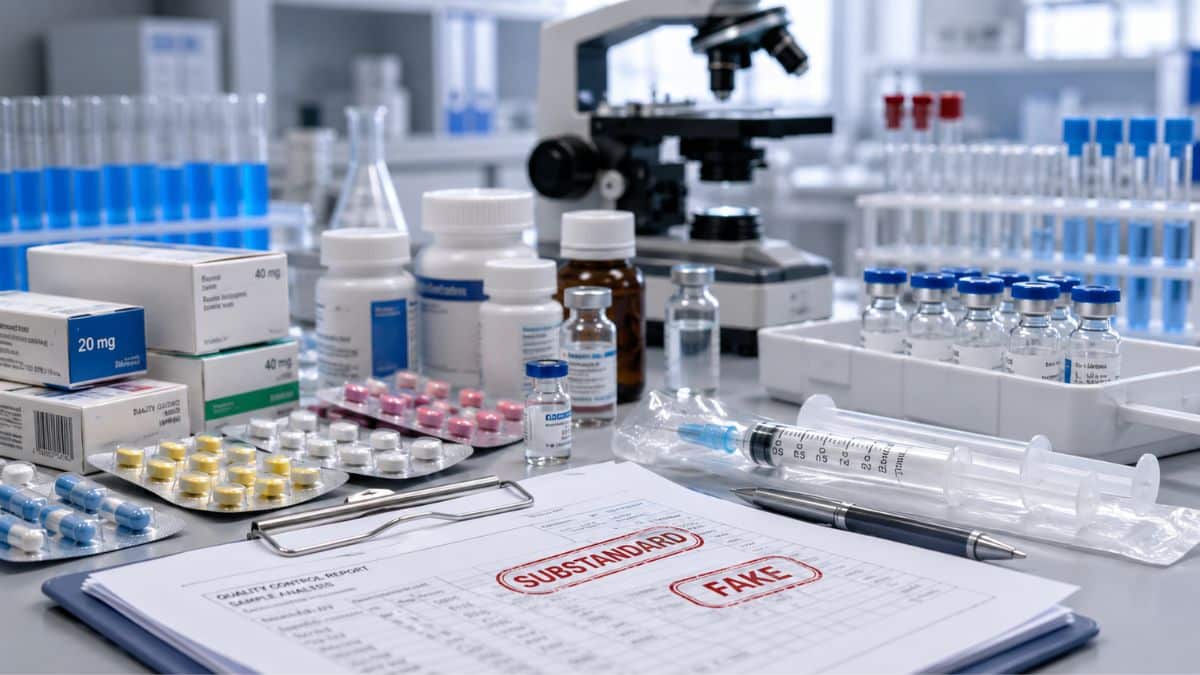
The Punjab administration is calibrating its healthcare infrastructure through the establishment of a Rs. 2 billion facility dedicated to medicine quality testing. This bioequivalence laboratory serves as a strategic catalyst to eliminate substandard pharmaceuticals while simultaneously fortifying the local manufacturing sector. Chief Minister Maryam Nawaz recently reviewed the project specifications, signaling a high-priority shift toward structural drug regulation.
A Strategic Pivot in Medicine Quality Testing
This proposed laboratory establishes a baseline for pharmaceutical excellence by aligning local production with rigorous international benchmarks. Specifically, the facility will utilize scientific protocols to assess the performance, effectiveness, and biological equivalence of generic drugs. Consequently, local manufacturers can validate their products within the province, removing the expensive requirement to seek verification from foreign laboratories.
The Translation: Technical Precision for Public Safety
In technical terms, this lab addresses the “Bioequivalence” gap. While many companies produce generic drugs, verifying that these versions perform identically to original brand-name counterparts requires precision equipment. The Punjab government is providing the industry with the architectural tools needed to prove that locally made medicine is just as potent as imported alternatives. This move transitions our pharmaceutical sector from basic manufacturing to high-tech verification.
The Socio-Economic Impact: Protecting Wallets and Health
For the average Pakistani citizen, this development secures both physical health and economic stability. By localizing medicine quality testing, the government achieves three critical objectives:
- Consumer Safety: It filters out substandard or “fake” medicines before they reach the pharmacy shelf.
- Foreign Exchange Conservation: Pharmaceutical companies will no longer spend precious dollars on international testing services.
- Export Potential: Standardized testing allows Pakistani-made drugs to enter global markets with credible, science-backed certification.
The Forward Path: A Momentum Shift
We categorize this development as a definitive Momentum Shift. Rather than simply maintaining current drug inspection standards, the Punjab government is building the structural capacity for innovation and global competition. This facility will likely attract new investment into the pharmaceutical sector, as research-driven companies prefer environments with robust quality control. If executed with transparency, this lab could serve as the primary engine for Pakistan’s pharmaceutical export growth over the next decade.








