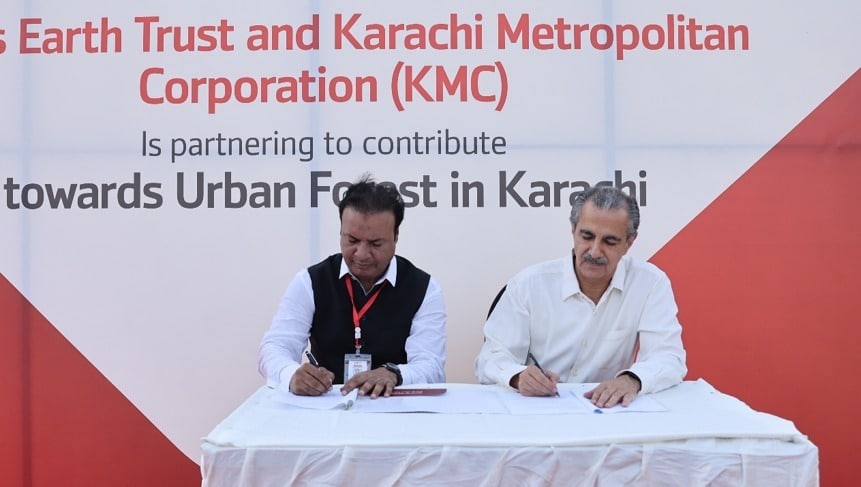
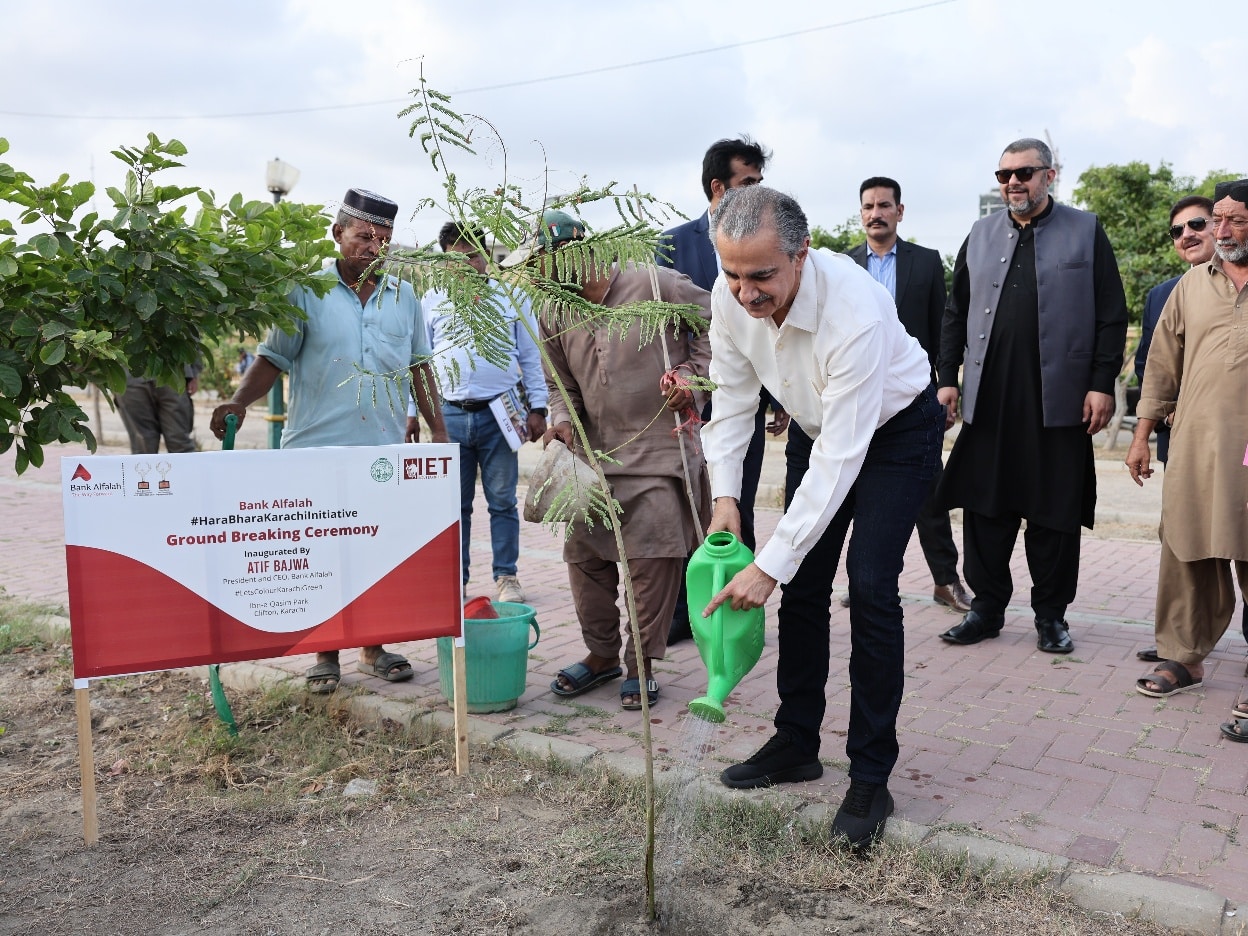
Karachi’s urban resilience depends on the strategic integration of biological infrastructure. Bank Alfalah recently launched its inaugural Urban Forestry Karachi initiative at Ibn-e-Qasim Park, Clifton. Consequently, this PKR 3 million pilot project serves as a catalyst for large-scale environmental restoration. By partnering with the Karachi Metropolitan Corporation (KMC) and Indus Earth Trust (IET), the bank aims to recalibrate the city’s thermal baseline. This mission ensures a healthier, more resilient ecosystem for the financial hub of Pakistan.
Strategic Impact of Urban Forestry Karachi
Atif Bajwa, President and CEO of Bank Alfalah, and Aijaz Ali Abro, CEO of IET, finalized the partnership through a formal Memorandum of Understanding (MoU). The Urban Forestry Karachi project targets four critical vectors: thermal reduction, air quality optimization, biodiversity support, and climate resilience. The initiative begins with a dense plantation area within the park, designed to act as a “green lung” for the surrounding metropolitan district.
The Translation (Clear Context)
Urban forestry is not merely a tree-planting exercise; it is a precision engineering tool for climate management. This partnership converts neglected public spaces into high-density biological cooling systems. Specifically, by using native species, the project ensures the ecosystem remains self-sustaining without excessive maintenance. Therefore, this strategic deployment functions as a natural filtration system for both atmospheric pollutants and thermal energy.
Socio-Economic Impact
This development directly improves the daily life of every Karachi citizen by mitigating the “Urban Heat Island” effect. Lower ambient temperatures in urban parks lead to reduced energy demands for cooling in nearby households. Furthermore, the initiative fosters cleaner air, which reduces respiratory health risks for students and professionals. Economically, Bank Alfalah’s commitment to PKR 24 billion in green financing and PKR 75.2 billion in SME financing empowers sustainable business growth across the country.
Scaling the Environmental Frontier
The bank is also executing a multi-layered environmental strategy beyond Ibn-e-Qasim Park. Key components include:
- Mangrove Restoration: A target to plant 100,000 mangroves by 2030 in collaboration with WWF-Pakistan.
- Air Quality Monitoring: The installation of seven air quality monitoring stations across Karachi via PAQI.
- Educational Infrastructure: Establishing an Air Quality Laboratory at LUMS to facilitate scientific research.
The Forward Path (Opinion)
This development represents a Momentum Shift. Bank Alfalah has transitioned from traditional corporate philanthropy to structured, data-driven ESG (Environmental, Social, and Governance) precision. By integrating air quality monitoring with physical reforestation, the bank creates a measurable baseline for urban health. This architectural approach to sustainability sets a high standard for Pakistan’s corporate sector, proving that private capital can effectively stabilize our national climate future.