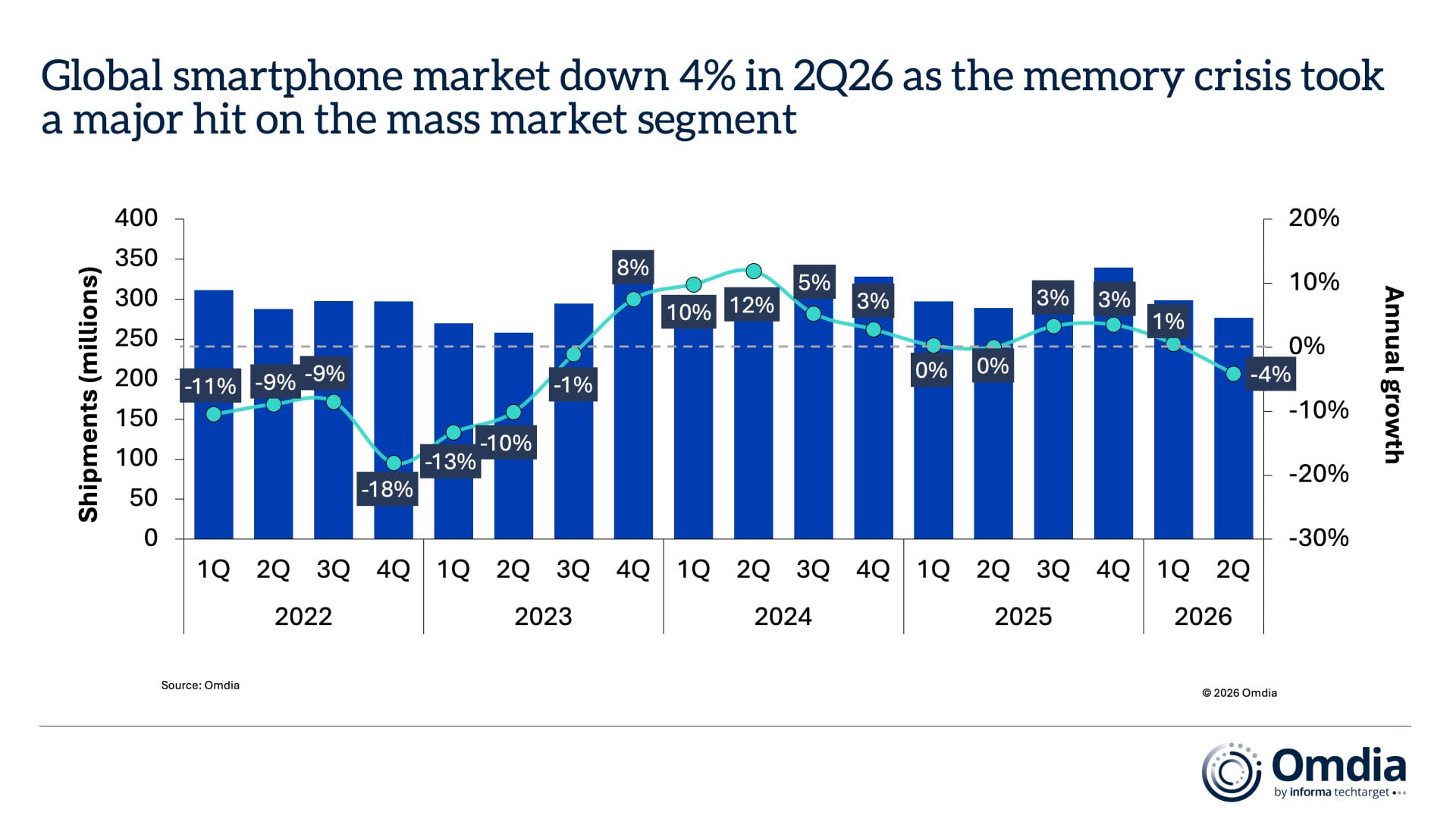
The global digital infrastructure is currently navigating a calibrated recalibration. While global smartphone shipments retracted by 4% year-on-year in the second quarter of 2026, the data reveals a strategic expansion in smartphone market share for dominant industry titans. This structural shift, catalyzed by persistent memory shortages, is fundamentally altering how technology is priced and distributed across the globe.
How Global Giants Seized Smartphone Market Share
Despite the broader industry contraction, Samsung and Apple demonstrated remarkable supply chain resilience. Samsung maintained its position as the global leader, commanding a 22% smartphone market share, a significant baseline increase from its 20% standing in the previous year. Specifically, the Korean giant leveraged stable demand and optimized supply availability to outpace competitors.
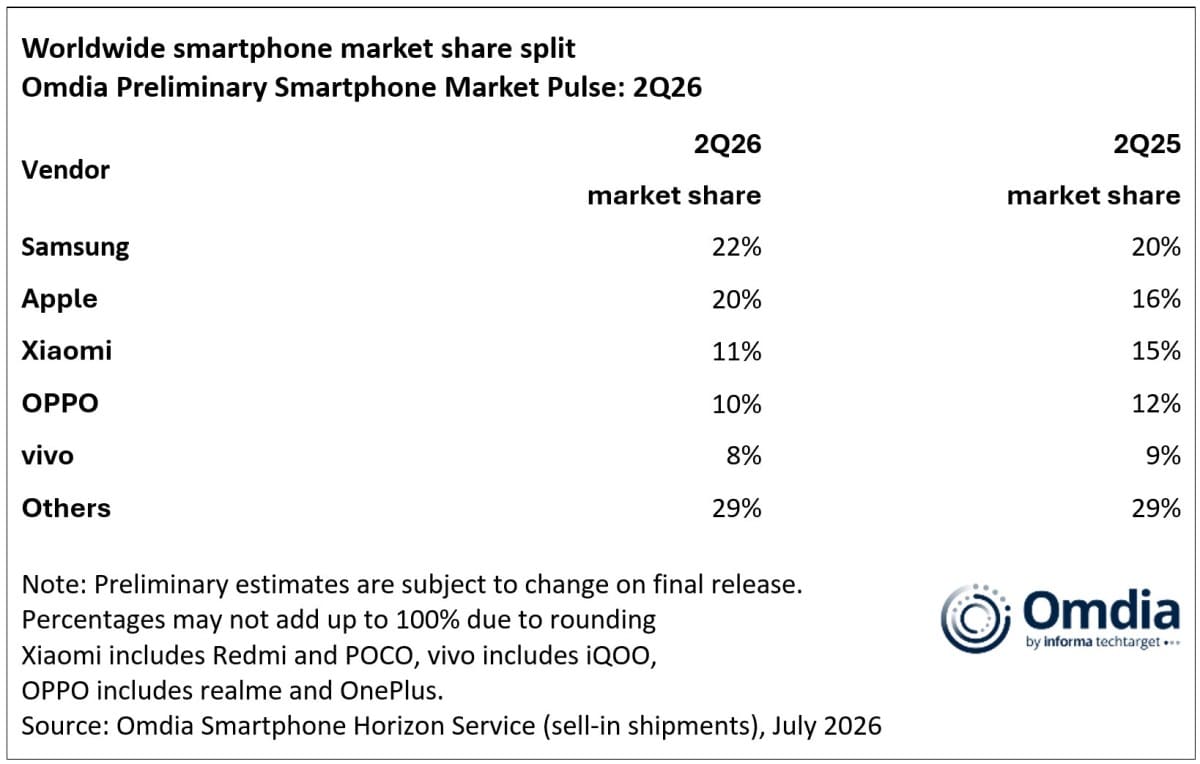
Apple followed a similar trajectory of precision growth. The Cupertino-based firm increased its share to 20%, up from 16%. This performance represents Apple’s most successful second quarter on record. This surge was primarily driven by the iPhone 17 series, which triggered a high-velocity upgrade cycle among consumers. Consequently, Apple’s decision to maintain stable pricing while rivals faltered acted as a major catalyst for demand.

Structural Pressure on Budget Manufacturers
In contrast, manufacturers focused on the mass-market segment faced severe headwinds. The shortage of critical memory components has disproportionately affected brands that rely on high-volume, low-margin shipments. The resulting market data shows a notable decline for several key players:
- Xiaomi: Market share retracted from 15% to 11%.
- Oppo: Dropped to a 10% share from 12%.
- Vivo: Declined to 8%, down from 9% in Q2 2025.

The sub-$400 smartphone segment experienced the most aggressive decline. Analysts note that memory and storage components now represent over 60% of the total bill of materials (BOM) for budget devices. For flagship models, this figure remains manageable at approximately 30%. This disparity forces manufacturers to either increase prices or reduce their exposure to the lower-margin tier.
The Situation Room Analysis
The Translation
The current hardware shortage is not a temporary glitch but a structural cost increase. When memory prices account for 60% of a phone’s cost, the “affordable smartphone” model becomes unsustainable. Samsung and Apple are winning because they possess the capital to absorb these costs and the brand equity to sell high-margin flagship devices. Essentially, the market is shifting from “quantity of users” to “quality of hardware.”

The Socio-Economic Impact
For the Pakistani citizen, this development signals a mandatory shift in digital procurement. As budget-friendly brands like Xiaomi and Vivo lose smartphone market share and raise prices, students and young professionals will find entry-level hardware less accessible. We expect a significant surge in the refurbished device economy and a heightened reliance on consumer financing and installment plans in urban centers like Karachi and Islamabad.

The Forward Path
This development represents a Stabilization Move. The industry is sacrificing shipment volume to ensure the financial viability of its remaining product lines. We do not anticipate a reduction in component costs until late 2027. Investors and consumers should prepare for a “Value-First” market where longevity and device financing become the primary drivers of growth, rather than annual low-cost upgrades.