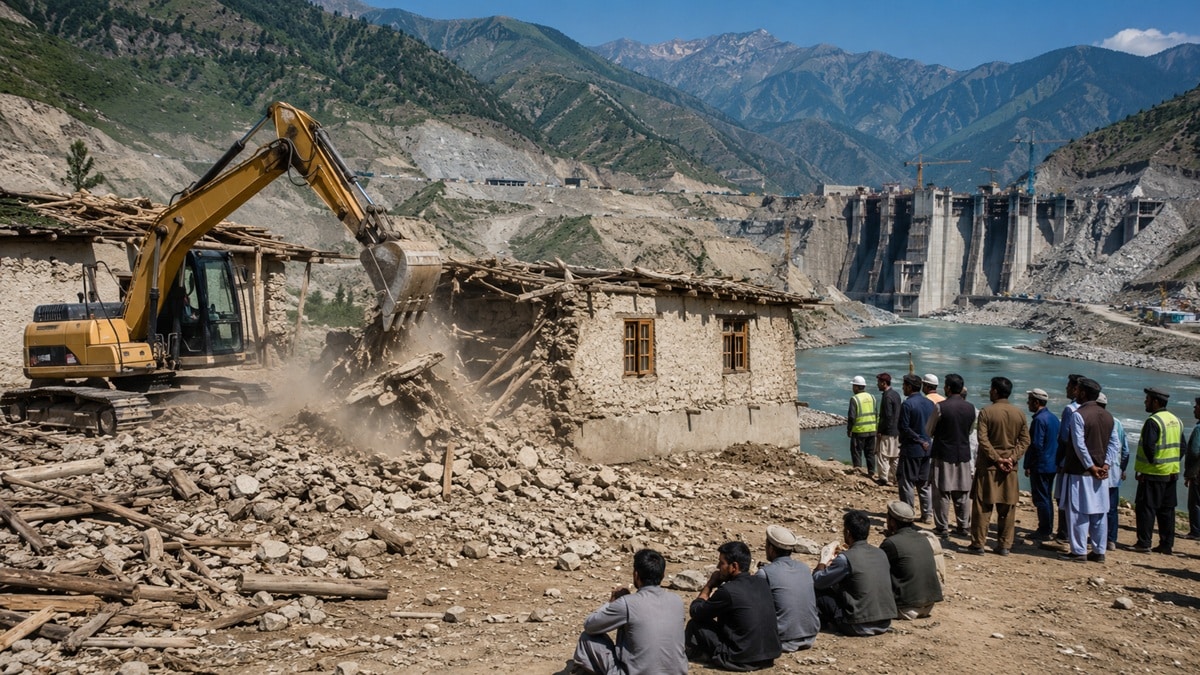
The Dasu Hydropower Project represents a calibrated catalyst for Pakistan’s structural energy independence, recently achieving a strategic milestone in Upper Kohistan. To ensure the uninterrupted execution of this 4,300-megawatt powerhouse, the district administration successfully demolished approximately 70 houses obstructing the primary construction site. Consequently, this surgical clearance optimizes the baseline for engineering teams to maintain their high-precision deployment schedule.
Accelerating the Dasu Hydropower Project Infrastructure
Deputy Commissioner Azizullah Jan confirmed that the removal of structures within the project’s footprint remains a top priority. Currently, the administration has marked a total of 500 houses for demolition to clear the logistical pathway. Strategic cooperation from local families has accelerated this transition, allowing the government to execute the relocation with precision. Furthermore, the state has already dispersed Rs. 3.5 million to over 200 affected families to facilitate their transition.

Payments for the remaining 300 families are currently processing under an enhanced self-managed relocation package. This mechanism empowers citizens to manage their own housing logistics while receiving substantial financial support from the state. Additionally, the district administration plans to integrate the following public welfare initiatives into the surrounding ecosystem:
- Advanced educational healthcare facilities and vocational centers.
- Strategic road networks for improved regional connectivity.
- Specialized colleges and schools for the local youth.
The Situation Room: Analysis
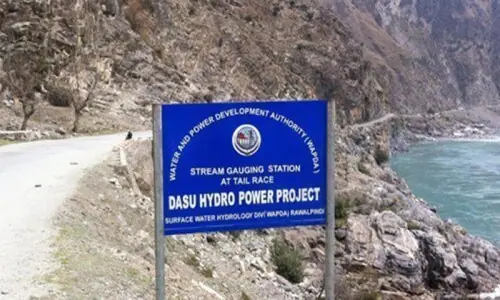
The Translation
In technical terms, the demolition of these structures is a “site readiness” protocol essential for high-capacity hydropower. The “enhanced self-managed relocation package” shifts the burden of construction from the state to the individual. By providing liquid capital instead of pre-built colonies, the Dasu Hydropower Project allows families to customize their new living standards based on personal economic requirements.
The Socio-Economic Impact
For the average Pakistani citizen, this development signals a dual-layered victory. Internally, the Upper Kohistan community gains access to modern vocational centers and healthcare, shifting from a rural baseline to an urbanized service economy. Nationally, the addition of 4,300 megawatts to the grid will eventually lower the cost of production for households and industries alike, creating a ripple effect of affordability.
The Forward Path
We classify this development as a Momentum Shift. The high level of community cooperation and the efficient distribution of compensation suggest a significant improvement in provincial administrative capacity. This project is no longer just a blueprint; it is a live demonstration of Pakistan’s ability to navigate complex socio-technical challenges to secure our energy future.