
National digital advancement relies on a calibrated telecommunications infrastructure to maintain system efficiency. The Pakistan Telecommunication Authority (PTA) recently published its 2026 Q1 Independent Quality of Service (QoS) Survey, confirming that Pakistan’s best network for overall performance is currently Jazz. This rigorous audit evaluated four major operators across 18 urban centers to establish a strategic performance baseline for the nation’s connectivity.
Structural Superiority: Jazz Dominates Download Benchmarks
During the 75-day testing period, PTA engineers covered 2,705 kilometers to record data across diverse topographies. Consequently, Jazz secured the highest overall ranking in 14 out of 18 cities, including major hubs like Islamabad, Karachi West, and Rawalpindi. Specifically, Jazz achieved a 95 percent regulatory compliance rate, the highest in the sector.
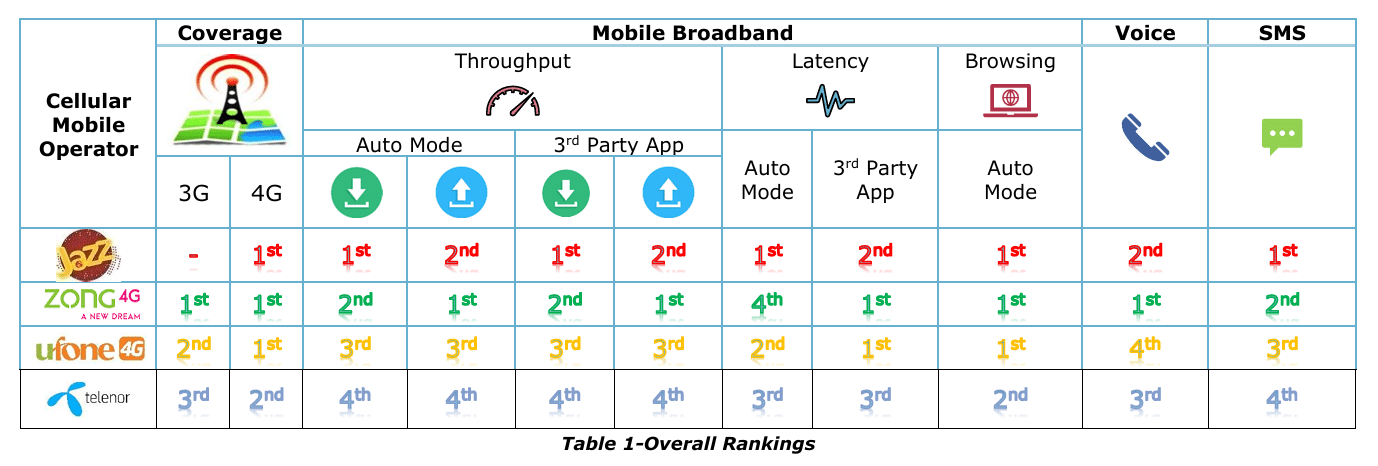
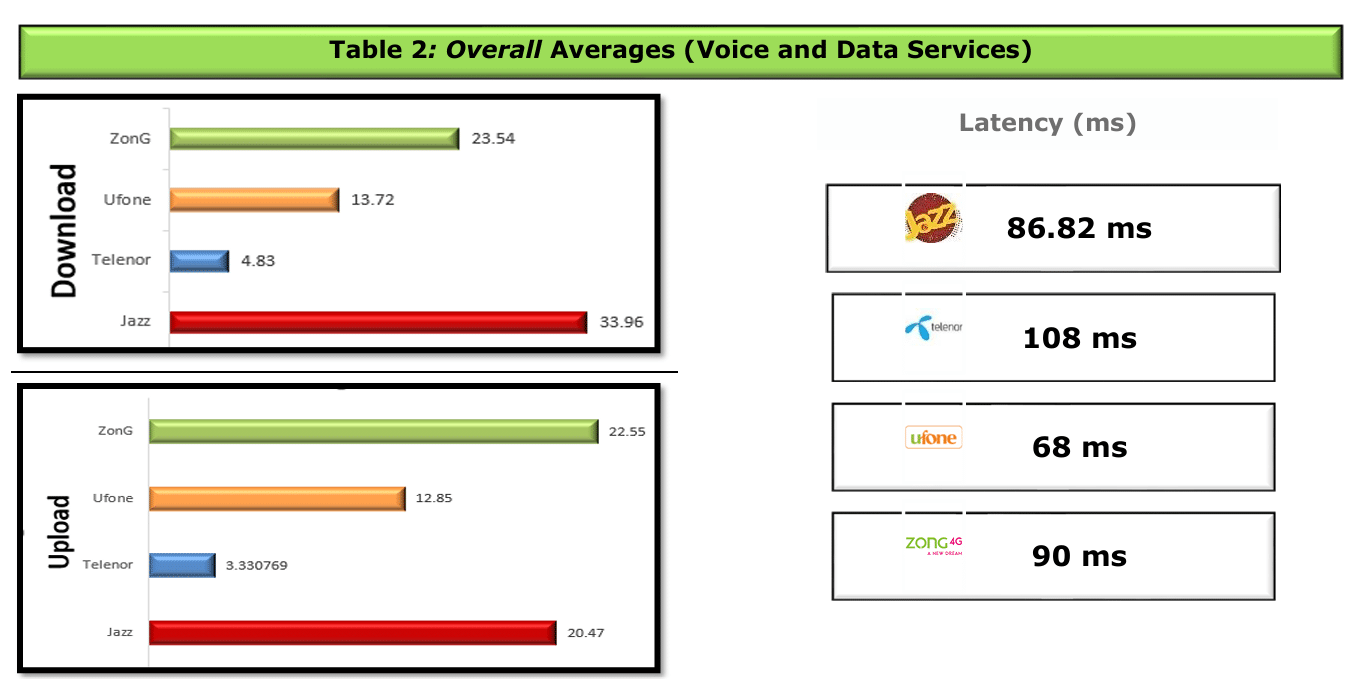
Furthermore, the data highlights a significant gap in mobile broadband throughput. Jazz recorded a national average download speed of 33.96 Mbps. In contrast, Zong followed at 23.54 Mbps, while Ufone and Telenor lagged significantly behind at 13.72 Mbps and 4.83 Mbps respectively.
Precision Voice Quality: Zong Leads the Auditory Frontier
While Jazz leads the data race, Zong has calibrated its network for superior voice service precision. The operator achieved the highest Mean Opinion Score (MOS) of 3.9, reflecting perceived clarity during calls. Additionally, Zong maintained a 99.3 percent call completion ratio, outperforming competitors in network accessibility and setup success.
Strategic coverage metrics also show that Jazz, Zong, and Ufone maintain robust 4G availability. However, Zong remains the strongest performer in legacy 3G fallback scenarios, ensuring connectivity remains stable even in areas with fluctuating signal strength.
The Situation Room: Analyzing the Digital Shift
The Translation
Regulatory compliance is more than just a legal requirement; it serves as a catalyst for network reliability. PTA’s 95% compliance rating for Jazz indicates a highly optimized network architecture designed for high-density data traffic. Meanwhile, Zong’s focus on Mean Opinion Scores (MOS) ensures that the fundamental utility of mobile phones—voice communication—remains at a professional standard.
The Socio-Economic Impact
For the average Pakistani citizen, these technical KPIs translate directly into economic opportunity. High download speeds in 13 cities empower the freelance economy, while superior voice quality ensures that critical communication in rural hubs like Zhob and Loralai remains stable. Reliable 4G coverage is no longer a luxury; it is the baseline for education and modern commerce.
The Forward Path
This development represents a Momentum Shift in the telecom sector. The significant performance lag from Telenor suggests a structural divide where infrastructure-heavy players are accelerating away from the competition. For Pakistan to achieve a unified digital frontier, laggards must recalibrate their spectrum efficiency to meet the evolving standards set by the market leaders.