
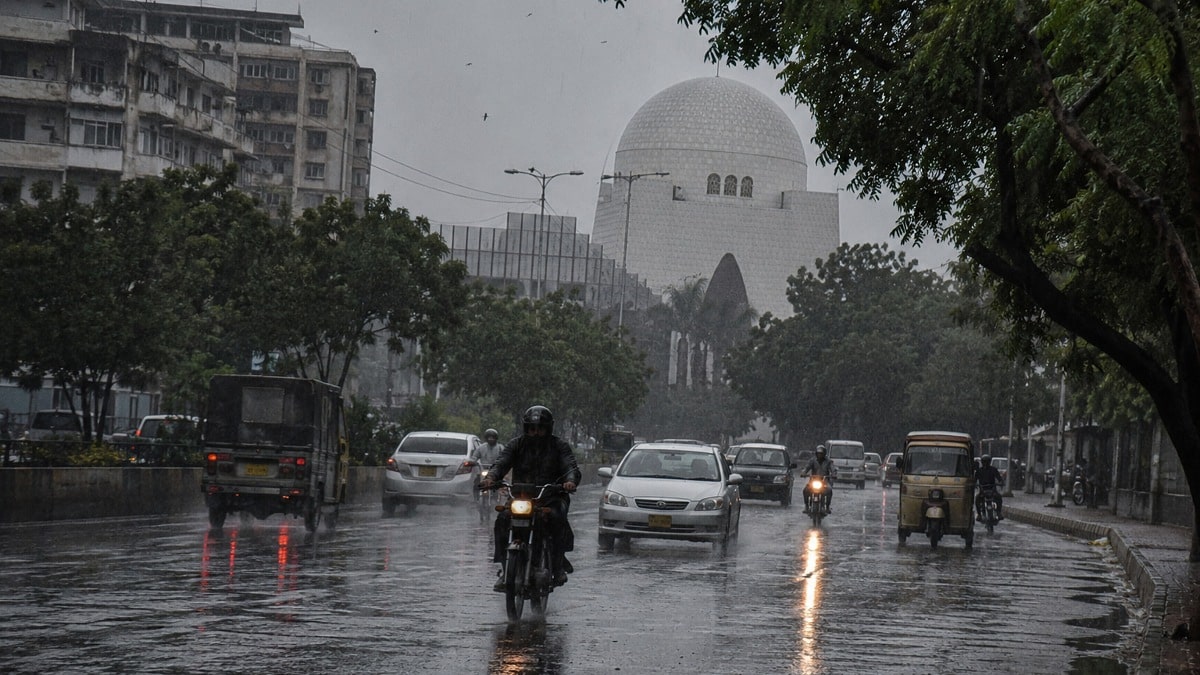
Strategic weather monitoring serves as the fundamental baseline for urban resilience in Pakistan’s primary economic engine. The latest Karachi rain forecast reveals a strategic shift in atmospheric conditions as moisture-laden winds from the Arabian Sea stabilize over the region. Consequently, the Pakistan Meteorological Department (PMD) anticipates a three-day period characterized by light rain and intermittent drizzle beginning this Monday. Furthermore, architectural wind patterns will likely exceed standard velocities through Wednesday, requiring calibrated precautions for high-density urban infrastructure.
Strategic Analysis of the Karachi Rain Forecast
Precision data from the Early Warning Centre indicates that Karachi will maintain a thermal baseline between 28°C and 30°C for minimum temperatures. Simultaneously, daytime maximums will range from 33°C to 35°C. Humidity levels remain a critical variable, with morning saturation reaching 70% to 80% before adjusting to 55% to 65% by evening. These moist currents currently influence upper and central Pakistan, while a distinct westerly weather system impacts the northern territories. In contrast, interior Sindh regions such as Dadu and Sukkur face more volatile conditions, including potential dust storms and thunderstorms.
The Translation: Modern Meteorological Clarity
Technical jargon often obscures the practical reality of weather shifts. In this context, “moisture-laden winds” refer to the concentration of water vapor being pushed inland by the Arabian Sea’s high-pressure system. This mechanism creates the necessary atmospheric density for drizzle without the structural threat of a full monsoon deluge. The interaction between these currents and the northern westerly system ensures a broader cooling effect across the provincial corridor, effectively mitigating the localized heat island effect in Karachi’s industrial zones.
The Socio-Economic Impact: Daily Life and Infrastructure
While the Karachi rain forecast indicates light precipitation, the socio-economic implications remain significant for the average citizen. Higher humidity levels typically correlate with increased energy demand for cooling systems, potentially straining the local power grid. Moreover, the forecasted wind surges demand heightened vigilance from maritime professionals and logistics operators. For the daily commuter, light drizzle often compromises road friction; thus, transport efficiency may experience a marginal decline. Conversely, the cooling effect provides a necessary respite for outdoor laborers and students across the metropolitan area.
The Forward Path: Next Gen Perspective
Next Generation Pakistan views this development as a Stabilization Move. This weather pattern represents a recalibration of seasonal norms rather than a disruptive momentum shift. It provides a strategic window for municipal authorities to audit drainage systems and grid resilience before more intensive weather cycles arrive. Precision in forecasting allows for proactive system management, ensuring that Pakistan’s coastal hubs continue to operate with maximum efficiency despite environmental fluctuations.








