
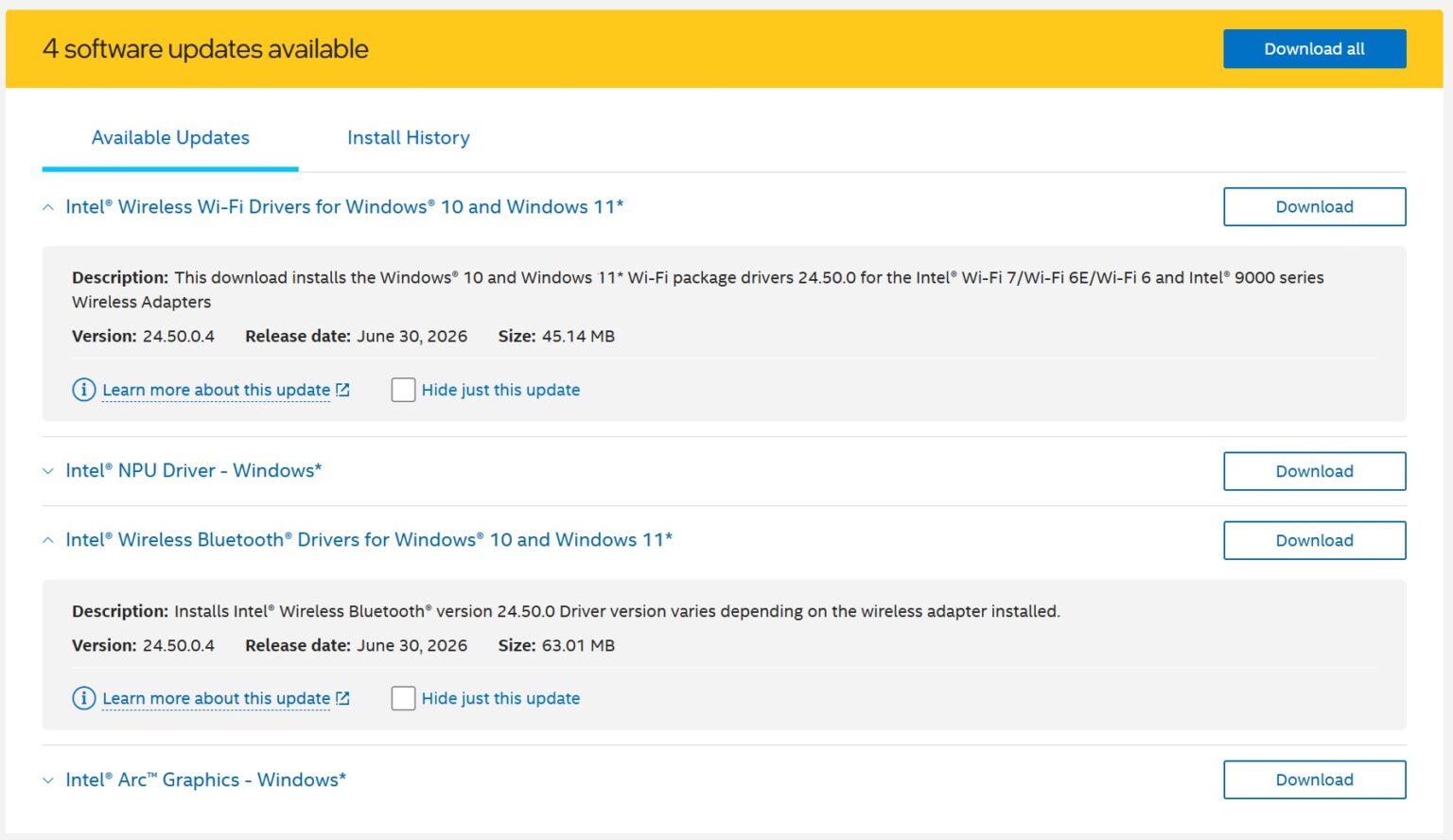
Intel has deployed a calibrated Intel driver update (Package 24.50.0) that fundamentally reshapes hardware interaction within the Windows 11 ecosystem. This strategic release integrates Microsoft’s Driver Quality Initiative (DQI), a structural project designed to maximize system stability, security, and predictability. Consequently, users will experience a more resilient computing environment where wireless connectivity and Bluetooth performance function with heightened precision.
A Structural Catalyst for System Stability
The Intel driver update serves as a primary catalyst for the new industry-standard performance metrics introduced at WinHEC 2026. Specifically, this update addresses critical components including Wi-Fi 7, Wi-Fi 6E, and legacy Wireless-AC adapters. Furthermore, Intel has refined 6GHz performance and enhanced the coexistence between Wi-Fi and Bluetooth signals to prevent frequency interference. These improvements ensure that high-bandwidth tasks remain uninterrupted by structural software failures.
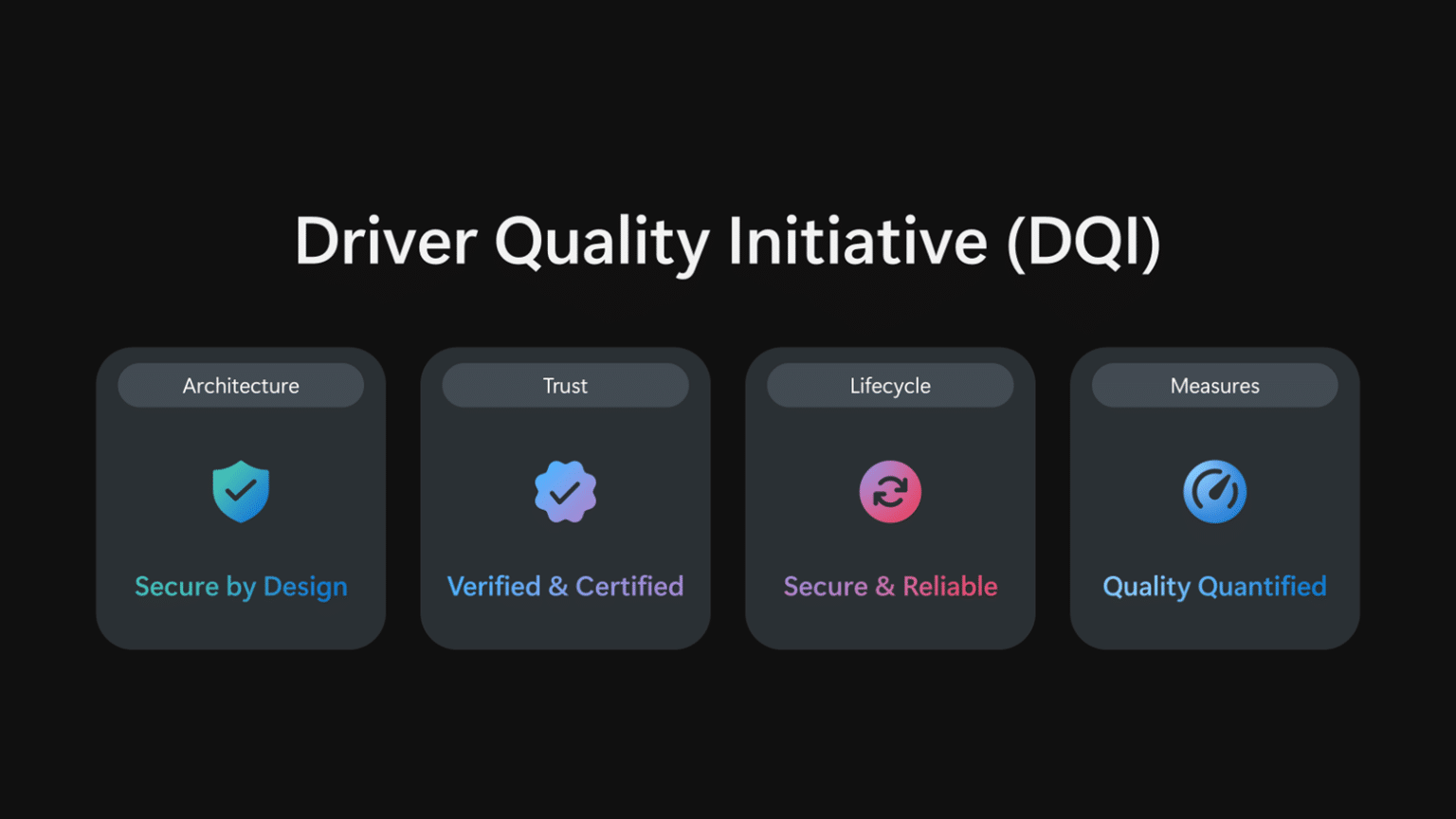
Implementing the Driver Quality Initiative (DQI)
Microsoft’s DQI framework represents a shift toward architectural trust and lifecycle management. Historically, disorganized driver installations frequently caused system crashes, thermal spikes, and excessive battery drain. By migrating third-party drivers from kernel-mode to safer user-mode designs, Intel reduces the probability of catastrophic blue-screen errors. This move signifies a transition toward a more modular and robust operating system architecture.
The Translation: Contextualizing DQI
To understand the logic behind this shift, one must view drivers as the vital communication bridge between software and physical hardware. Previously, a single error in a kernel-level driver could collapse the entire operating system. Now, through the DQI framework, the Intel driver update isolates these processes. If a driver malfunctions, the system can recover without a full reboot. This precision engineering ensures that hardware components like PCIe devices and Wi-Fi stacks operate within strictly defined safety parameters.
The Socio-Economic Impact: Empowering the Pakistani Workforce
For the Pakistani professional and student, system reliability directly correlates with economic productivity. In an environment where freelance exports and remote learning are critical, a sudden system crash is more than a technical glitch; it is a loss of billable hours and educational momentum. This Intel driver update mitigates hardware-related downtime for users in both urban hubs and rural areas. Consequently, more stable hardware allows for longer device lifespans and reduced maintenance costs for households operating on constrained budgets.
The Forward Path: A Momentum Shift
In my professional assessment, this development represents a definitive Momentum Shift in the Windows ecosystem. For too long, hardware manufacturers and software providers operated in silos, leading to the “fragmentation” that plagues many PC users. Intel’s early adoption of DQI standards establishes a baseline that other manufacturers, including AMD and Qualcomm, are now compelled to follow. This collective movement toward architectural resiliency is the precise evolution required to sustain the next generation of high-performance computing.








