
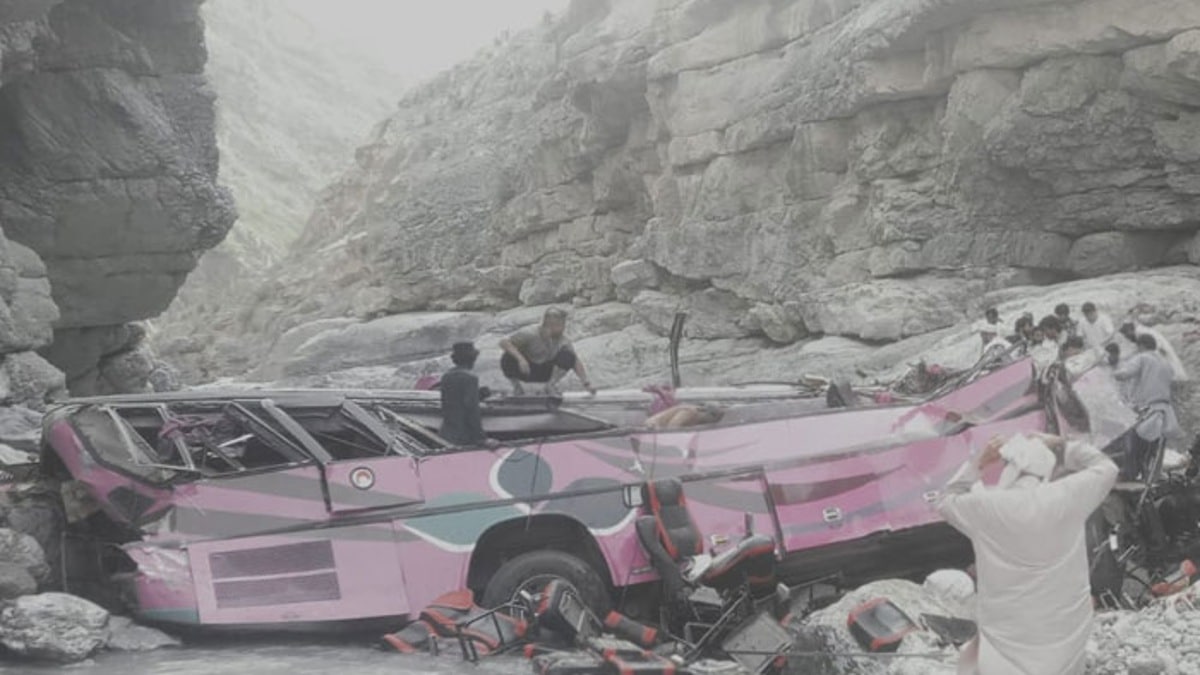
The recent Quetta-Peshawar bus crash serves as a grim baseline for the structural vulnerabilities within Pakistan’s inter-provincial transport network. At least 40 individuals lost their lives after a passenger coach plunged into a ravine near the Dhanasar area of Sherani district. Consequently, this catastrophic event highlights the urgent need for calibrated safety protocols and precision in vehicle load management across high-risk corridors.
Analyzing the Quetta-Peshawar Bus Crash Factors
The ill-fated coach departed Quetta with 36 passengers, but the manifestation changed during the journey. Specifically, additional passengers from a broken-down vehicle boarded the bus, bringing the total count to approximately 48 people according to Rescue 1122 reports. As the vehicle crossed into Dera Ismail Khan, it lost traction and descended into a deep ravine, resulting in immediate fatalities.

Chief Minister Sarfraz Bugti ordered an immediate rescue operation, mobilizing district administrations from both Balochistan and Khyber Pakhtunkhwa. Furthermore, emergency teams shifted the eight survivors to the District Headquarters Hospital in Zhob for intensive medical care. Authorities have now initiated a formal investigation to identify the technical catalyst behind this tragedy.

The Translation: Interpreting Technical Failures
In technical terms, this incident reveals a critical breakdown in “Route Manifest Discipline.” When a secondary bus transfers its passengers to an already occupied coach, the vehicle’s center of gravity shifts dangerously. On the steep gradients of the Dhanasar area, this imbalance becomes a structural liability. Consequently, what appears to be a helpful gesture—picking up stranded travelers—actually bypasses safety tolerances and increases the kinetic risk during navigation.

The Socio-Economic Impact: Vulnerability on the Frontier
The Quetta-Peshawar bus crash disproportionately affects the labor and student populations who rely on these affordable transit links. These corridors are the lifeblood of economic exchange between Balochistan and Khyber Pakhtunkhwa.
- Household Stability: The loss of 40 primary or secondary breadwinners creates a multi-generational poverty trap for affected families.
- Infrastructure Trust: Frequent accidents on these routes deter professionals from accepting roles in remote regions, hindering national integration.
- Emergency Logistics: The distance between the crash site and specialized medical facilities in Zhob underscores the “Golden Hour” deficit in rural healthcare.
The Forward Path: A Momentum Shift for Safety
This event represents a critical moment for a “Stabilization Move” in transport oversight. We must move beyond reactive investigations and implement real-time digital manifest tracking. Every passenger boarding an inter-city coach should be logged into a centralized database that triggers an alert if the vehicle exceeds its calibrated weight limit. Only through such precision-driven engineering of our transport laws can we ensure that a Quetta-Peshawar bus crash never happens again. National advancement requires the safety of those moving the nation forward.








