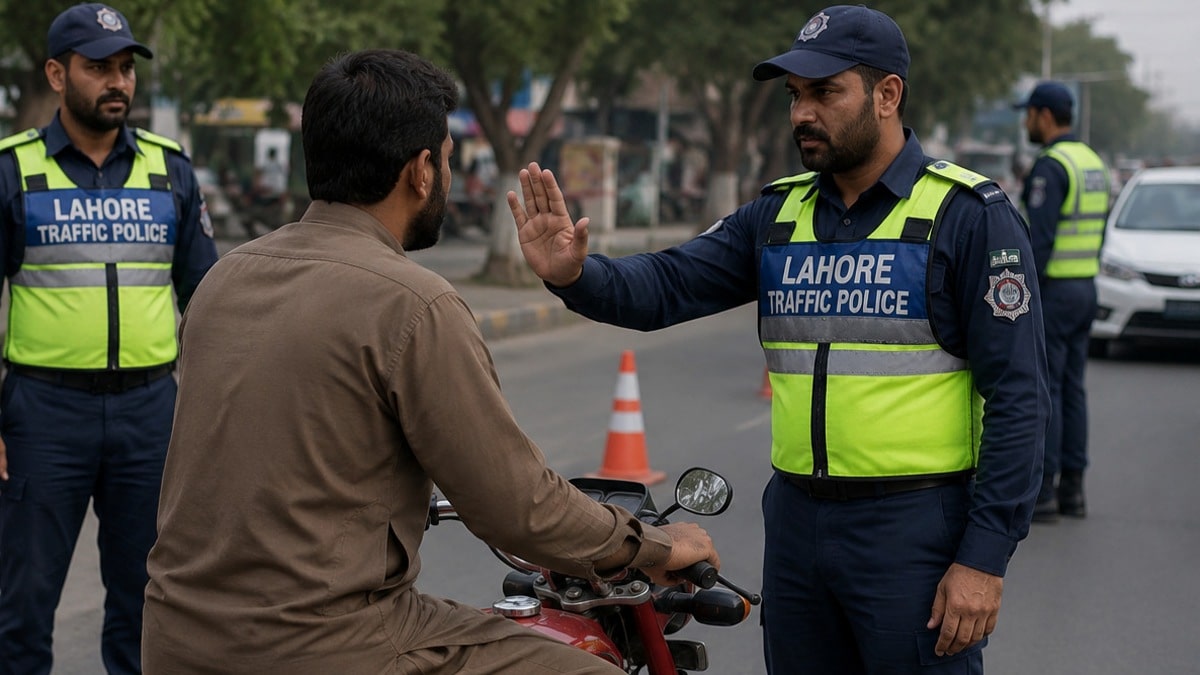
The Lahore helmet ban represents a calibrated shift in urban safety management, as authorities leverage high-precision AI technology to enforce compliance on major corridors. Chief Traffic Officer (CTO) Abdul Rahim Shirazi recently confirmed that strategic city roads are now officially restricted zones for motorcyclists lacking protective gear. This precision-led initiative aims to establish a new baseline for traffic discipline across the provincial capital.
AI-Powered Precision: Analyzing the Baseline Data
The Lahore Traffic Police conducted their inaugural artificial intelligence-based survey to quantify compliance levels. Consequently, the data revealed that 97.11% of motorcyclists on model roads already adhere to safety protocols. By integrating Punjab Safe Cities Authority (PSCA) cameras across 17 major intersections, the department calibrated its enforcement strategy based on real-time movement.
- Total Observations: 264,112 motorcycles monitored during peak hours.
- Compliant Riders: 256,473 individuals identified wearing helmets.
- Violators: 7,639 riders flagged for non-compliance.
Furthermore, this data-driven approach allows for a structural reallocation of police resources toward high-violation zones, ensuring system efficiency.
Restricted Zones: The Strategic Reality of the Lahore Helmet Ban
The department has declared several high-traffic corridors as zero-tolerance zones. Motorcyclists without helmets cannot access these specific routes:
- The Mall
- Jail Road
- Canal Road
- Cantt Areas
Moreover, the CTO emphasized that the zero-tolerance policy will expand to adjoining roads to maintain momentum in reducing traffic fatalities. This strategic expansion serves as a catalyst for broader behavioral change among the citizenry.
The Situation Room Analysis
The Translation
This initiative transitions traffic management from subjective manual enforcement to objective AI surveillance. By using PSCA cameras, the police remove human error and bias from the identification process. The “No-Go Zone” logic acts as a physical barrier to entry, forcing a change in habits before a rider even enters the urban core.
The Socio-Economic Impact
The data highlights a structural victory: a 40% reduction in severe head injury cases. For the average Pakistani household, this translates to lower emergency medical costs and the preservation of the primary breadwinner’s health. Furthermore, improved road discipline reduces traffic congestion, directly enhancing the daily productivity of professionals and students alike.
The Forward Path (Opinion)
This development represents a Momentum Shift for Pakistan’s urban infrastructure. While initial enforcement might seem restrictive, the integration of AI tools signals a move toward a “Smart City” framework. To sustain this progress, authorities must now focus on making high-quality helmets more accessible to low-income riders to ensure safety does not become a financial burden.