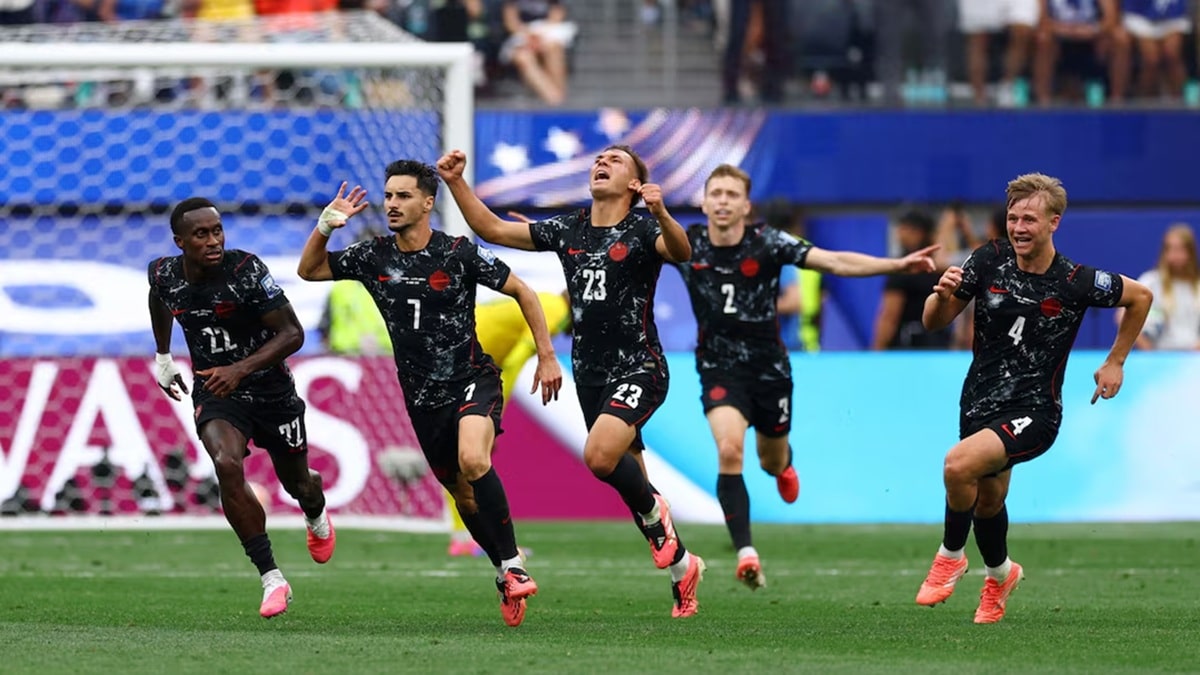
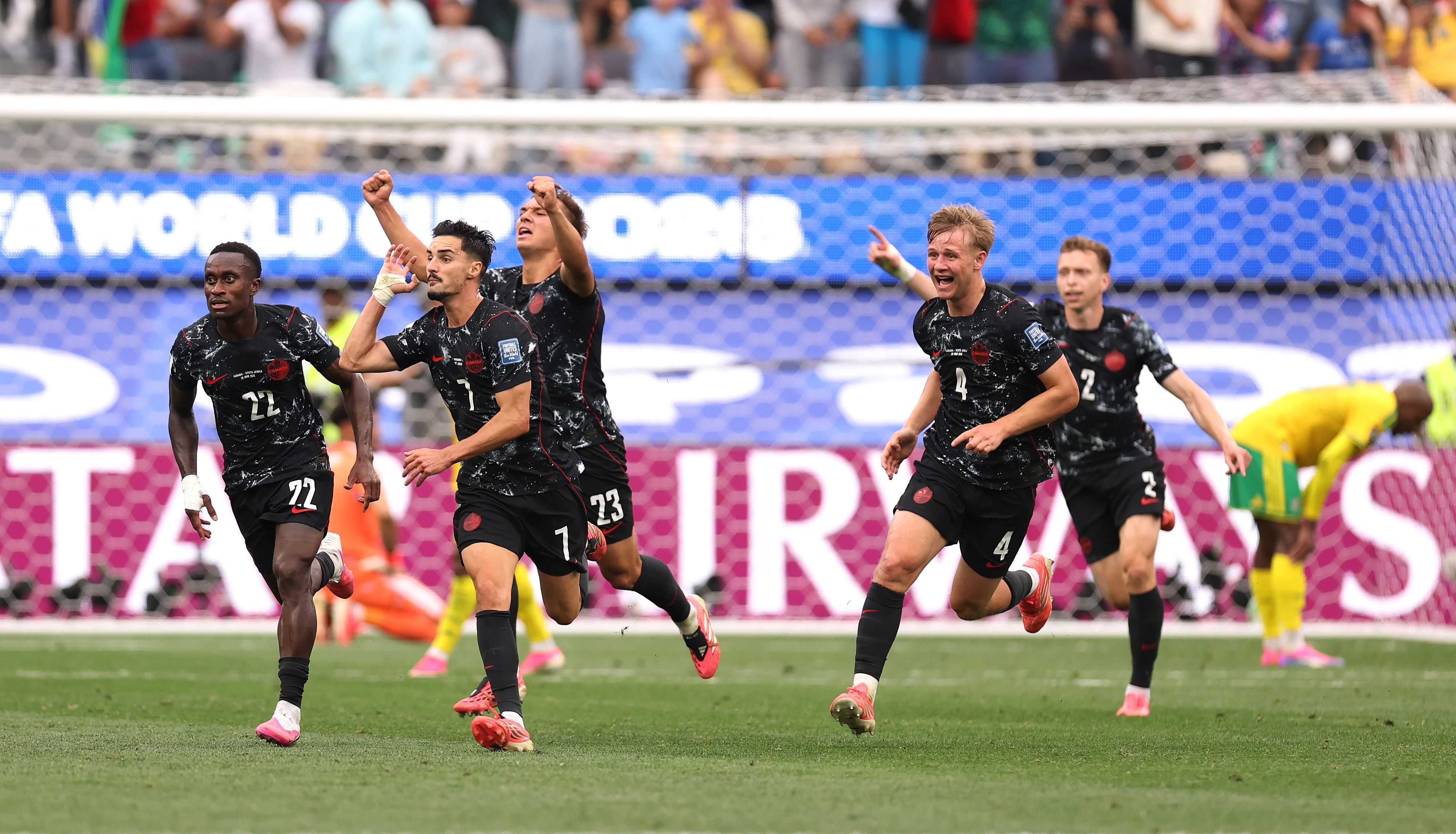
Canada achieved a landmark in Canada World Cup history by securing their first-ever advancement to the FIFA World Cup Round of 16. Stephen Eustaquio delivered a calibrated stoppage-time strike to defeat South Africa 1-0 at Los Angeles Stadium. Consequently, this victory marks a structural shift in the efficiency and global standing of North American football.
Analyzing the Strategic Defensive Baseline
South Africa maintained a disciplined defensive baseline throughout the match, controlling 58.2% of the possession. Despite their technical control, Canada’s persistence acted as a catalyst for a breakthrough in the final moments. Furthermore, the Canadian squad demonstrated immense character under Jesse Marsch’s leadership to overcome South Africa’s high-pressure system.

The match remained scoreless for 90 minutes, appearing destined for a penalty shootout. However, Eustaquio produced a moment of precision in the dying seconds. This goal was his first international strike in over two years, solidifying his role as a tactical anchor for the team.
Precision Execution: The Defining Moment in Canada World Cup History
The decisive play began when Alistair Johnston advanced down the right flank to deliver a high-velocity ball into the area. Although South Africa initially cleared the cross, Eustaquio intercepted the ball at the edge of the box. He controlled the descent with his chest and fired a low strike into the bottom corner, leaving goalkeeper Ronwen Williams stranded.
Earlier in the contest, Canada missed several opportunities due to South Africa’s robust clearance strategies. For instance, Aubrey Modiba cleared a goal-bound header from Moise Bombito off the line. Additionally, Tani Oluwaseyi and Jonathan David were both denied by South African interventions during the second half.

The Situation Room
The Translation
In high-stakes sports science, a “stoppage-time winner” is not merely luck; it is the result of superior aerobic conditioning and psychological resilience. Canada utilized a high-press system that eventually fatigued the South African backline. By maintaining structural integrity for 90+ minutes, Canada exploited the singular moment of South African defensive entropy to secure the result.
The Socio-Economic Impact
This milestone resonates beyond North America, serving as a blueprint for developing football nations like Pakistan. It proves that long-term investment in coaching infrastructure—exemplified by Jesse Marsch’s two-year project—yields measurable international success. For Pakistani youth, this result highlights football as a viable vertical for national pride and professional socio-economic mobility.
The Forward Path
We classify this development as a Momentum Shift. Canada has transitioned from a regional participant to a structural contender on the global stage. Their upcoming fixture against the Netherlands or Morocco on July 4 in Houston will serve as the baseline for their potential as a top-tier footballing nation.