
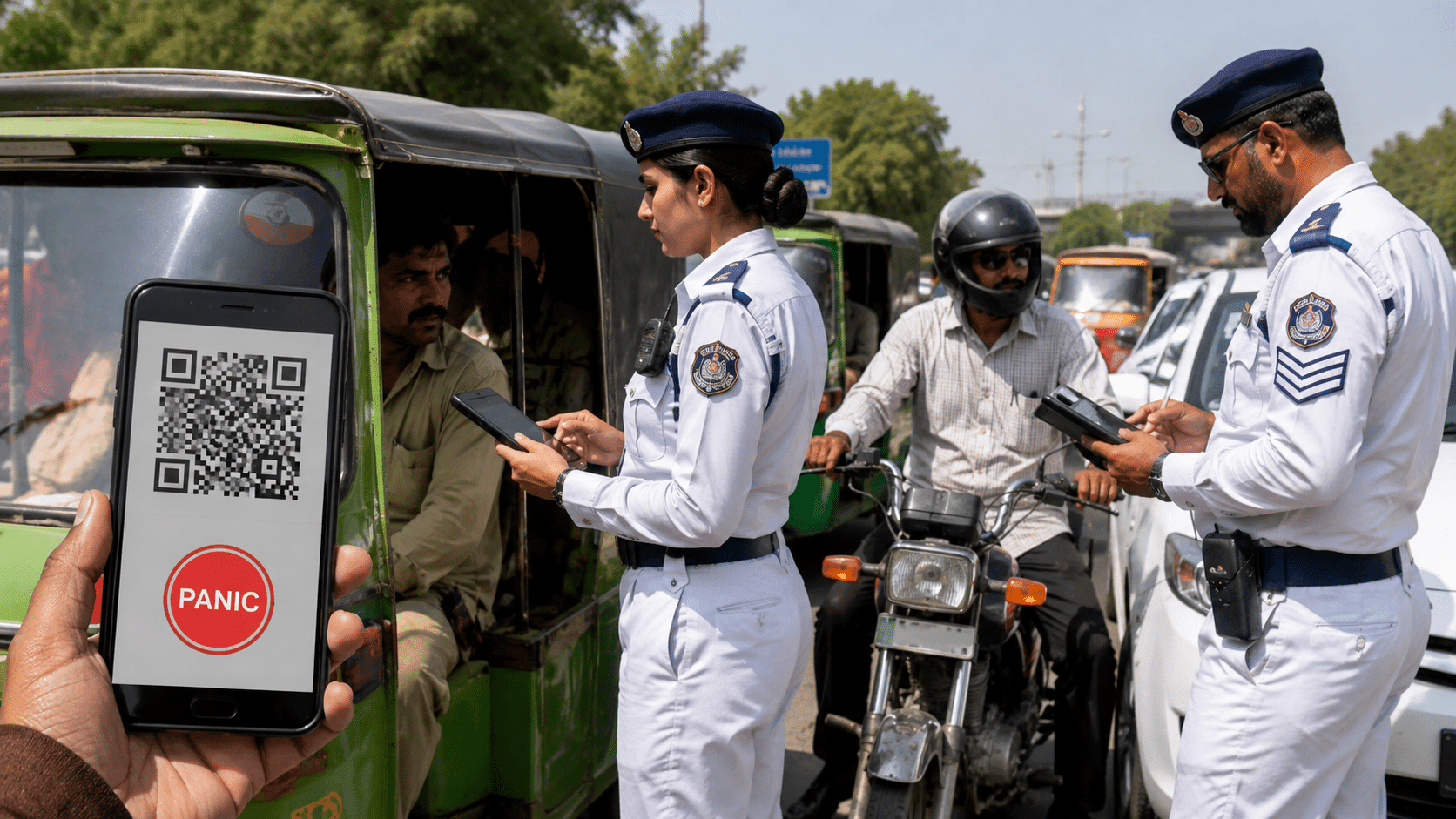
Lahore’s urban mobility ecosystem is undergoing a calibrated security upgrade. Starting July 1, the City Traffic Police will initiate a structural crackdown against public transport vehicles lacking mandatory QR panic buttons. This strategic mandate targets all rickshaws, taxis, and e-hailing services to establish a new baseline for commuter safety across the provincial capital.
Chief Traffic Officer (CTO) Syed Abdul Rahim Shirazi confirmed that all transport unions and operators have until June 30 to implement these precision security features. Consequently, any vehicle found operating without these calibrated safety protocols after the deadline will face immediate legal penalties. The department has already deployed 12 dedicated teams exclusively to assist the rickshaw sector with these installations.
Strategic Deployment of QR Panic Buttons
To facilitate a seamless transition, authorities have established 45 dedicated installation locations across Lahore. Currently, the ongoing campaign has successfully equipped more than 6,000 rickshaws with the required technology. Furthermore, the government has inaugurated four additional licensing centers to accelerate the registration process for transport providers.
Vehicle owners must meet specific administrative criteria before the hardware integration occurs. These requirements include:
- A valid and verified driving license.
- Original vehicle registration documents.
- Full clearance of any pending e-challans.
The Situation Room Analysis
The Translation: Digital Safety Sovereignty
The integration of QR panic buttons represents a shift from manual emergency reporting to automated digital response. Instead of passengers relying on mobile calls during a crisis, this system creates a direct, traceable link to the Punjab Safe Cities Authority. This precision technology effectively converts every public vehicle into a monitored, safe node within the city’s digital grid.
The Socio-Economic Impact: Empowering the Commuter
This initiative serves as a catalyst for mobility confidence, specifically for women and students in urban Lahore. By standardizing safety, the government reduces the “security tax” often felt by vulnerable populations. Moreover, the prerequisite of clearing e-challans forces a structural cleanup of traffic violations, leading to more disciplined roads and increased municipal revenue efficiency.
The Forward Path: A Momentum Shift
We classify this development as a Momentum Shift. This is not merely a maintenance move; it is an architectural redesign of public trust in transport. While the compliance deadline is aggressive, the widespread availability of 45 installation hubs demonstrates a commitment to systemic progress. The long-term success will depend on the sustained functionality of the backend response systems.








