
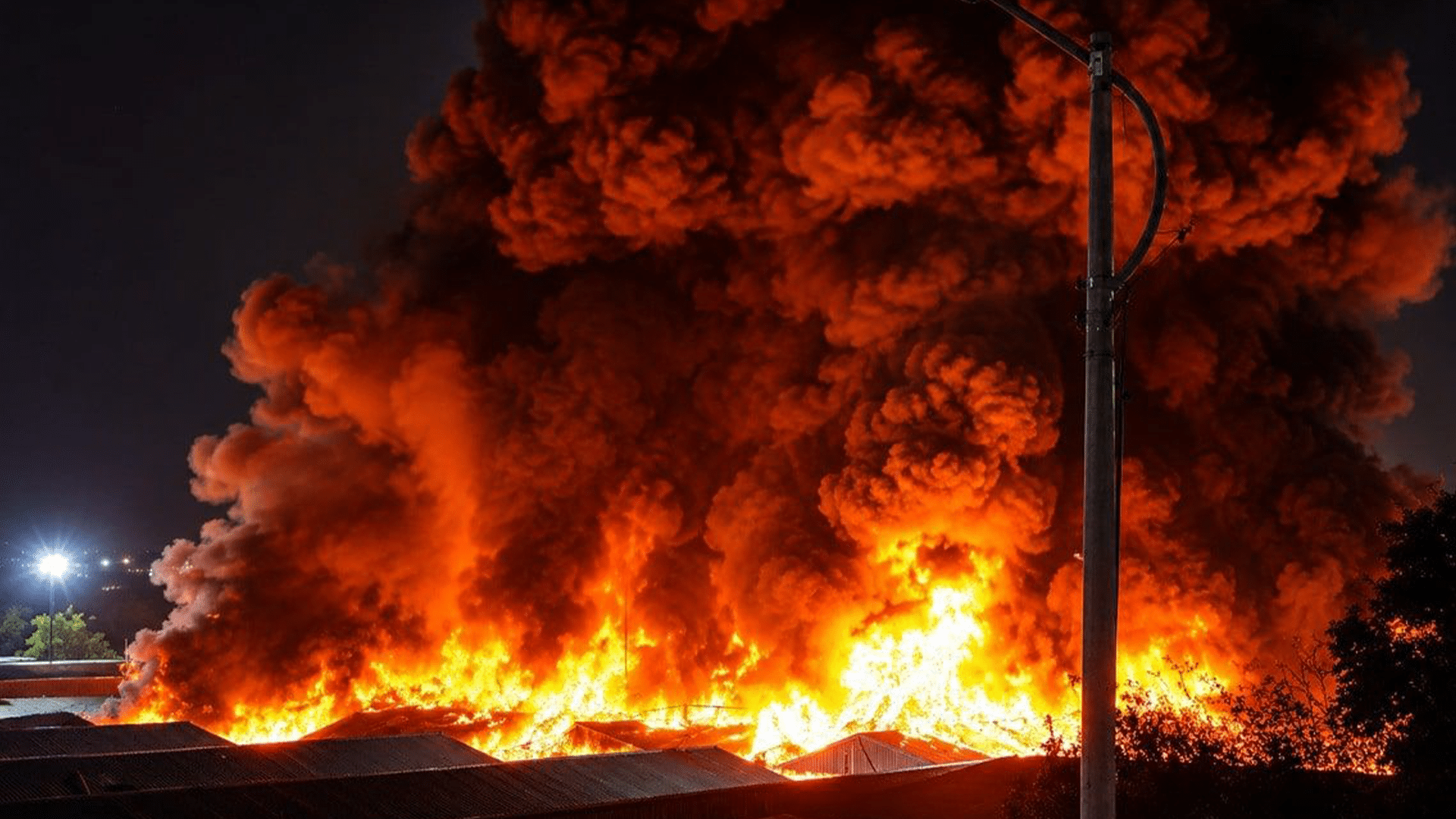
The recent Islamabad bazaar fire serves as a critical diagnostic event, exposing the systemic vulnerabilities and structural deficits within our urban commercial hubs. A preliminary investigation by the Capital Development Authority (CDA) identified multiple safety violations and a significant lack of fire infrastructure that catalyzed the destruction of nearly 370 shops. Consequently, this incident demands a calibrated shift in how we manage public trade spaces to ensure national resilience.
The Anatomy of the Fire Response
The blaze initiated on a Tuesday night, prompting a massive response from a multi-agency task force. Firefighting crews reached the H-9 Bazaar within a precision window of two minutes after the 9:53 PM alert. However, the intensity of the situation required over three hours of active suppression to contain the flames. The operation successfully concluded cooling efforts the following day to neutralize any risk of structural reignition.
This massive deployment involved 122 personnel and 17 fire engines from diverse units, including the Pakistan Navy and Bahria Town. Despite this high-level mobilization, three individuals sustained injuries, with one requiring urgent transfer to the Pakistan Institute of Medical Sciences (PIMS). Furthermore, the lack of designated fire points and local hydrants severely throttled the efficiency of the response team.
Identified Structural and Safety Violations
The CDA investigators documented several critical breaches of standard safety protocols that exacerbated the Islamabad bazaar fire. First, the widespread use of flammable tarpaulin sheets allowed the fire to propagate across stalls with high velocity. Second, the illegal storage of combustible materials and gas cylinders inside shops after hours created a high-risk environment for emergency responders.
Moreover, rescue efforts faced significant human obstacles as large crowds obstructed the movement of heavy machinery. Some individuals reportedly manhandled firefighters and seized equipment, creating a chaotic baseline for an already volatile emergency. These factors combined to transform a manageable incident into a structural catastrophe with deep economic consequences.
The Situation Room: Strategic Analysis
The Translation (Clear Context)
In technical terms, the H-9 Bazaar functioned as a “fire load” anomaly. The combination of high-density combustible fabrics and unregulated fuel sources (gas cylinders) created a thermal environment that exceeded the capacity of existing onsite suppression tools. The absence of a dedicated hydrant network meant that fire engines had to rely on external water bowsers, introducing a strategic delay in the suppression cycle.
The Socio-Economic Impact
For the average Pakistani citizen, this incident represents more than just structural damage; it is a direct blow to the informal economy. The loss of 370 shops affects thousands of households, from stall owners to daily-wage laborers. In urban centers like Islamabad, such fires disrupt the supply chain of affordable goods, placing additional financial strain on low-to-middle-income families who rely on weekly bazaars for survival.
The Forward Path (Opinion)
This development represents a Momentum Shift. The CDA’s subsequent recommendation for immediate infrastructure installation and stricter enforcement marks a transition from passive reporting to active governance. If these standards are calibrated and enforced across all commercial zones, this tragedy could serve as the catalyst for a modern, precision-based approach to urban fire safety in Pakistan.








