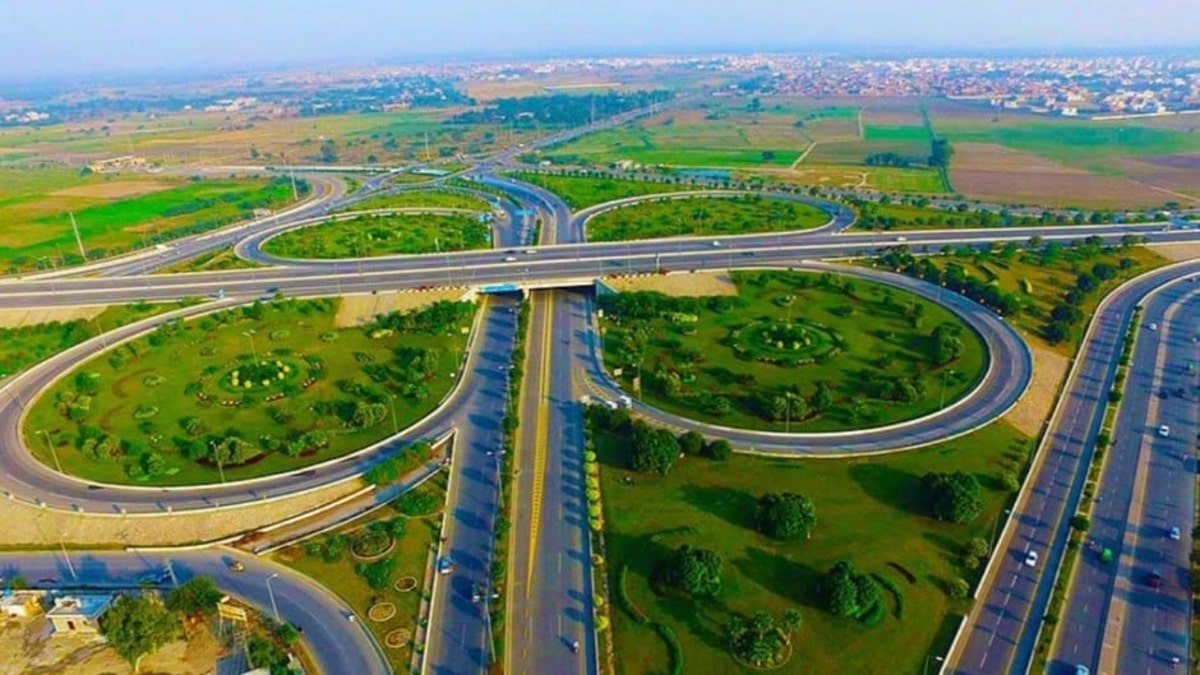
Structural efficiency serves as the baseline for national progress. The Rawalpindi Ring Road, a calibrated Rs. 47 billion infrastructure project, is currently undergoing final technical alignments for its July debut. Deputy Project Director Ashfaq Sulheri confirms that asphalt work on the 38.3-kilometer route is now complete. Consequently, the provincial government is preparing to announce a formal inauguration date after a final project audit.
Optimizing Urban Logistics: The Ring Road Network
Engineers are currently executing the final finishing phases of the corridor. These precision tasks include lane markings, drainage optimization, and strategic landscaping. Furthermore, the installation of essential road lighting and signboards will reach completion within the next thirty days. This meticulous approach ensures that the Rawalpindi Ring Road meets international safety standards before full-scale traffic deployment.
Strategic Interchanges and Corridor Connectivity
The 38.3-kilometer alignment functions as a critical bypass, stretching from Baanth on G.T. Road to Thalian. To maximize accessibility, the design incorporates five strategic interchanges:
- Baanth: Connecting primary G.T. Road traffic.
- Maira Mohra: Facilitating localized regional access.
- Khasala and Kolian Parr: Enhancing rural-urban connectivity.
- Thalian: Linking the corridor to major motorway networks.
Beyond simple transit, planners have integrated an industrial zone along the corridor. This strategic move aims to decentralize commercial activity from the urban core. While the main artery opens in July, work on the expanded Thalian interchange will commence as a follow-up phase.
The Situation Room Analysis
The Translation (Clear Context)
In technical terms, this project is a “bypass corridor” designed to siphon heavy commercial traffic away from Rawalpindi’s congested central business districts. By removing long-haul trucks from city streets, the system logic drastically reduces the “wear and tear” on local roads and minimizes carbon idling. It converts a chaotic transit environment into a high-speed, controlled-access logistics network.
The Socio-Economic Impact
For the average Pakistani citizen, this development translates into “Time Equity.” Commuters traveling from G.T. Road to the motorways can expect to save significant fuel costs and transit hours. Additionally, the planned industrial zone acts as a catalyst for job creation, potentially transforming the peripheries of Rawalpindi into a hub for manufacturing and logistics professionals.
The Forward Path (Opinion)
This development represents a Momentum Shift. While many infrastructure projects suffer from “drift,” the completion of the asphalt work indicates a transition from vision to utility. For Pakistan to achieve regional competitiveness, the Rawalpindi Ring Road must be viewed not just as a road, but as the foundation for a wider smart-city framework. Maintaining this momentum through the Thalian interchange expansion will be vital for long-term system efficiency.