
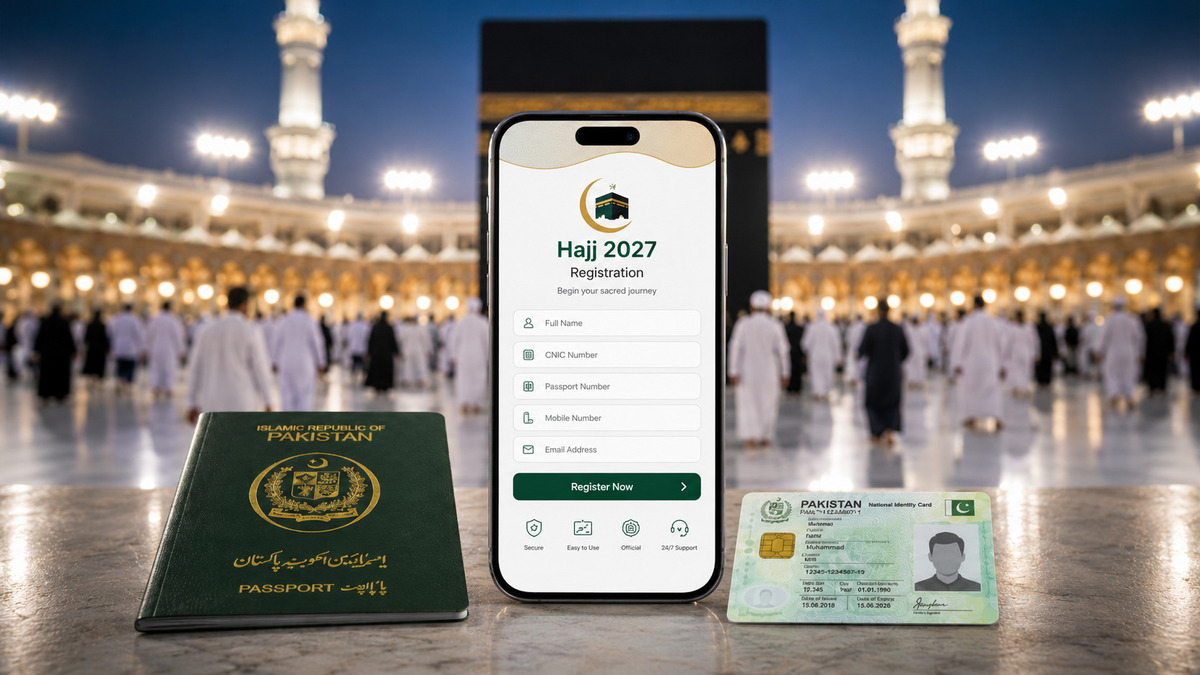
National administrative efficiency depends on the precision of digital interfaces. The Ministry of Religious Affairs (MORA) and the National IT Board (NITB) have recently deployed a calibrated update to the Hajj digital system, enabling registered pilgrims for the 2027-2030 cycle to verify their application status via a remote interface. This strategic shift eliminates the need for physical office visits, streamlining the verification process for thousands of Pakistani citizens through a centralized data portal.
Optimizing the Hajj Digital System Frontier
The National IT Board integrated the new “Application Inquiry” feature to provide a structural baseline for pilgrim facilitation. Consequently, individuals and groups can now access real-time status updates and relevant personal data with greater convenience. By shifting these services online, the government continues its trajectory toward a paperless governance model that prioritizes citizen accessibility and data transparency.
The Translation: Technical Logic for the Citizen
While the update appears as a simple inquiry button, it represents a deep-level integration between the NITB database and user-facing portals. It converts a traditionally manual, paper-heavy tracking process into a precision-engineered digital lookup. Furthermore, this system allows for high-concurrency inquiries, ensuring that the surge in status checks does not degrade the user experience or system stability.
The Socio-Economic Impact: Daily Life in Pakistan
For the average Pakistani household, this update reduces the “hidden costs” of pilgrimage, specifically the time and travel expenses required for manual follow-ups at regional offices. By digitizing the inquiry phase for the 2027-2030 cycle, the state empowers rural and urban professionals to maintain focus on their economic activities while staying informed about their religious obligations. This move fosters a more efficient baseline for social participation in national religious ceremonies.
The Forward Path: A Strategic Assessment
This development represents a Momentum Shift for digital governance in Pakistan. It demonstrates a commitment to a “digital-first” service model that is both scalable and transparent. However, the true catalyst for progress will be the expansion of this system to include end-to-end digital visa processing and payment logistics. This update is a necessary structural baseline for a modern, tech-enabled pilgrimage experience that matches international standards.








